
Vandaag of morgen in huis

Kwaliteit gegarandeerd

Welkomstaanbiedingen ontgrendelen: GRATIS bezorging | Tot 80% korting | Gratis 30 dagen JoyPlus-proefperiode
Download de app
A wide choice of cat food is useful, but it does not always make comparing products easy. Packaging often focuses on flavour, “premium” formulas or eye-catching ingredients. However, these words do not automatically tell you whether a product suits your cat’s age, lifestyle and nutritional needs.
Pay particular attention to three common pitfalls:
Cat food for adult cats is not the same as kitten food. Kittens have different nutritional needs from adult animals. Therefore, check that the label clearly states which life stage the product is intended for.
For adult cats, there are various options, such as:
A product for sterilised cats may have an adjusted composition and feeding guideline. This does not mean that every cat needs this type of food. Consider your cat’s individual condition, activity level and portion size. If your cat has a medical condition or you are unsure about its diet, it is advisable to consult a vet.
The designation complete pet food means that, according to the product information, the product is intended as complete nutrition for the stated animal species and life stage. Also check the analytical constituents, such as protein, fat, fibre, ash and moisture.
Wet cat food often contains around 75 to 85 per cent moisture. This means that a portion contains a lot of water and fewer calories per gram than dry food. Dry cat food generally contains around 10 per cent moisture and is therefore more concentrated. So, do not compare wet and dry food solely by the price per pack. Also consider:
A claim such as “supports digestion” or “helps natural defences” should be read as a statement from the product’s marketing communications. Based on the brand’s own research or formulation, this is not a guarantee that every cat will experience the same effect. Base your choice first on the stated composition and suitability.
Texture mainly affects acceptance and ease of use. Options include:
A 2 kg bag of dry food is practical for everyday use, but it should be sealed properly after opening and stored in a dry place. 85-gram pouches are useful for portion control. Store opened wet food in the fridge according to the label and use it within the stated period. Serving temperature can also make a difference: many packs recommend serving wet food at room temperature.
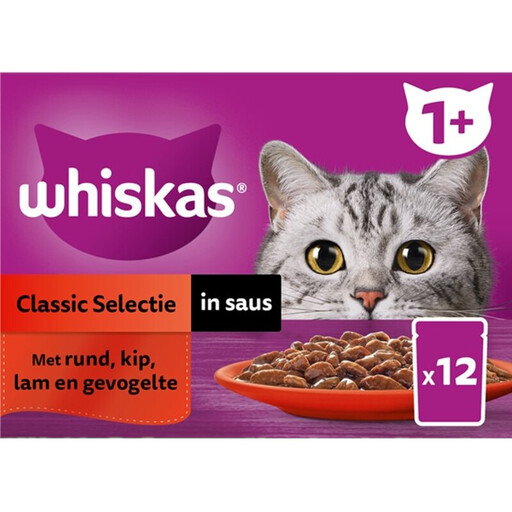
Why it suits this profile: A multipack with 12 portions of 85 grams offers an easy way to try different flavours in gravy.
The packaging states that this is complete wet food for cats aged 1 year and over, and provides the composition, analysis and feeding guidelines per portion.
12 x 85 g, different flavours and clear storage instructions for opened wet food.
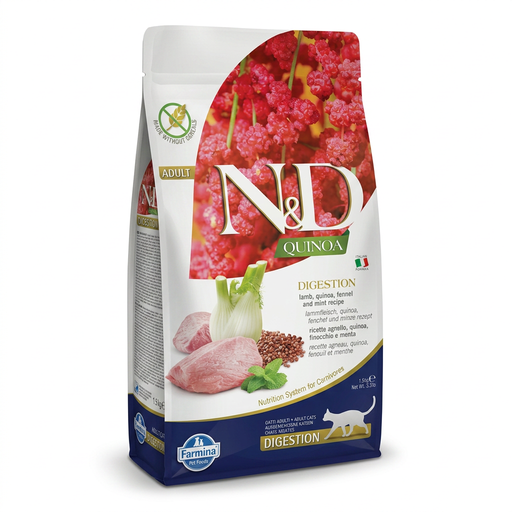
Why it suits this profile: The small pack is ideal if you want to try a specific formula before buying a larger quantity.
The product information describes a complete grain-free food with lamb and quinoa, and an analysis of 36% crude protein and 20% fat.
Grain-free recipe according to the product description, 300 g contents and feeding advice based on body weight.
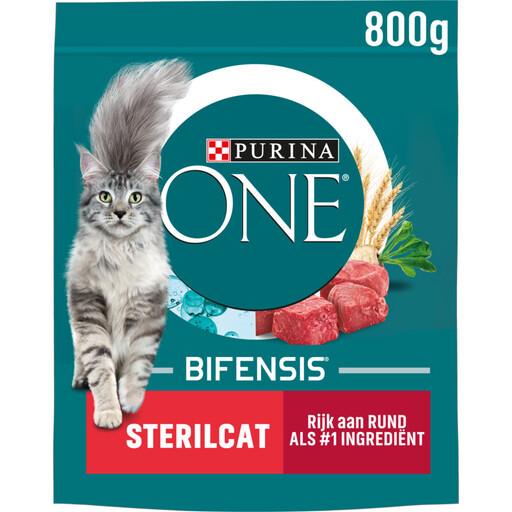
Why it suits this profile: Designed for adult sterilised or neutered cats, it is suitable as everyday dry food when you want to weigh portions accurately.
The packaging explicitly states the target group, feeding amounts by weight and the composition with beef and grains.
800 g pack, 37% crude protein according to the product information and a feeding chart for different body weights.
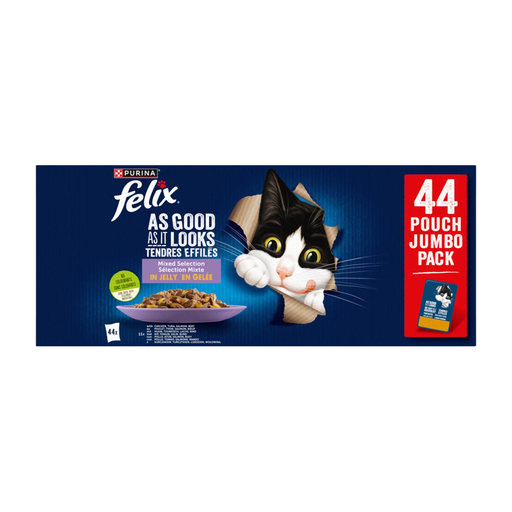
Why it suits this profile: With 44 pouches of 85 grams, this is a practical supply for households serving several meals every day.
The label states that this is complete food for adult cats, and includes portion advice and four named flavour varieties in jelly.
44 x 85 g, individual pouches and storage instructions for unopened and opened portions.
We have put together a complete, up-to-date list of products that fully meet these strict selection criteria and the applicable European safety regulations.
That depends on your cat’s preferences, the feeding guidelines and your daily routine. Wet food generally contains a lot of moisture and is supplied in portions. Dry food lasts longer after opening and is easy to weigh. You can also combine the two, as long as you adjust the total daily amount.
Always use the feeding guideline on the packaging as your starting point. The right amount varies according to weight, age, activity level and body condition. A guideline for a cat weighing around 4 kg is not automatically suitable for every cat. Ideally, weigh portions and adjust them if your cat’s body weight changes.
Cover leftovers and store them in the fridge according to the instructions on the packaging. Many products recommend using them within 24 to 48 hours. Do not leave an opened portion at room temperature for an extended period. Always make sure your cat has access to fresh drinking water.
