
Vandaag of morgen in huis

Kwaliteit gegarandeerd

Welkomstaanbiedingen ontgrendelen: GRATIS bezorging | Tot 80% korting | Gratis 30 dagen JoyPlus-proefperiode
Download de app
A bag of cat food labelled “natural”, “grain-free” or “with chicken” may seem self-explanatory, but the front of the pack doesn’t tell the whole story. The difference between complete cat food, complementary food and a treat is often printed in smaller text. Flavour claims can also give a stronger impression than the ingredients list justifies.
As a Joybuy Product Recommendation Officer, I look first at the facts you can check: the animal species, life stage, nutritional status, ingredients, analytical constituents and feeding instructions. That way, you can avoid paying for attractive packaging when the product isn’t right for your cat or their feeding routine.
A flavour name doesn’t always tell you how much of the named ingredient is in the product. For example, Felix Double the Tasty Salmon, Sea Fish & Beetroot states that the product contains 1.7% salmon and 1.7% sea fish. The ingredients list also includes cereals, meat and animal derivatives, vegetable protein extracts, and fish and fish derivatives.
So don’t just look at the name cat food with chicken or cat food with fish. Check the percentages in the ingredients list.
In grain-free cat food, cereals are replaced with other ingredients, such as peas, chickpeas, potatoes or quinoa. That doesn’t automatically make a recipe suitable for every cat. The full ingredients list, analytical constituents and suitability for your cat’s life stage matter more.
A grain-free recipe may appeal to owners who are specifically looking for one, but that’s no reason to overlook other nutritional information.
Cat soup, broth and liquid sticks often contain plenty of moisture, but they’re usually complementary pet food. For example, INABA Broth with Chicken and Tuna contains 93% moisture and is described in the product information as a hydrating treat. INABA Churu Multipack Chicken contains 91% moisture and is also a treat.
Use these products alongside a complete meal, not as a replacement for complete cat food.
For everyday meals, look for the words complete pet food. This means the product is labelled as suitable to feed as a complete diet for the stated life stage.
Also check whether the food is suitable for:
Food for adult cats isn’t automatically suitable for a kitten. When switching foods, follow the instructions on the packaging. Several Farmina products recommend making the change gradually over about seven days.
Dry cat food and cat biscuits are easy to store and weigh out. They generally contain much less moisture than wet cat food, so fresh drinking water should always be available.
Wet food or broth contains more moisture and can add variety to your cat’s bowl. G'woon Chicken & Turkey in Jelly comes in a 405-gram tin for adult cats. According to the product information, once opened it should be refrigerated and used within two days.
Be sure to distinguish between complete wet food and complementary soup. A high moisture content doesn’t, by itself, tell you whether a product is nutritionally complete.
Compare at least:
Felix Double the Tasty Salmon, Sea Fish & Beetroot lists 30% protein, 11% fat, 8% crude ash and 3% crude fibre. Farmina N&D Prime Neutered Cat Chicken lists 36% protein, 14% fat and 9% moisture. These figures can help you compare products more objectively, but the right choice also depends on your individual cat.
If you suspect your cat has a food sensitivity, compare ingredients carefully and ask your vet for advice. A brand’s marketing claims aren’t a personalised nutritional assessment.
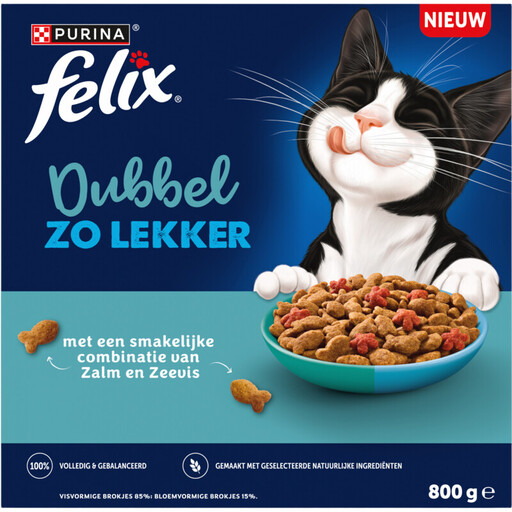
Why it suits this profile: An 800-gram pack and a recipe for adult cats make this a straightforward option for everyday dry meals.
The product information clearly states the fish percentages, that it’s complete food and its analytical constituents. So you don’t have to guess what the flavour name means.
Complete food for adult cats; 30% crude protein, with added taurine, vitamins and minerals.
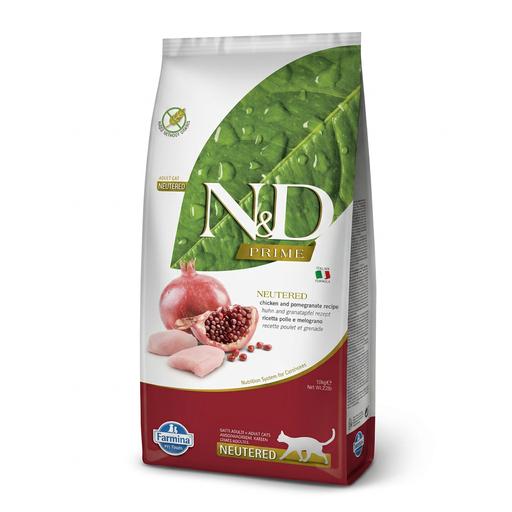
Why it suits this profile: A good fit for owners looking for a large pack and a recipe for sterilised or neutered adult cats.
The life stage and intended cats are clearly stated. The ingredients include chicken, dehydrated chicken, chicken fat, herring, eggs, peas and chickpeas.
10 kg pack; 36% crude protein, 14% fat and 9% moisture according to the product information.
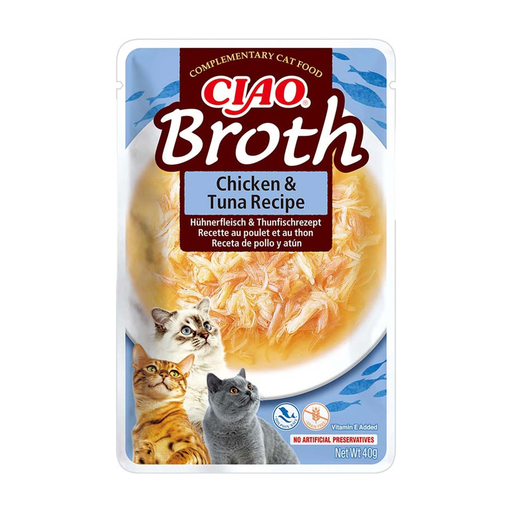
Why it suits this profile: A handy complementary treat for cats who don’t drink much, or for adding variety to their routine.
The product information identifies it as complementary pet food and says it should be given as a treat. So it isn’t a replacement for a complete meal.
93% moisture; made with chicken broth, chicken and tuna; 40-gram portion.
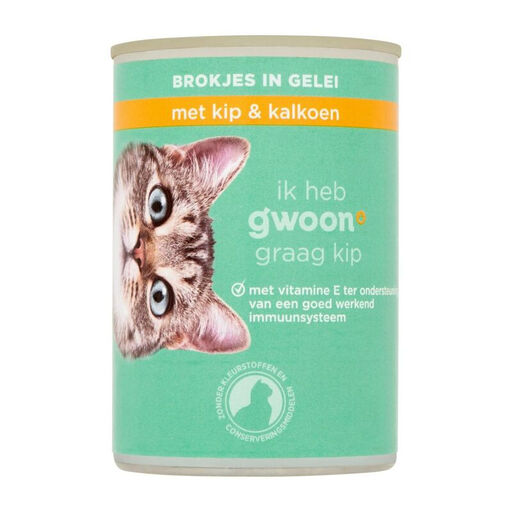
Why it suits this profile: A 405-gram tin is a practical choice for households looking to alternate wet and dry food for adult cats.
The product information says it’s complete food for adult cats. Before buying, check the current packaging, as not all analytical values are listed online.
Wet food in jelly; chicken and turkey in the ingredients; refrigerate after opening.
We’ve put together a complete, up-to-date list of products that meet these strict selection criteria and the applicable European safety requirements.
Keep dry food sealed in a cool, dry place. Once opened, wet food should be kept in the fridge. Storage times vary by product: G'woon recommends using it within two days, while some small broth portions should be used immediately after opening. Always follow the label.
That depends on your cat’s preferences, their feeding routine and the product’s ingredients. Dry food is easy to weigh out and store. Wet food generally contains more moisture. With either type, check whether it’s complete or complementary food, and adjust the portion to match the feeding guidelines.
Give treats according to the product instructions and take the total daily amount into account. For example, the INABA Churu sticks recommend a maximum of three to four sticks a day for adult cats, with treats making up no more than around 10% of their daily food intake. Fresh water should always be available.
