
Vandaag of morgen in huis

Kwaliteit gegarandeerd

Welkomstaanbiedingen ontgrendelen: GRATIS bezorging | Tot 80% korting | Gratis 30 dagen JoyPlus-proefperiode
Download de app
A bag of cat food with a striking claim, a multipack with lots of flavours or an appealingly low price per kilo can seem like an obvious choice. But choosing the wrong option can lead to waste, oversized portions or food that isn’t right for your cat’s life stage.
When choosing cat food, start by checking whether it’s complete, its ingredients and what it’s intended for. Only then should you consider flavour, brand and packaging.
Not every product containing meat, fish or broth is suitable as your cat’s everyday main food. Wet cat food can be a complete food, but cat broth and many cat treats are often complementary foods. The label will say whether a product is intended as “complete pet food” or “complementary pet food”.
Give complementary products alongside your cat’s usual meal. For example, INABA Broth Chicken with Tuna Recipe contains 93% water and, according to the product information, is intended as a treat or hydration supplement. It isn’t a replacement for a complete meal.
Grain-free cat food contains no grains, but that doesn’t automatically make it suitable for every cat. Check the protein source, fat content, analytical constituents and nutritional status too. A cat with a sensitive digestive system may react to several ingredients.
Claims about how a product works should also be treated with caution. If a brand says an ingredient has a particular effect, that’s the brand’s own claim. Always check the current packaging, and speak to a vet if symptoms persist.
A cat food multipack is practical, but it’s only good value if your cat eats all the flavours. Also check the number of grams in each pouch and the recommended daily amount. For example, a Felix multipack contains 44 pouches of 85 grams each. That’s handy for portion control, but the right daily amount depends on your cat’s weight, age, activity level and the rest of their diet.
Choose cat food that’s right for your cat’s life stage:
Don’t simply feed a kitten adult cat biscuits as their main food. Nutritional needs vary depending on age and product.
Wet food generally contains considerably more moisture than dry cat food. This can be useful for cats that don’t drink much, but it also means you’ll feed more grams per day. Dry food keeps for longer after opening and is easy to weigh out, but fresh drinking water should always be available.
Cat broth and liquid treats can be another way to offer extra moisture. Use them according to the label and include treats in your cat’s daily diet.
Don’t just look for words such as “rich in fish” or “high in protein”. Check:
For example, Farmina N&D Ocean Cat Herring with Orange 5 kg lists 44% crude protein, 20% fat and 8% moisture. The composition includes herring, dehydrated herring and hydrolysed fish, among other ingredients. These are verifiable details from the product information, not a general guarantee that every cat will tolerate this food well.
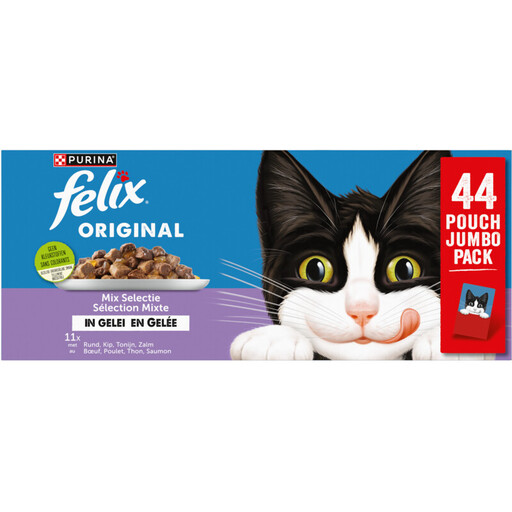
Why it suits this profile: This multipack contains 44 portion-sized pouches of 85 grams, with a range of flavours. It’s a straightforward way to introduce your cat to wet food without buying several large packs straight away.
The packaging states that this is a complete food for adult cats. Do check the portion guide, and store opened pouches according to the label.
44 individual portions; a variety of flavours, including beef, chicken, tuna and salmon.
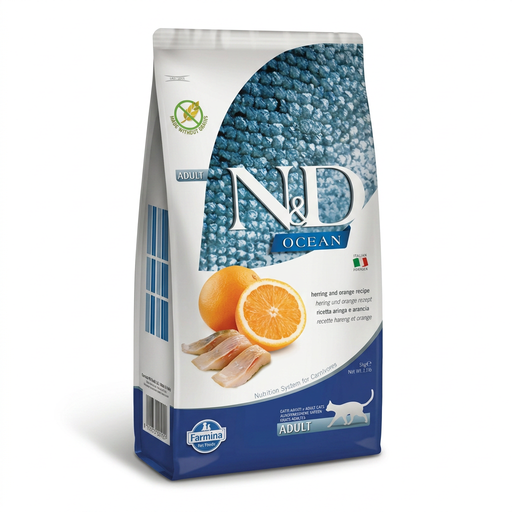
Why it suits this profile: This grain-free cat food is aimed at adult cats and features herring and other fish ingredients prominently.
The product information gives percentages for protein, fat, moisture and omega-3. This lets you make your choice based on figures rather than relying on the “ocean formula” claim alone.
5 kg pack; 44% crude protein; herring and fish oil in the composition.
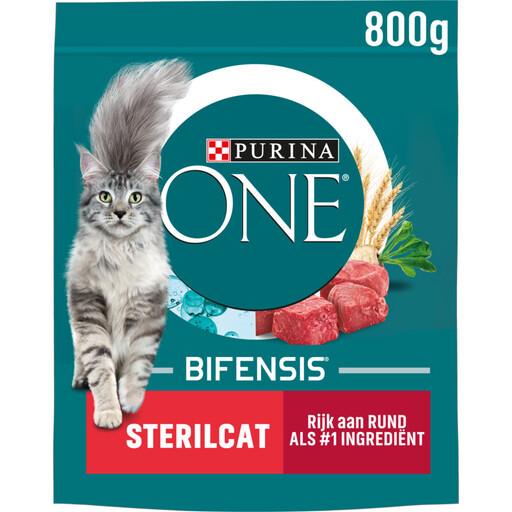
Why it suits this profile: According to the product information, this variety is intended for neutered adult cats and includes specific feeding guidelines for different weight ranges.
The bag gives feeding guidelines for cats weighing 2 to 7 kg and over. This helps you serve measured portions instead of topping up the bowl without limit.
800 g pack; 37% crude protein; a variety for neutered adult cats.
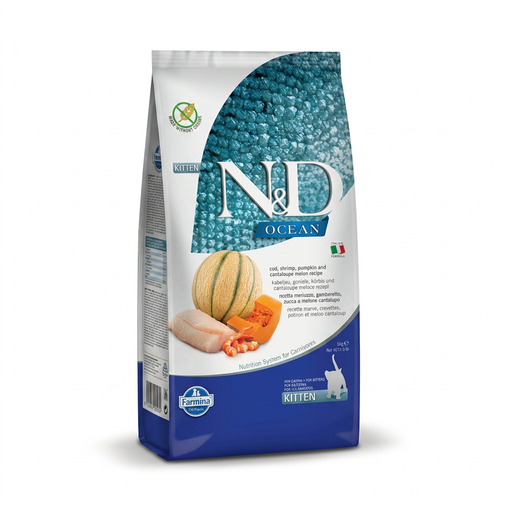
Why it suits this profile: The product information states that this is a complete food for kittens, with cod as a key ingredient and a gradual transition recommended.
The life stage is clearly marked as kitten. This helps you avoid choosing an adult formula based only on its flavour or packaging.
5 kg pack; 36% crude protein; DHA and EPA listed in the product specifications.
We’ve put together a complete, up-to-date list of products that meet these strict selection criteria and the applicable European safety regulations.
It depends on your cat, the product you choose and your daily routine. Wet food contains more moisture and is often served in portions. Dry food is easy to store and weigh out. With either type, check that it’s a complete food and adjust the amount to your cat’s energy needs.
Keep opened dry food sealed, somewhere cool and dry. Opened wet food should usually be covered and stored in the fridge, then used within the time stated on the product packaging. For Felix, for example, the guidance for opened contents is 24 hours; always check the label on your particular variety.
No. Cat treats and INABA cat snacks are extras, not essential main foods. Give them in moderation and take them into account when working out your cat’s total daily intake. According to the product information, INABA Churu Multipack Chicken & Beef contains 20 tubes and can be fed by hand or used as a topper. That makes it handy as a reward, but it isn’t a replacement for a complete meal.
