
Vandaag of morgen in huis

Kwaliteit gegarandeerd

Welkomstaanbiedingen ontgrendelen: GRATIS bezorging | Tot 80% korting | Gratis 30 dagen JoyPlus-proefperiode
Download de app
Buying a bag of cat food seems simple, until you have to choose between dry food, wet food, kitten food, senior cat food and varieties for sterilised or sensitive cats. Packaging is often covered in promises about taste, vitality and healthy digestion. Yet a prominent claim does not always tell you whether the product is suitable for your cat.
Start by checking the product category, life stage and nutritional information. This helps you avoid paying too much for a product that does not suit your cat’s age, activity level or eating habits.
Cat food with salmon, cat food with chicken, or a mix of beef, chicken and fish may sound appealing. However, check whether the packaging states that it is complete food. Some products are complementary, such as soups and cat snacks. These are intended as treats and do not automatically replace a daily meal.
Felix Soup is one example. According to the product information, it is complementary food for adult cats. It can add variety, but should be given alongside a complete meal.
Kitten food is formulated for young cats, while cat food for adult cats is intended for animals from around 1 year old. Senior cat food, such as food for cats aged 7 and over, has a different purpose again. So do not simply give every cat in your household the same product.
Also look out for terms such as sterilised cat, sensitive cat or indoor cat. These labels indicate the situation the recipe has been formulated for, but they are not a substitute for personalised advice from a vet if your cat has health problems.
Brands may make specific functional claims. For example, Purina One states that certain products support the gut microbiome. The turkey and rice variety also mentions a reduction in unpleasant odours from faeces. This latter claim is based on Purina’s own research and should therefore not be regarded as a guaranteed result for every cat.
Alongside such claims, look for verifiable information: whether the product is complete or complementary food, the recommended age, ingredients, analytical constituents, portion size and storage advice.
This is the first thing to check. Complete food is intended, according to the label, to be given as a daily diet within the recommended quantities. Complementary food is an additional product.
Examples:
First choose according to life stage:
A sensitive digestive system or a sudden change in eating habits requires consultation with a vet. Do not use commercial nutritional claims as a diagnosis.
A multipack may seem like good value, but check that your cat actually eats the flavour and texture. A large cat food multipack can lead to waste if several pouches remain unused.
Pay attention to:
Wet food is usually served at room temperature. Leftovers should be refrigerated according to the product label and used within the stated period. Always provide fresh drinking water.
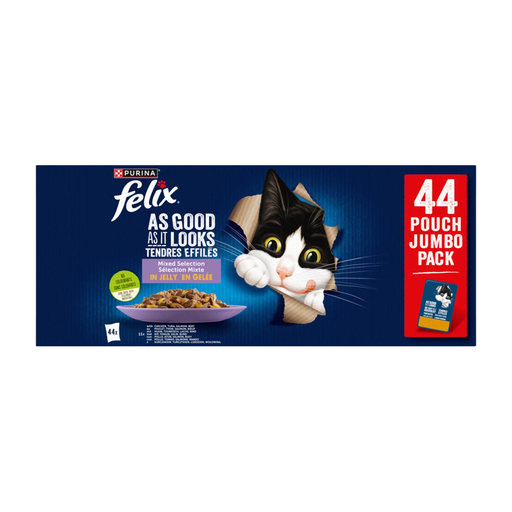
Why it suits this profile: The multipack contains 44 portions of 85 grams in a range of flavours, including salmon, beef, chicken and tuna. This is practical for households that want to try different varieties without buying lots of individual packs.
The product information states that this is complete food for adult cats. However, check the portion instructions and the shelf life after opening.
44 individual pouches, several flavours and a clear indication that it is for adult cats.
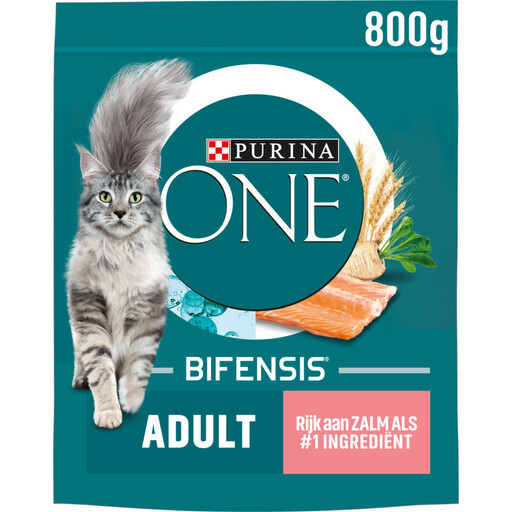
Why it suits this profile: This dry food is labelled as complete food for adult cats from 1 year old. According to the product description, salmon is listed as the first ingredient.
The life stage and product type are clearly stated. Claims about the gut microbiome and tartar come from the product information and are not a guarantee.
800 grams of dry food, salmon listed as the first ingredient according to the product description, and suitable for adult cats.
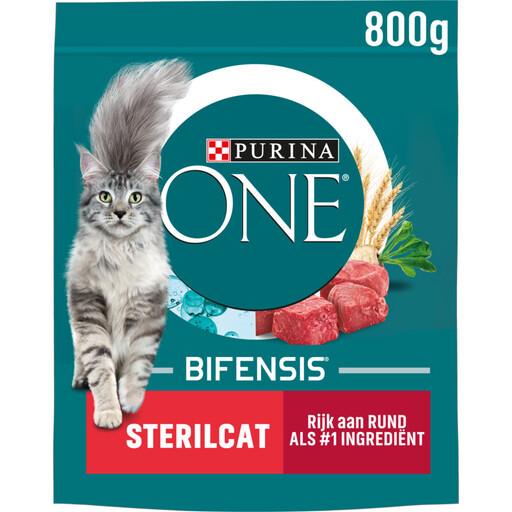
Why it suits this profile: This variety is specifically labelled for sterilised or neutered adult cats. The product information states that it contains 37% protein and 13% fat, and provides feeding advice based on body weight.
Portions are linked to weight categories. This helps you avoid feeding by guesswork, but the quantity should be adjusted according to activity level and body condition.
A targeted formulation for sterilised cats, an 800-gram pack and stated analytical values.
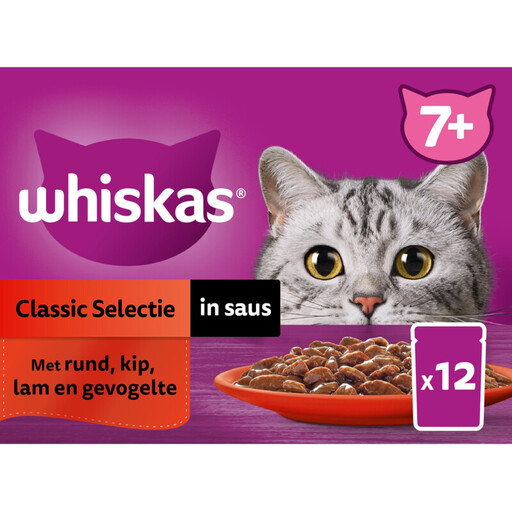
Why it suits this profile: The packaging is intended for senior cats aged 7 and over and contains 12 portion pouches of 85 grams in gravy.
The age indication is clearly stated. Feeding quantities are provided for different weights and should be adjusted gradually when changing over.
Complete wet food for senior cats according to the product information, with convenient portion pouches and a gravy texture.
We have put together a complete, up-to-date list of products that fully meet these strict selection criteria and the applicable European safety regulations.
That depends on your cat’s preferences, nutritional needs and the label. Wet food generally contains a lot of moisture and is offered in portions. Dry food is easy to measure and store. Both can be complete food. Check the nutritional information and always provide fresh drinking water.
Follow the feeding guidelines on the packaging and, preferably, divide the daily quantity between several meals. The right amount depends on age, weight, activity level and body condition. Snacks and complementary products must be included when determining the total daily quantity.
Gradually mix the old and new food over several days. Start with a small amount of the new product and increase it step by step. Monitor your cat’s appetite and stools. If problems persist, your cat refuses food or you are unsure which food is right, contact a vet.
