
Vandaag of morgen in huis

Kwaliteit gegarandeerd

Welkomstaanbiedingen ontgrendelen: GRATIS bezorging | Tot 80% korting | Gratis 30 dagen JoyPlus-proefperiode
Download de app
Buying cat food seems simple until you have to choose between wet food, dry food, kitten food, treats and dozens of brands. Packaging often highlights flavour, vitamins or a standout ingredient. That doesn’t always tell you whether the food is right for your cat.
The most important question isn’t which product makes the biggest promises, but whether the food suits your cat’s life stage, daily needs, portion size and nutritional requirements. Use the checks below to compare cat food based on information you can find on the label or in the product description.
Not every pouch of wet food, cat broth or cat treat is intended as a complete meal. The packaging usually states whether it is complete food or complementary food.
A product labelled “complementary pet food” is intended as a treat, reward or addition to your cat’s diet. Felix Soup and INABA Broth are examples of products described as complementary food in their product information. They can add variety, but they don’t replace complete daily food.
“Chicken cat food” or “fish cat food” sounds clear enough, but check how much of the named ingredient is actually in the product. Some varieties, for example, list a minimum of 4% of the named animal. The rest of the ingredients may include other animal by-products, fish ingredients, cereals, vegetable protein extracts or minerals.
A flavour name doesn’t give you the full picture of what’s in the food. Check the ingredients list and analytical constituents, such as protein, fat, fibre, ash and moisture.
Kitten food is formulated for growth, while food for adult cats is intended for a different life stage. Food for sterilised cats often also comes with specific feeding instructions and portion guidance.
A multipack may seem like good value, but a box of 44 pouches of 85 grams is only practical if your cat likes the flavours and you can keep track of how long the food lasts once opened. Portions that are too large can also lead to waste or overfeeding.
Look for a clear label such as complete pet food for adult cats, complete food for kittens or similar wording. Complete food is intended as a daily meal for the stated life stage.
Treats, cat broth and lickable treats serve a different purpose. According to its product information, INABA Churu Cat Tuna contains 91% moisture and is intended as a complementary snack. Felix Soup is also described as complementary food in its product specification, with a guideline of one pouch per 4 kilograms of body weight per day alongside complete food.
Check whether the food is suitable for:
If your cat has persistent symptoms, refuses food or has a medical condition, it’s better to speak to a vet than to keep changing their food yourself.
Wet food generally contains a lot of moisture. Felix Original Mix, for example, lists 82% moisture, while Gourmet Mon Petit lists 81.5%. Dry food contains less moisture and is more concentrated per gram, so don’t feed the same quantity of dry food as wet food.
Follow these instructions:
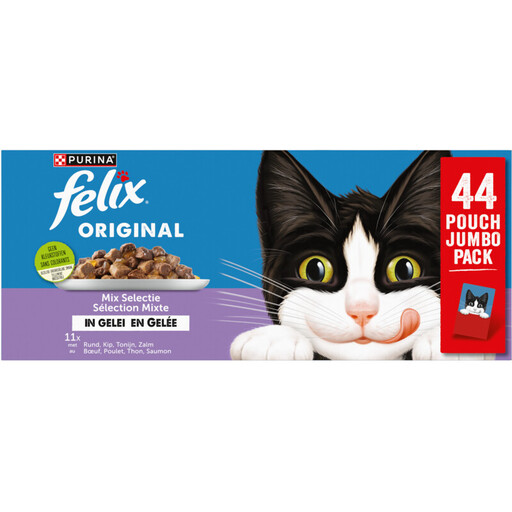
Why it suits this profile: The multipack contains 44 portion pouches of 85 grams, with varieties such as beef, chicken, tuna and salmon. It’s an easy way to try different flavours.
The product information states that this is complete food for adult cats. Be sure to check the current ingredients and feeding guide on the packaging.
44 individual pouches, 85 grams per portion and a mix of four named flavours.
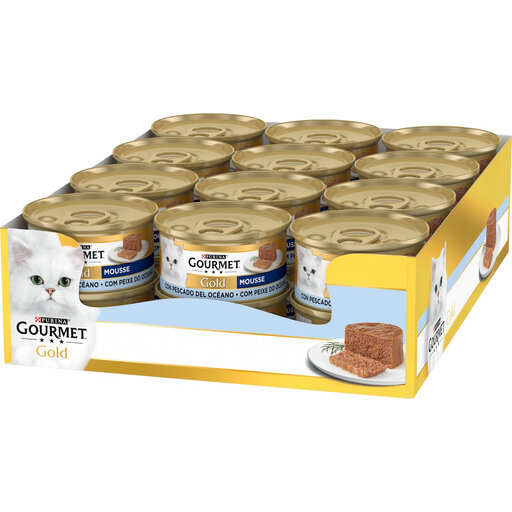
Why it suits this profile: The 85-gram portions are easy to manage, and the product description states that this is complete food for adult cats.
The pack size and feeding quantities are clearly set out: for a cat weighing around 4 kilograms, the guidance is 2 to 3 cans per day.
24 portions of 85 grams and a mousse texture, according to the product description.
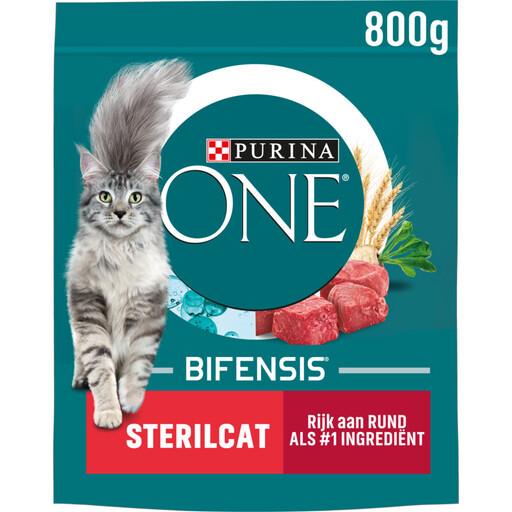
Why it suits this profile: According to the product information, this dry cat food is intended for adult sterilised or neutered cats and comes in an 800-gram bag.
The life stage and intended audience are clearly stated. The product information mentions an adjusted protein-to-fat ratio and balanced minerals; these are brand claims, not a guarantee that the food will suit every cat.
Complete dry food for the stated audience, with a feeding guide based on body weight.
We’ve put together a complete, up-to-date list of products that meet these strict selection criteria and current European safety requirements.
Wet food generally contains more moisture and often comes in small portions. Dry food is more concentrated, keeps for longer once opened and is easy to weigh out. The right choice depends on what your cat will eat, whether the product is complete food and the daily feeding guide. You can combine complete wet and dry food, as long as you adjust the total amount.
It depends on your cat’s body weight, age, activity level and the type of food. For example, a product description might recommend three to four pouches of wet food for a 4-kilogram cat, while dry food quantities are given in grams. Always use the packaging guidance as a starting point, then adjust the portion to help your cat maintain a healthy weight.
Usually not. Check whether the product is labelled “complete food” or “complementary food”. Cat broth, soup and treats are generally intended as additions. Give them within the recommended amount and, if needed, reduce your cat’s main meal to avoid unnecessary extra calories.
