
Vandaag of morgen in huis

Kwaliteit gegarandeerd

Welkomstaanbiedingen ontgrendelen: GRATIS bezorging | Tot 80% korting | Gratis 30 dagen JoyPlus-proefperiode
Download de app
A bag of chicken cat biscuits, a multipack of wet cat food or a hydrating cat treat: there is plenty of choice. However, attractive packaging does not always tell you whether a product is right for your cat. Three pitfalls in particular can lead owners to pay too much or choose a product that does not fit their cat’s everyday diet.
The first pitfall is confusing complete cat food with complementary food. A liquid treat or broth may contain plenty of moisture, but it does not replace a complete meal. The second is relying on words such as “with chicken” or “natural” without checking the ingredients and analytical constituents. The third is choosing the wrong food for your cat’s life stage: kitten food, adult cat food and food for neutered cats do not automatically have the same nutritional values.
The label should state whether the product is complete pet food or complementary pet food. Complete cat food is intended as a daily staple when you follow the recommended quantity. Complementary products, such as cat treats, broth and soft snacks, are intended as extras.
A product containing 90 to 93% moisture can be useful as a supplement to your cat’s fluid intake, but it usually does not provide the nutritional value of a complete meal. The INABA broths in this selection, for example, are described as complementary pet food. Always provide fresh drinking water as well.
Kitten food is formulated to support kittens during their growth phase. One example is Purina One Junior, which according to the product information is intended for kittens from weaning up to twelve months. When feeding kitten food, follow the table on the packaging and adjust the portion as your cat grows.
After spaying or neutering, your cat’s energy requirements may change. According to the stated analysis, Farmina N&D Prime for neutered cats contains 38% crude protein, 16% crude fat and 9% moisture. The manufacturer recommends adjusting the portion to your cat’s body weight and activity level, and gradually mixing it with the previous food over five to seven days when switching.
Do not focus only on words such as “light” or “for neutered cats”. Compare the nutritional values of each product and include treats in your cat’s daily allowance.
Wet cat food generally contains more moisture than dry cat food. This can be practical for cats that do not drink much from a bowl, but it is not a reason to automatically consider a product complete food.
Pay attention to these points:
“Grain-free cat food” may suit a specific preference, but grain-free does not automatically mean complete, more nutritious or suitable for every cat. Always check the full composition.
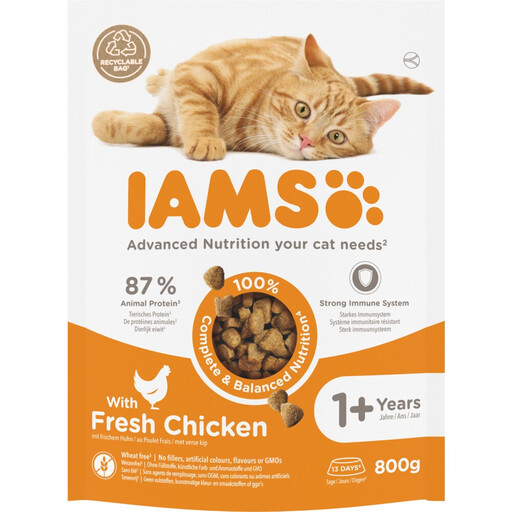
Why it suits this profile: An easy-to-manage 800-gram bag of complete cat food for adult cats is practical if you are looking for a reliable everyday staple.
The product information states that this is 100% complete and balanced food for adult cats. Check the current packaging for the exact feeding guide.
Made with fresh chicken according to the product description; according to the manufacturer, it contains 87% animal proteins and omega 3 and 6.
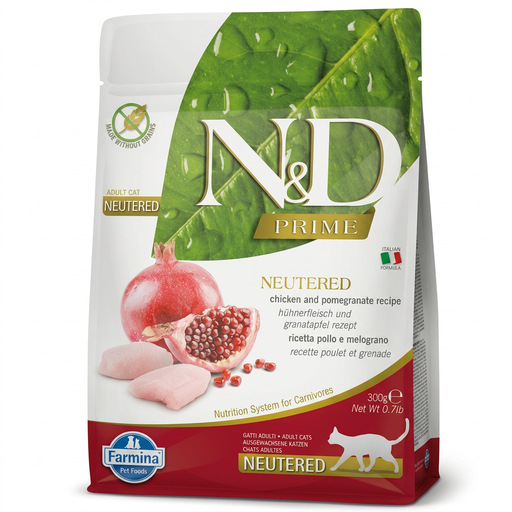
Why it suits this profile: Designed for cat owners who want to compare nutritional values and are looking for a recipe for neutered cats.
The packaging clearly states that this is complete food for neutered cats. The feeding guidelines also warn against overfeeding.
Grain-free composition; 300 grams; with chicken, dried chicken, herring and added taurine according to the product details.
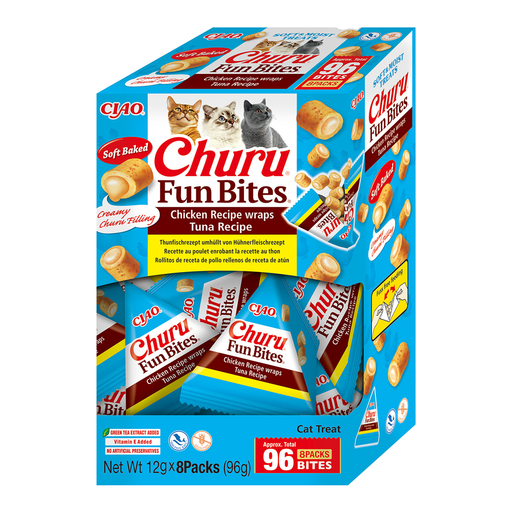
Why it suits this profile: Handy for cats that need extra moisture through a treat or that find a soft reward more appealing than dry cat treats.
The product name and feeding instructions indicate that this is complementary food. It is therefore clear that it is not intended as a complete main meal.
93% moisture; four listed flavours: chicken, tuna, scallop and salmon; net contents 146 grams.
We have put together a complete, up-to-date list of products that fully meet these strict selection criteria and the applicable European safety regulations.
Dry cat food contains little moisture and is easy to weigh out and store. Wet food generally contains more moisture and is often supplied in portions. With both types, check whether the product is complete food. You can combine dry and wet food, but adjust the quantities to prevent overfeeding.
This depends on the product, your cat’s weight and its total energy intake. Follow the feeding guidelines on the packaging and ideally give treats as a small part of your cat’s daily diet. Liquid treats often specify a maximum of one to a few portions per day. A treat should not replace your cat’s main food.
Choose food that clearly states it is intended for kittens or the growth phase. According to the product information, Purina One Junior is suitable from weaning up to twelve months. An adult recipe is not automatically suitable for a kitten. If you have concerns about growth, weight or a sensitive stomach, it is advisable to consult a vet.
