
Vandaag of morgen in huis

Kwaliteit gegarandeerd

Welkomstaanbiedingen ontgrendelen: GRATIS bezorging | Tot 80% korting | Gratis 30 dagen JoyPlus-proefperiode
Download de app
Choosing the right cat food from the wide range available might seem straightforward – until you start comparing labels and packaging side by side. One cat loves wet food, another prefers biscuits. Age, activity level, whether they’ve been neutered, and a preference for chicken or fish all come into play.
As a Joybuy Product Recommendation Officer, I focus on verifiable information: the type of pet food, the life stage, ingredients, analytical constituents, portion size and packaging. That way, you’re not just relying on words like “natural”, “delicate” or “grain-free”.
“With chicken”, “with salmon” or “with beef” doesn’t automatically mean that ingredient makes up the largest part of the product. The label often shows a percentage in brackets. For example, several wet foods in the range list just 4% chicken, beef, rabbit or salmon.
So always check the full ingredients list. A fish-flavoured variety may also contain meat and animal derivatives, vegetable protein extracts and minerals.
Not every product with appealing-sounding ingredients is complete cat food. INABA Fun Bites and INABA Churu, for instance, are complementary pet foods. They’re intended as a treat, reward or topper, and don’t replace daily nutrition.
Check the packaging for “complete pet food” or “complementary pet food”. Also, factor treats into the daily amount so your cat doesn’t consistently overeat.
A cat food multipack can be handy for households with a cat that happily accepts one flavour. But with a fussy cat, a box of 60 pouches or a 2 kg bag of biscuits could prove impractical if their preferences change.
Look out for:
For daily meals, you should generally choose a product labelled as complete pet food for adult cats. Gourmet Perle Mini Fillets, Gourmet Gold Mousse, Felix wet food, Sheba Mini Fillets and several g’woon products are listed as complete food in the product information.
A complementary treat, such as an INABA Churu stick or Fun Bites, is used alongside the main food. The Churu Multipack Chicken contains 20 sticks of 14 g each and 91% moisture, according to the product information. That makes it suitable as a treat, but the manufacturer clearly states it is not a replacement for complete food.
Choose cat food for the correct life stage. The wet foods mentioned are mainly intended for adult cats. For a neutered cat, a product like Farmina N&D Prime Neutered Cat Chicken fits the product category for neutered cats. The stated analysis shows 38% crude protein, 16% crude fat and 9% moisture.
These are product specifications, not a guarantee of a particular result. You should adjust the daily portion to your cat’s weight, activity level and body condition. If you’re unsure about diet or weight, it’s wise to consult a vet.
Wet cat food typically contains a lot of moisture. Gourmet Perle Mini Fillets, for example, lists 80% moisture, 12.5% protein and 2.5% fat. Gourmet Gold Mousse lists 77.5% moisture, 10.5% protein and 7% fat.
Dry food contains much less moisture and is easier to measure and store. Farmina N&D Prime Cat Lamb lists 10% moisture, 36% crude protein and 20% crude fat. The recommended amount is therefore given in grams per day, not in pouches.
Use the feeding guide on the packaging as a starting point. An average adult cat weighing 4 kg might, for example, need 3 to 4 pouches of 85 g per day with some wet foods, divided over at least two meals. The recommended amount varies by product and by cat.
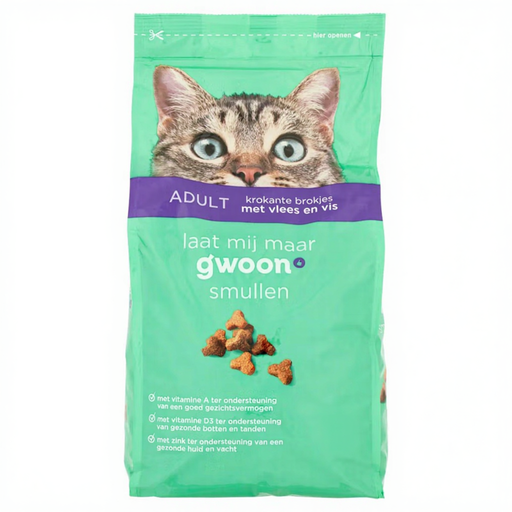
Why this fits: A practical bag of dry food for anyone who wants to portion daily and appreciates having a 2 kg supply on hand.
The packaging clearly states it is dry food for adult cats. Do check the full nutritional analysis on the bag before buying.
2 kg pack; meat and fish variety; suitable for serving dry and measured.
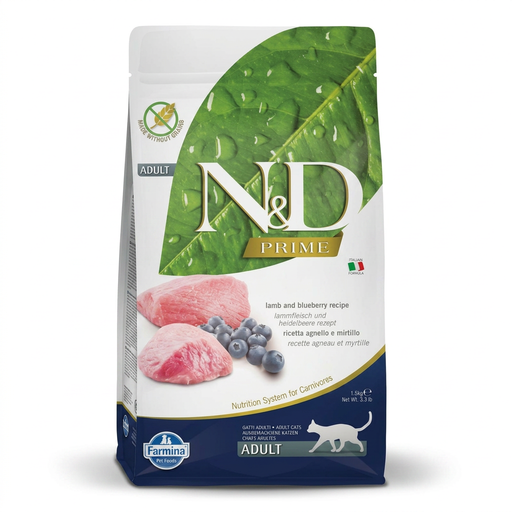
Why this fits: For owners who deliberately seek out grain-free cat food with lamb as the named animal protein source.
The product description explicitly mentions a grain-free recipe. For a sensitive cat, always check the current label.
1.5 kg bag; 36% crude protein; lamb, herring and egg in the stated ingredients list.
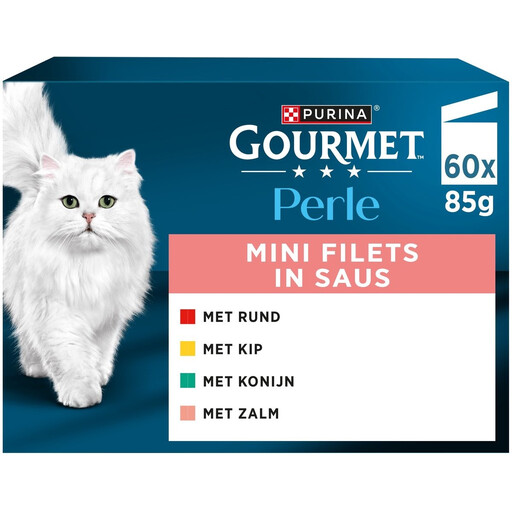
Why this fits: A large cat food multipack with chicken, rabbit, beef and salmon in mini fillets with sauce.
It is labelled as complete food for adult cats. The 85 g portions help reduce waste after opening.
60 individual portions; 80% moisture according to the product information; multiple flavour varieties.
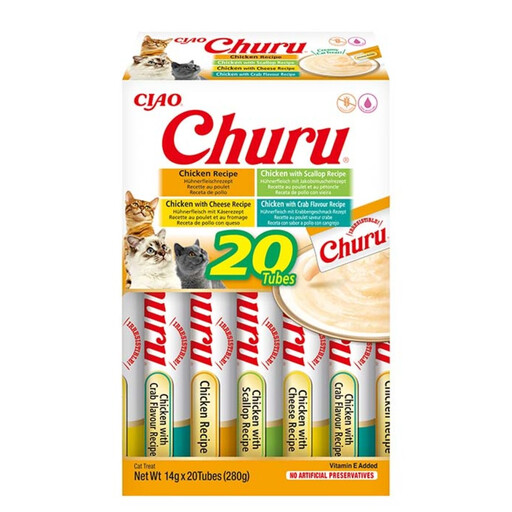
Why this fits: For a small reward or topper alongside their usual wet or dry food.
The product information clearly states “complementary pet food”. This makes its role as a treat clear.
20 sticks of 14 g; 91% moisture; according to the product information, a maximum of 3 to 4 sticks per day for adult cats.
Browse a current selection of products and compare flavour, packaging, food type and suitability for your cat.
That depends on your cat’s preference, their nutritional needs and your practical situation at home. Wet food generally contains more moisture and is sold in individual portions. Dry food keeps longer after opening and is easy to weigh out. With both types, check whether it is complete food.
The amount varies by product, weight, activity level and body condition. Follow the feeding guide on the packaging as a starting point. For wet food, a guideline for a 4 kg cat might be 3 to 4 pouches per day, while dry food is often measured in tens of grams.
Use cat treats as a supplement and take into account the energy from the main meals. For INABA Churu, the product information states a maximum of 3 to 4 sticks per day for adult cats. The exact amount is always on the label and should fit within the overall feeding plan.
