
Vandaag of morgen in huis

Kwaliteit gegarandeerd

Welkomstaanbiedingen ontgrendelen: GRATIS bezorging | Tot 80% korting | Gratis 30 dagen JoyPlus-proefperiode
Download de app
Cat food packaging is often covered in appealing terms like “with chicken”, “natural”, “for vitality” or “supports the urinary tract”. That sounds clear enough, but it doesn’t always tell you whether it’s suitable for your cat. The right choice mainly depends on their life stage, daily activity, the ingredients, and any specific dietary needs.
“With chicken” or “with fish” doesn’t automatically mean that ingredient makes up the bulk of the food. Always check the ingredients list and see which ingredient comes first. For example, Felix Double the Tasty Beef and Chicken states that the product is flavoured with beef and chicken; the declared amount of both ingredients is limited.
The same goes for cat food with fish, such as salmon or cod – it’s wise to look at the full ingredients list. The name and picture on the bag are no substitute for the ingredients list.
Brands are allowed to highlight benefits on the packaging, but the evidence behind each claim varies. According to Purina’s own research, Purina One Sensitive claims that litter box odour can reduce by 24% in 14 days. That’s a brand claim, not a general guarantee for every cat.
So treat claims as product information, not as a fixed result. If your cat has ongoing health issues, urinary problems, weight loss, or a change in appetite, it’s important to get advice from a vet. A product labelled as urinary cat food is not automatically a treatment.
A 3.8 kg or 10 kg bag might look like good value, but dry cat food gradually loses its aroma and freshness once opened. Only buy a large bag if your cat already accepts the food and you can store it in an airtight, cool, dry place. For a first try, an 800 g bag of cat food is often more practical.
First, choose by age:
Always check the age recommendation on the packaging. Feeding an adult cat kitten food on a regular basis can provide too much energy, while a kitten has different nutritional needs to an adult.
Look for the label complete pet food. This means the product is intended as a daily food within the stated usage instructions. Also check the recommended amount per body weight.
The feeding guide is a starting point, not a fixed rule. Adjust the portion based on:
It’s best to weigh dry food. A free-feeding bowl makes it harder to monitor daily intake. Always provide fresh drinking water, especially if you’re feeding mainly dry cat food.
Compare the ingredients list with the analytical constituents, such as protein, fat, fibre and ash. A high protein percentage alone isn’t a reason to choose a product; the overall composition and suitability for the life stage also matter.
For neutered cats, cat food for neutered cats can be worth considering when the energy intake and minerals have been adjusted. Purina One Sterilcat, for example, states an adapted protein-to-fat ratio and balanced minerals. These are verifiable product features, but the effect on your cat may vary.
For a sensitive digestive system, Purina One Sensitive with turkey and rice could be an option. The product description lists turkey as the first ingredient and no added wheat. If you suspect an allergy, always check the full label.
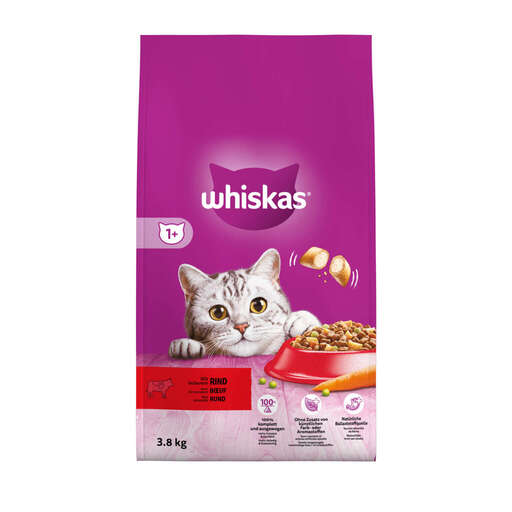
Why this fits the profile: The large bag is handy for households with an adult cat that is already used to this type of dry food.
The product information includes a daily feeding guide per body weight, so you can portion it more accurately than if you were free-feeding.
3.8 kg bag, beef variety, and a resealable bag according to the product description.
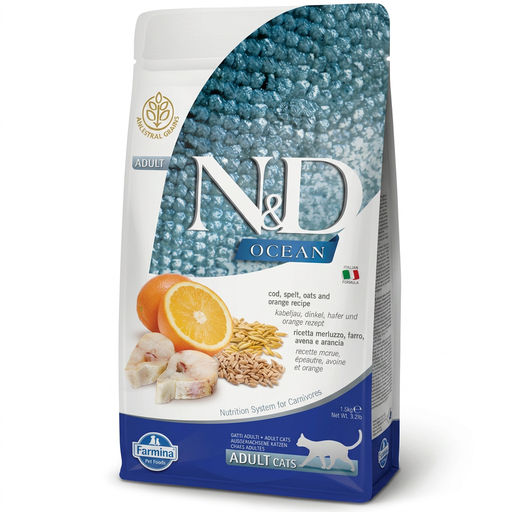
Why this fits the profile: Ideal for those who deliberately look for a detailed recipe with fish as the main ingredient.
The ingredients list fresh cod at 27% and dehydrated cod at 26%, so the fish content is clearly specified.
1.5 kg bag; recipe with cod, fish oil, spelt and oats.
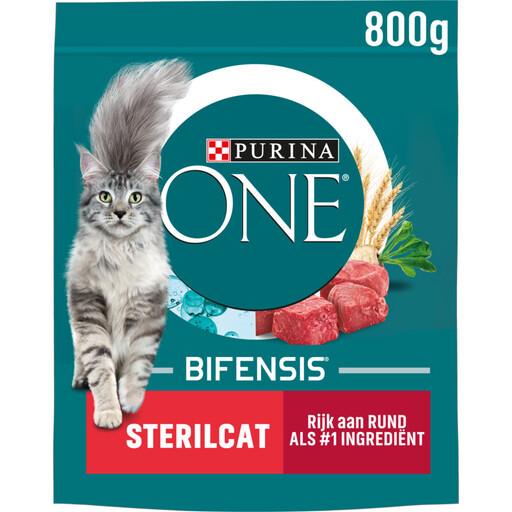
Why this fits the profile: Designed for adult neutered or spayed cats where portion control is especially important.
The packaging includes a separate feeding guide for neutered cats and advises adjusting the portion according to body condition.
800 g bag; beef variety; stated protein of 37% and fat content of 13%.

Why this fits the profile: The age recommendation makes this a straightforward option for kittens from weaning up to 12 months.
This is clearly labelled as kitten food. The portion should increase with age and weight; the packaging provides the guidelines for this.
800 g bag; chicken as a listed ingredient; DHA according to the product description.
We’ve put together a full, up-to-date list of products that fully meet these strict selection criteria and comply with current European safety regulations.
Follow the guideline on the packaging and ideally split the daily amount into two or more meals. Kittens often need several smaller meals. Keep an eye on their weight and body condition, and adjust the portion as needed.
If the product is labelled as complete pet food for the correct life stage, it can be given as daily food according to the usage instructions. Always make sure there’s plenty of fresh water available when feeding dry food. Wet food can also help add more moisture to their diet, but the total combination should fit within the daily amount.
Urinary cat food is designed for adult cats with nutritional needs relating to the urinary tract, according to the product description. It is not a substitute for a diagnosis or treatment. If your cat is straining, passing small amounts of urine frequently, has blood in their urine, or shows any other unusual behaviour, contact your vet straight away.
