
Vandaag of morgen in huis

Kwaliteit gegarandeerd

Welkomstaanbiedingen ontgrendelen: GRATIS bezorging | Tot 80% korting | Gratis 30 dagen JoyPlus-proefperiode
Download de app
Buying cat food might seem straightforward – until you have to choose between mousse, kibble, gravy, multipacks and recipes for different life stages. A striking packet doesn't always tell you enough about whether it's right for your cat. So start by looking at the product category, the ingredients and the practical portion size.
In British households, these three pitfalls are particularly common:
The choice between wet cat food and dry cat food depends on your cat's preference, your daily routine and the instructions on the packaging.
Wet cat food includes mousse, pâté, pieces in gravy, jelly and mini fillets. The high moisture content and small portions can be practical for cats that prefer soft food. Once opened, the packaging usually needs to be kept in the fridge and used within the stated time.
Dry cat food is easy to measure out and stays fresh longer after opening, provided you seal the bag properly and store it in a cool, dry place. For indoor cats, there are varieties with added fibre and adjusted nutritional values. Purina One Bifensis Indoor Adult, for example, lists turkey, wholegrain cereals, 17% turkey and 17% wholegrain wheat in its ingredients.
A product labelled as complete food is intended as a full meal for the stated animal type and life stage. Always check that this label appears on the packaging. A supplementary treat or snack should not simply replace daily nutrition.
Choose kitten food for kittens when the label is designed for them. Felix Double as Nice Junior is aimed at kittens from 6 to 52 weeks. The product description mentions, among other things, 35% protein, 12% fat and added vitamins and minerals. Use the feeding guide on the packaging and don't switch based on flavour alone.
For cats aged seven years and older, there is senior cat food, such as Felix Double the Tasty Senior Chicken and Turkey. The description states that this food is developed for cats from seven years old. Check that the energy content and portion size suit your cat's weight and activity level.
An indoor cat often moves differently to a cat that goes outside. A formula for indoor cats can therefore be a practical choice when the product description is explicitly aimed at this lifestyle. That doesn't mean every indoor cat food is suitable for every indoor cat.
Don't be guided solely by words like "with turkey" or "high protein". Look at the ingredients list and the analytical constituents. For Gourmet Gold Mousse Turkey, for example, the description states "of which turkey 4%". With Purina One Sensitive Adult, turkey is listed as the first ingredient and rice is mentioned; according to the product description, this formula contains no added wheat.
Also pay attention to differences between varieties within one multipack. A cat food multipack may contain several flavours, but the ingredients per flavour can differ. With wet cat food in gravy or mousse, the texture also tells you nothing about the nutritional value. So compare protein, fat, moisture and the "complete food" label per product.
If your cat has a known sensitivity to an ingredient, it's wise to read the label carefully. For persistent digestive problems or suspected food intolerance, the choice shouldn't be based solely on a marketing claim; consult a vet.
An 800g bag might seem better value than individual pots, but only if your cat eats the food well and the bag is sealed correctly. With wet food, 85g portions are handy when you want to limit waste. Sheba Delicacies in Sauce, for example, mentions small portions and advises storing opened food covered in the fridge for a maximum of two days.
Use the feeding guide as a starting point and adjust the amount based on weight, activity and body condition. The guideline for a four-kilogram cat differs per recipe. Always make sure fresh drinking water is available, even when you mainly give wet cat food.
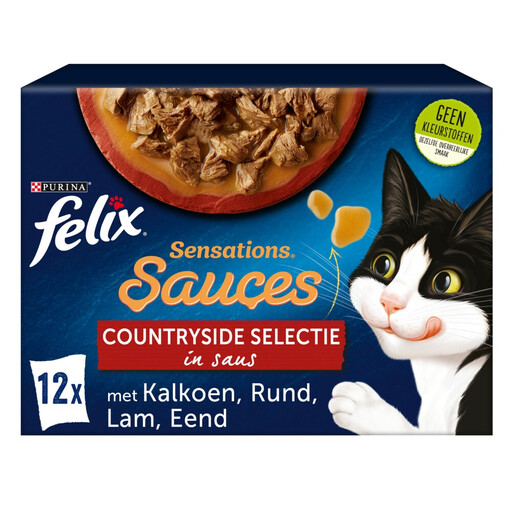
Why this suits the profile: The pack contains 12 portions of 85g and offers several varieties in gravy. This makes getting started with wet cat food straightforward.
The product description states complete and balanced nutrition, portion guidance and no added artificial colours, flavours or preservatives.
12 x 85g; three flavour combinations; portions are easy to divide per meal.
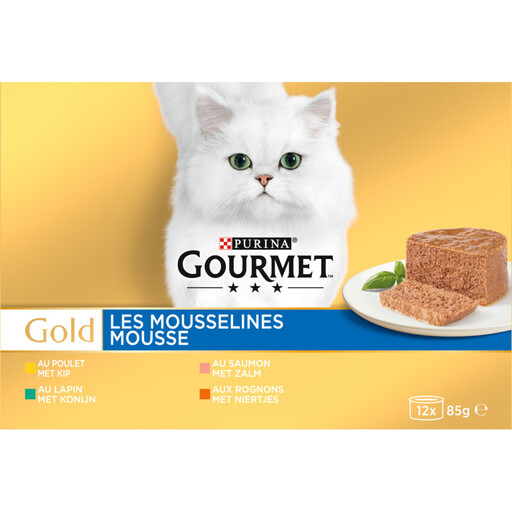
Why this suits the profile: The smooth mousse suits cats that prefer a silky texture over pieces or kibble.
The product page clearly states that it is complete food for adult cats. The flavour varieties and ingredients are described per recipe.
Smooth mousse; multipack with variety; feeding advice for a four-kilogram cat is provided.
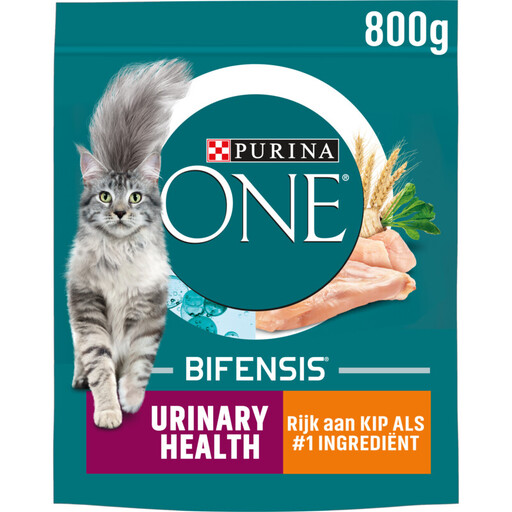
Why this suits the profile: According to the product description, this dry food is intended for adult cats and contains, among other things, 34% protein, 14% fat and added omega-3 and omega-6 fatty acids.
The ingredients and analytical values are listed. The claim about supporting urinary health comes from Purina's product description and does not replace veterinary advice.
800g dry food; clear portion guidelines; chicken as the stated main variety.
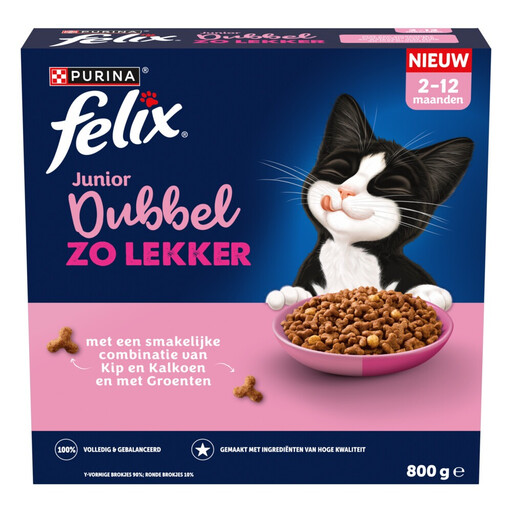
Why this suits the profile: The product description is specifically aimed at kittens from 6 to 52 weeks and mentions a complete, balanced composition.
The target group and age limit are clearly stated. This means you don't have to select kitten food based on flavour name alone.
Indicated for kittens; 35% protein and 12% fat according to the product information; dry food is easy to portion out.
We've put together a full, up-to-date list of products that fully meet these strict selection criteria and comply with current European safety regulations.
That depends on the daily portion, the weight of the packaging and the feeding guide. Compare the price per kilogram and not just the price per pouch or tin. A multipack can be practical, but also check whether all the varieties will be eaten. Otherwise, you might be paying for food that gets left behind.
Store dry food in a cool, dry place and seal the packaging well. Opened wet food should be covered and placed in the fridge. Many product pages state a usage period of up to two days, but always follow the instructions on the packaging. Don't leave wet food out at room temperature for long periods.
Only choose a formula that is explicitly described for that need and check the ingredients. For recurring symptoms, pain, blood in the urine, not eating or changes in drinking behaviour, veterinary advice is necessary. A product named "Sensitive" or "Urinary" is not a substitute for a diagnosis or treatment.
