
Vandaag of morgen in huis

Kwaliteit gegarandeerd

Welkomstaanbiedingen ontgrendelen: GRATIS bezorging | Tot 80% korting | Gratis 30 dagen JoyPlus-proefperiode
Download de app
When you buy cat food, you’ll quickly spot terms like “premium”, “natural” and “high protein” on the packaging. On their own, these words don’t mean much. It’s the ingredients, the type of food and the feeding instructions that determine whether a product suits your cat and your daily routine.
A good choice starts not with the flavour name, but with the label. Below, you’ll find out what to look for in wet cat food, dry cat food, cat food multipacks and cat treats.
“With salmon” doesn’t automatically mean salmon is the main ingredient. With some products, it refers to a set percentage of the named ingredient. For example, the product information for several varieties lists 4% salmon, chicken, beef or rabbit. So always check the full ingredients list, not just the front of the pack.
Cat treats, sticks, creams and other cat snacks are often complementary pet food. They are intended to be given alongside the main meal and do not replace a complete cat food. For instance, MjAMjAM Cat Cream Chicken & Salmon is, according to the product information, only suitable as a snack or treat. Whiskas Cat Sticks Salmon are also complementary food for adult cats.
What’s more, give treats in moderation. The manufacturer of Catisfactions recommends a maximum of 20 pieces per day for adult cats and states that the main meal should be adjusted accordingly. Always check the current instructions on the packaging.
A cat food multipack can be handy for households with a fixed flavour preference and can mean fewer individual packets. However, a large stock is less practical if your cat quickly gets bored or doesn’t eat an opened pack in time. Pay attention to the weight per pouch or tin, the shelf life and the storage instructions after opening.
The label must clearly state which animal species and life stage the product is intended for. For adult cats, there are both complete meals and complementary products.
Felix Premium Cat Food Fish Mix and Gourmet Perle Mini Fillets are described in the product information as complete food for adult cats. In contrast, INABA Broth Chicken with Salmon contains 93% moisture and is intended as a hydrating treat, not as a replacement for complete cat food.
Wet cat food typically contains a lot of moisture. This can be useful for cats that don’t drink much from their water bowl, although fresh water is always necessary. Within wet food, there are clear texture differences:
Don’t choose based on flavour alone, but also on what your cat actually eats. A cheap pack that gets left uneaten is ultimately not a good buy.
Look at moisture, protein, fat, crude ash and crude fibre. Products with a high moisture content often show lower percentages of protein and fat on the label than dry food. That doesn’t automatically mean they are less suitable; the values need to be read in relation to the product type.
For Iams Naturally Adult Cat Dry Food Salmon & Rice, the label states 33% crude protein and 15% fat. The product is described as a complete dry food for adult cats. For Felix Fish Mix, it states 82% moisture, 11.5% protein and 2.5% fat. So it’s best to compare products within the same category.
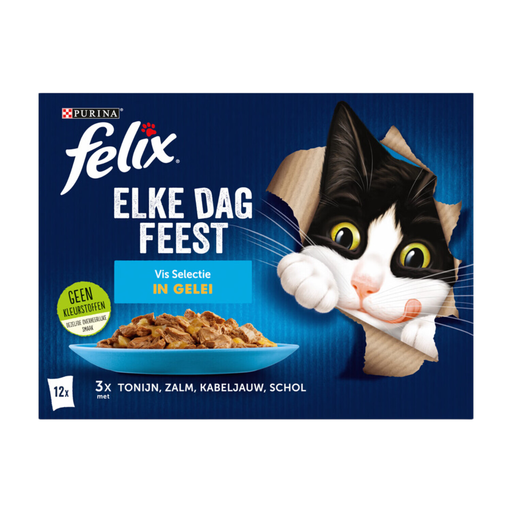
Why this fits the profile: A multipack with 12 portions of 85 grams offers variety with cod, tuna, salmon and plaice in jelly. That’s practical for a household that wants to try several flavours.
The product information states that it is a complete food for adult cats. Do check the portion instructions on the packaging and adjust them to your cat.
12 portions, four fish varieties, 82% moisture and a stated source of omega 6 fatty acids.
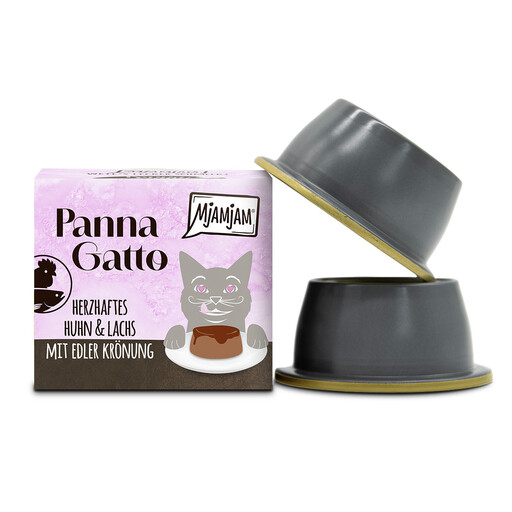
Why this fits the profile: Ideal for cat owners looking for a soft complementary treat with chicken and salmon, for example as extra variety alongside a complete meal.
The product information clearly states that this is a complementary food. It therefore does not replace a complete cat food.
2 portions of 80 grams, soft texture and 82% moisture according to the provided product specifications.

Why this fits the profile: For owners who want a specific snack for daily dental care and wish to follow the recommended amount precisely.
The product information provides a daily guideline and emphasises supervision during eating. According to Purina’s own research, a reduction in tartar build-up is claimed; this is not a substitute for a veterinary check-up or advice.
Crunchy, porous texture, salmon flavour, calcium and taurine according to the product specifications.
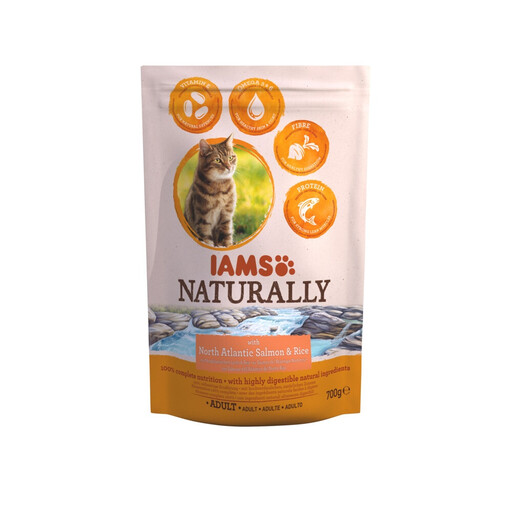
Why this fits the profile: A practical choice for daily portions of dry food, when shelf life, easy portioning and a compact pack are important.
The product information states that it is a complete food for adult cats and lists the ingredients in descending order.
33% crude protein, 15% fat and 4.1% salmon and rice according to the provided analysis data.
We’ve put together a full, up-to-date list of products that fully meet these strict selection criteria and comply with current European safety regulations.
Not automatically. First, check whether the product is complete, which life stage it’s intended for, and whether the texture suits your cat. Wet food generally contains more moisture, while dry food is easier to portion and store. Fresh drinking water should be available with both types of feeding.
That depends on body weight, age, activity level, whether the cat is neutered or spayed, and the energy content of the food. Use the feeding guideline on the packaging as a starting point. Multipacks with pouches or tins often include a recommendation for a cat of around 4 kg. Adjust the amount to maintain a healthy body weight.
They are not essential as a base food. You can use them as an extra, but keep an eye on the calories and reduce the main meal if needed. With dental treats, you should follow the recommended amount and safety instructions. If you have any concerns about your cat’s teeth or eating behaviour, advice from a vet is wiser than relying solely on a product claim.
