
Vandaag of morgen in huis

Kwaliteit gegarandeerd

Welkomstaanbiedingen ontgrendelen: GRATIS bezorging | Tot 80% korting | Gratis 30 dagen JoyPlus-proefperiode
Download de app
Finding the right meal among all the different varieties of cat food for adult cats isn’t always straightforward. Packaging often features terms like “with salmon”, “natural” or “complete nutrition”, but those words don’t automatically tell you how much of an ingredient is actually present or how well the product suits your cat.
Three common pitfalls to watch out for:
For everyday feeding, look on the label for “complete pet food” for adult cats. This means the product is intended as a full diet according to the product information. Wet food, dry cat food and combinations of both can all be suitable, as long as you follow the recommended portions.
A treat like Felix Deli Moments Salmon, on the other hand, is a complementary food. According to the product information, it’s one sachet of 10 grams per day as a treat. Catisfactions Cat snack cheese is also a complementary food; the packaging states a maximum of 20 pieces per day for adult cats. Such products are designed for reward moments, not as a replacement for a main meal.
With cat food containing salmon, the ingredients list is more important than the picture on the packaging. Check:
With wet food, the moisture content is generally higher than with cat kibble. Gourmet Perle Mini Fillets, for instance, states 80% moisture. That can be practical for cats that enjoy food with gravy, but the daily amount must be adjusted according to the cat’s weight, age and activity level.
A cat food multipack with small portions is handy if you want to vary flavours or divide meals easily. G’woon Adult Chunks in Jelly comes in a pack of 12 pouches. Gourmet Perle Mini Fillets is available as a pack of 60 sachets of 85 grams. That can be practical in a multi-cat household, but first check whether your cat accepts the texture of jelly, mousse or gravy.
For dry food, a resealable pack is important. Store cat kibble in a cool, dry place and seal the bag properly. Always provide fresh drinking water as well. When switching to a new food, a gradual transition is sensible so you can see how your cat reacts.
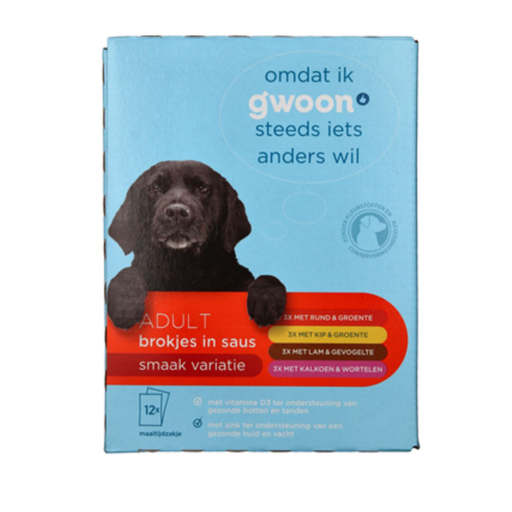
Why this fits the profile: The 12 pouches are easy to divide per meal and contain chicken, beef and salmon varieties according to the product information.
The packaging clearly shows the number of portions. However, do check the ingredients beforehand if your cat is sensitive to grains or certain animal ingredients.
Multipack with 12 pouches; wet food in jelly; intended as complete wet food for adult cats.
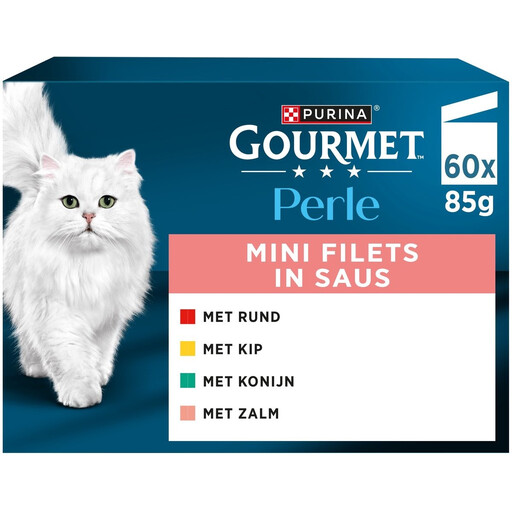
Why this fits the profile: The fine fillets in gravy offer multiple flavours and a fixed portion size of 85 grams per pouch.
The product information states that it is complete cat food for adult cats and provides feeding guidance by weight.
60 pouches of 85 grams; 80% moisture according to the label; no added artificial colours, preservatives or flavourings according to the product information.
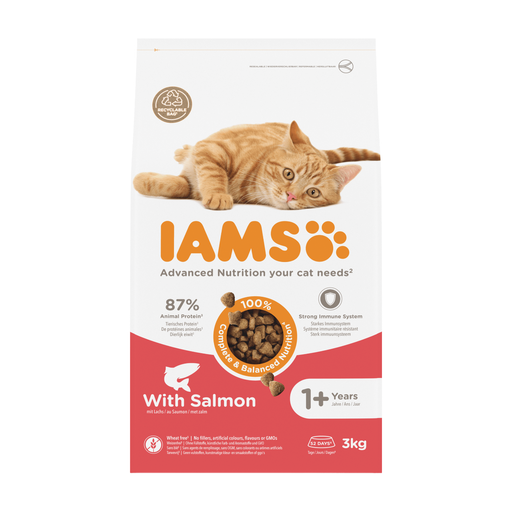
Why this fits the profile: The 3 kg bag is suitable for households that feed dry food daily and want to keep a larger stock.
The larger bag reduces the risk of running out of stock, but always seal the packaging properly to better preserve aroma and freshness.
Dry food for adult cats; salmon variety; 3 kg pack; taurine and a fibre blend are listed in the product description.
We’ve put together a full, up-to-date list of products that fully meet these strict selection criteria and comply with current European safety regulations.
That depends on your cat’s preference, portion control and your daily routine. Wet food generally contains more moisture and is often offered in fixed portions. Dry food keeps longer after opening and is easy to weigh out. A combination can be practical, as long as you monitor the total amount of food and follow the feeding guidelines on the packaging.
There is no fixed amount that suits every cat. Weight, age, activity level, body condition and the energy value of the food all play a part. Use the table on the packaging as a starting point and adjust the portion when necessary. Also, don’t give cat treats unlimitedly alongside the main meal.
A gradual transition is usually more practical than an immediate swap. Start by mixing a small amount of the new food with the familiar food and increase it step by step. Keep an eye on appetite, stools and behaviour. If problems persist or you’re unsure about the right diet, it’s wise to consult a vet.
