
Vandaag of morgen in huis

Kwaliteit gegarandeerd

Welkomstaanbiedingen ontgrendelen: GRATIS bezorging | Tot 80% korting | Gratis 30 dagen JoyPlus-proefperiode
Download de app
A bag of cat food with an appealing flavour name can seem like a good choice at first glance. But “with beef”, “with fish” or “with chicken” doesn’t always tell you how much of that ingredient is actually inside. Likewise, a bulk pack isn’t automatically better value if your cat turns its nose up at it, or if the bag takes too long to use up.
As Joybuy’s Product Recommendation Officer, I filter product information based on practical points. That way, you can see what to look out for before you buy – whether it’s dry cat food, wet cat food, kitten food or food for adult cats.
The front of the pack might say “cat food with meat” or “cat food with fish”. So always check the ingredients list on the packaging. For example, the product information for Felix Double the Tasty Beef and Chicken shows that beef and chicken each make up just 2% of certain kibble pieces. The legal wording “with” depends on the stated percentage; the name alone doesn’t reveal the full recipe.
Dry cat food contains very little moisture and is therefore concentrated. Wet cat food, on the other hand, has a much higher water content, so you can’t simply compare them gram for gram. Look at the recommended daily amount and adjust it according to your cat’s weight, age and activity level.
Kitten food is designed for growing cats. Adult cat food is formulated for a different life stage. So a product labelled “adult” on the pack isn’t automatically suitable for a kitten. Always check the target age group and the feeding instructions.
Complete and balanced cat food is intended to be fed as a full daily diet, following the feeding instructions. If a product is labelled as complementary food only, it isn’t meant to be served as a sole meal.
Also check:
For some product listings, analytical values aren’t provided. In that case, it’s harder to compare products on nutritional composition. If the information online differs from what’s on the label, use the packaging as your guide.
Dry food is practical for daily feeding and storage. A resealable bag helps keep the kibble dry and fresh. Once opened, you should seal the pack tightly and store it in a cool, dry place.
Examples from the range include:
A large size can be handy for multi-cat households or for a cat that eats the same food every day. For a fussy cat, a smaller pack is a wiser choice, so you reduce the risk of waste.
Wet cat food is sold in tins, trays or portion packs. Pay attention to the content per pack and the instructions for after opening. For example, the product information for G'woon Chicken & Turkey in Jelly states that leftovers should be kept in the fridge and used within two days.
Also check whether the flavour suits your cat. Cat food with fish, such as G'woon Salmon-Trout Pieces in Sauce, can be appealing to cats that accept fish. If your cat has known food sensitivities, read the full ingredients list. The statement “free from the 14 main EU allergens” doesn’t mean every cat can tolerate every ingredient.
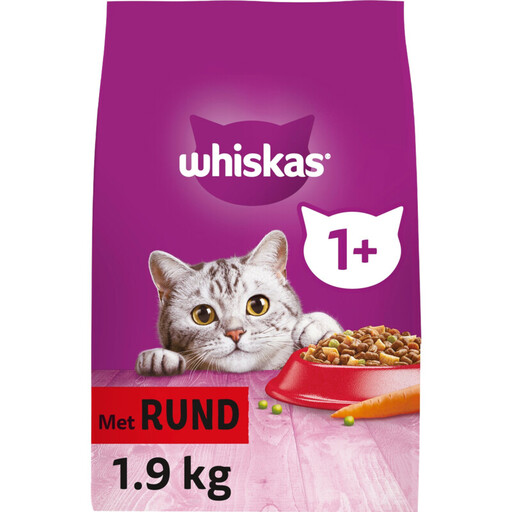
Why this fits the profile: The 1.9 kg pack is practical for an adult cat that eats dry food daily. According to the product description, it’s a complete dry food for adult cats.
The age suitability and product form are clearly stated. Do check the actual ingredients and feeding amount on the packaging.
Dry food for adult cats, beef variety and a 1.9 kg pack.
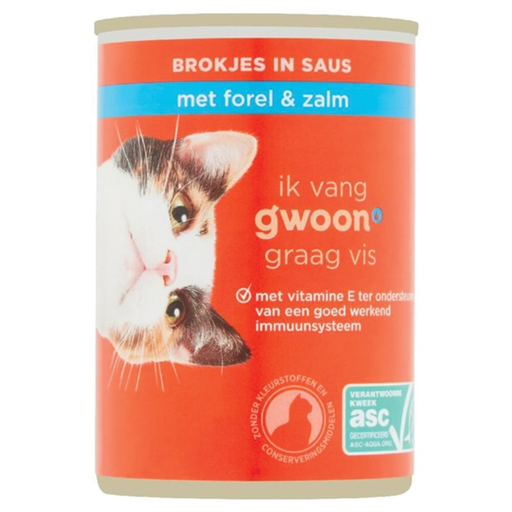
Why this fits the profile: This wet cat food offers a fish variety in sauce for adult cats. The product information states a 415 g tin and a complete food.
The packaging states the fish variety and target group. This means you can compare your choice against the ingredients list rather than relying solely on the flavour name.
Wet food with salmon and trout, in sauce, and a 415 g size.
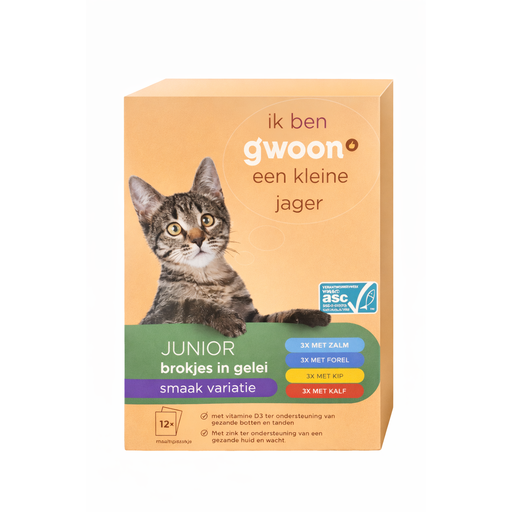
Why this fits the profile: The 12 x 100 g portion packs are designed for kittens. The product description mentions soft chunks in jelly and a kitten target group.
The variety is labelled as junior. This reduces the chance of accidentally choosing adult cat food; do check the actual packaging.
Kitten food, fish and meat variety, 12 individual 100 g portions.
We’ve put together a full, up-to-date list of products that fully meet these strict selection criteria and comply with current European safety regulations.
That depends on the daily portion, the packaging and the brand. Dry food contains less moisture and is often sold in larger bags. So compare the cost per day, not just the price per pack. With wet food, you also need to consider the number of portions and any leftovers after opening.
Store dry food sealed in a cool, dry place. Any leftover wet food should be covered and kept in the fridge. The product information for several of the wet foods mentioned advises using leftovers within two days. Always follow the instructions on the label.
Introduce the change gradually by mixing the new food with the current one over about seven to ten days. Keep an eye on your cat’s appetite, stools and body weight. If problems persist, or if your cat has a known allergy or specific dietary needs, it’s wise to consult a vet.
