
Vandaag of morgen in huis

Kwaliteit gegarandeerd

Welkomstaanbiedingen ontgrendelen: GRATIS bezorging | Tot 80% korting | Gratis 30 dagen JoyPlus-proefperiode
Download de app
Picking the right cat food from the vast selection on offer might seem straightforward – until you start comparing packets labelled “natural”, “premium” and “for a healthy cat”. On their own, these words tell you very little about whether a product is actually suitable for your cat. That’s why, as a Joybuy Product Recommendation Officer, I focus on verifiable information: the life stage, the type of food, the ingredients, the pack size and the feeding instructions.
Cat food with chicken, fish or beef sounds tempting, but the flavour alone doesn’t tell you whether it’s a complete meal. Check the label for “complete food” or “complete pet food”. If it only says “complementary food” or “treat”, it isn’t intended as a daily main meal.
Kitten food, adult cat food and senior cat food all have different nutritional goals. A kitten of a few months old has very different needs to a seven-year-old cat. So don’t just look at the brand or flavour – always check the age indication on the packaging.
A 10 kg bag might look good value per kilo, but it’s less practical if your cat eats slowly or quickly gets bored with a flavour. Once opened, dry food needs to be stored in an airtight container in a dry place. Wet food is often sold in single-portion packs, but any opened portions should be kept in the fridge and, according to the label, usually used within 48 hours.
Dry cat food contains very little moisture and is easy to portion and store. Look at the net weight, the recommended daily portion and the analytical constituents, such as protein, fat, fibre, ash and moisture. A dry kibble isn’t automatically the right choice for every cat.
Wet cat food typically contains a lot of moisture. The product information for various Gourmet and Felix packs, for example, lists moisture levels of around 74 to 80 per cent. Wet food can be handy for cats that don’t drink much from a water bowl, but always make sure fresh drinking water is available. Only combine dry and wet food if you adjust the total daily amount accordingly.
Choose the food based on your cat’s individual circumstances:
Look at the ingredients list together with the analytical constituents. “With chicken” doesn’t always mean chicken makes up the largest part of the recipe. For Purina One Urinary Care, for instance, chicken is listed as an ingredient at 17 per cent. For Purina One Sterilcat, beef is listed at 16 per cent.
You need to take claims about how a product works with a pinch of salt. According to Purina’s own research, the Sensitive formula is said to reduce unpleasant stool odour by 24 per cent within 14 days. That’s a brand claim, not a general guarantee for every cat. Likewise, statements about dental care, hairballs, the gut microbiome or urinary health are all manufacturer claims. So always look at the full ingredient list and follow the feeding guide on the packaging.
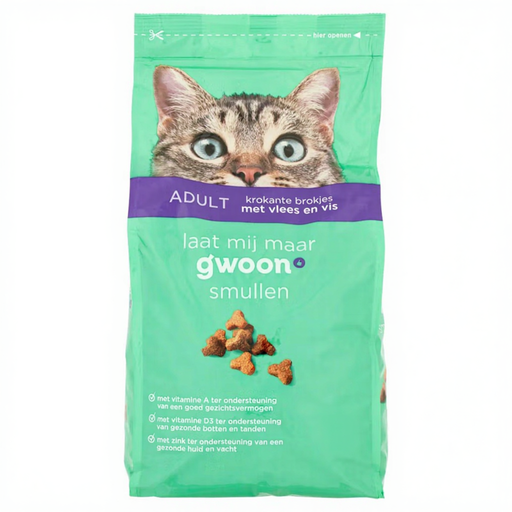
Why this fits the profile: This 2 kg pack is practical for an adult cat that eats dry food every day. The recipe combines meat and fish in crunchy kibble.
The size is larger than a trial bag, but not so big that storage becomes awkward. Do check the analytical values on the packaging yourself, as these aren’t specified in the product information.
Complete dry food for adult cats; 2 kg net weight; mix of meat and fish.
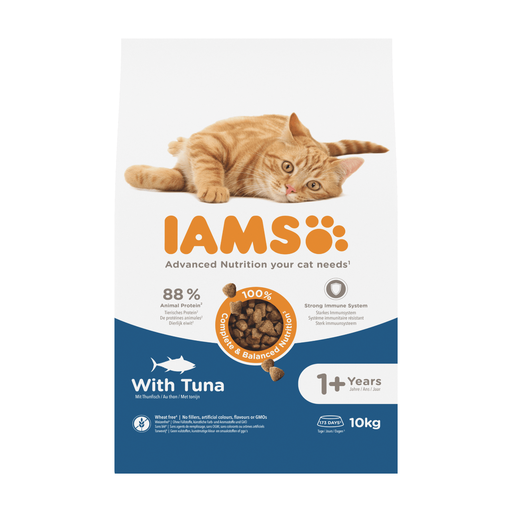
Why this fits the profile: The large size suits households with several adult cats, or a cat that happily eats the same dry food every day.
You’re not buying a small multi-pack of individual portions, but a supply that lets you easily work out the price per gram. Store the bag in an airtight container in a dry place.
10 kg pack; tuna variety; described as complete and balanced food for adult cats.
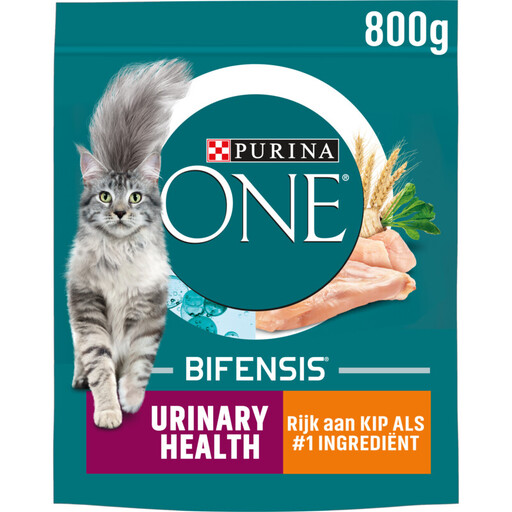
Why this fits the profile: This dry formula is designed for adult cats whose owners are specifically mindful of urinary tract and kidney health. If your cat has symptoms, veterinary advice remains essential.
The product information lists clear analytical values: 34% protein, 14% fat, maximum 12% moisture and 800 g net weight. This allows you to make a concrete comparison on the label.
For adult cats; chicken flavour; omega-3 and omega-6 fatty acids listed; feeding guide based on body weight.
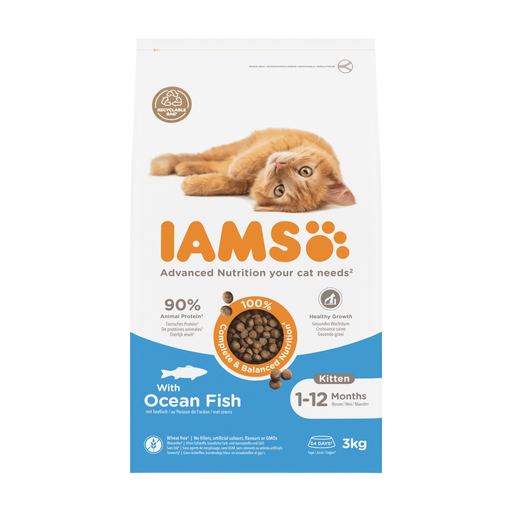
Why this fits the profile: The pack is designed for kittens and features ocean fish as the flavour. The product description mentions DHA, taurine, vitamin D and minerals, among other things.
The age category is front and centre, so you’re less likely to pick an adult cat food for a young animal. When transitioning, always follow the feeding guide on the packaging.
3 kg pack; kitten formula with ocean fish; product description mentions DHA and a fibre mix with prebiotics.
We’ve put together a full, up-to-date list of products that fully meet these strict selection criteria and comply with current European safety regulations.
That depends on the cat’s body weight, age, activity level and the type of food. Use the feeding guide on the packaging as a starting point and adjust the portion if the cat’s weight changes. If you’re mixing dry and wet food, you’ll need to calculate the total amount together.
Neither is automatically right for every cat. Dry food is easy to store and portion; wet food usually contains more moisture and is available in small portions. The most important things to look for are the “complete food” label, the life stage and the total daily amount.
Store dry food in a cool, dry place in an airtight container. Opened wet food should be covered, kept in the fridge and, according to the product information, usually used within 48 hours. Don’t leave leftovers sitting in the bowl for long, and always check the best-before date on the packaging.
