
Vandaag of morgen in huis

Kwaliteit gegarandeerd

Welkomstaanbiedingen ontgrendelen: GRATIS bezorging | Tot 80% korting | Gratis 30 dagen JoyPlus-proefperiode
Download de app
The choice of cat food is extensive: wet food, kibble, kitten food, multipacks and formulas for sterilised cats all compete for attention on the shelf. Yet an eye-catching flavour name or colourful packaging does not automatically mean a product is right for your cat. With a few simple checks, you can avoid a poor purchase and choose food that suits your cat’s age, needs and daily routine.
Packaging often prominently features flavours such as chicken, beef, salmon or tuna. Always check the composition. According to the product specifications, a claim such as “with chicken” may, for example, refer to 4% chicken in the pieces. Felix Double the Tasty Beef and Chicken lists 2% beef and 2% chicken; the official description therefore refers to the product as “flavoured with” beef and chicken.
Do not rely solely on the front of the pack. Also check:
A cat food multipack is convenient when you want to offer variety or have several cats. However, not every pouch or tray is a complete meal. Felix Soup Fish and Felix Soup Farm are described in the product information as complementary pet food for adult cats. These soups are therefore intended to complement a complete staple food, not replace all of your cat’s daily meals.
Packaging labelled “complete pet food” or “complete food for cats” is intended for daily feeding, according to the feeding guidelines on the label.
Kitten food and adult cat food are intended for different life stages. Kittens are still growing and need nutrition formulated for that stage of life, as specified by the manufacturer. Purina One Junior is intended from weaning until 12 months. Whiskas Junior and Felix Junior are also clearly labelled for kittens.
For an adult sterilised or neutered cat, a dedicated formula may be the more practical choice. According to its product description, Purina One Sterilcat Beef & Grain Formula was developed for sterilised and neutered adult cats, with an adjusted protein-to-fat ratio and balanced minerals. These are Purina’s product claims; always check the current label and adjust the portion to your cat’s body condition and activity level.
This is the first thing to verify. Complete cat food contains, according to the product designation, the nutrients required for a daily meal. Complementary food, such as soup or treats, should be used as an addition within an overall feeding plan.
Pay close attention to the exact wording on the packaging. A product featuring appealing ingredients, vitamins or omega 3 and 6 is not automatically suitable as your cat’s sole source of food.
Check whether the product is intended for:
The recommended quantity is a guideline. Felix Every Day Party Mix Selection, for example, lists up to three 85 g pouches per day for an average adult cat weighing approximately 4 kg. Felix Original Mix recommends three to four pouches per day for a 4 kg cat. Differences arise from the recipe, energy density, weight and activity level. Weigh your cat regularly and follow the feeding guide on the packaging.
Wet cat food contains a high proportion of moisture and is supplied in pouches, trays or cans. Once opened, leftovers should be covered, refrigerated and used within the period stated on the packaging. Many products recommend serving the food at room temperature.
Dry cat food is easy to portion and store. Always provide fresh drinking water alongside it. When combining wet and dry food, do not serve the full recommended quantity of both products. Whiskas, for example, states that one pouch of wet food can replace part of the recommended amount of dry food. Use the table on the label to determine the correct ratio.
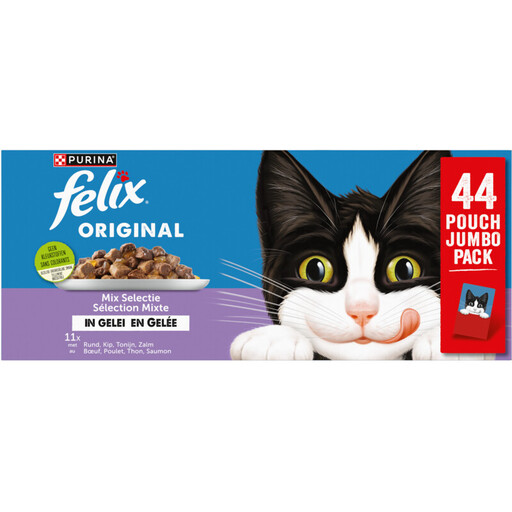
Why This Fits Their Persona: A large multipack with individually portioned pouches is practical for households that regularly serve wet food and want to alternate between different flavours.
The product information describes this as complete food for adult cats. The 85 g portions make it easier to avoid keeping opened pouches for too long.
44 pouches; a variety of beef, chicken, tuna and salmon flavours; 82% moisture according to the stated analysis.

Why This Fits Their Persona: According to the product specifications, this formula is intended for kittens from weaning until 12 months, as well as pregnant or nursing cats.
The intended life stage is clearly stated. This makes the choice more targeted than a standard product formulated for adult cats.
Complete food for kittens; 800 g pack; chicken listed as an ingredient at 17% of the composition.
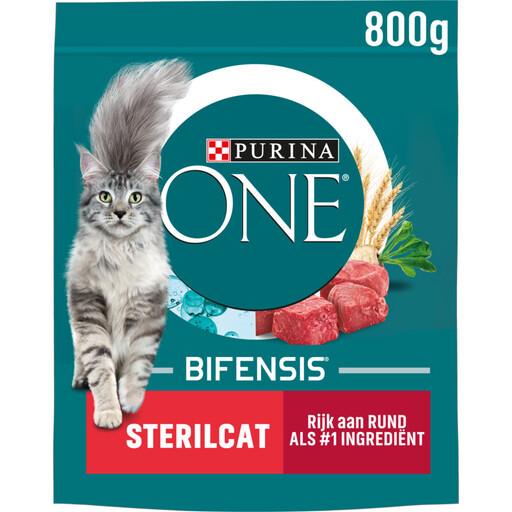
Why This Fits Their Persona: Designed for owners of a sterilised adult cat who are looking for a dry food formula tailored to this group and want to weigh out daily portions.
The packaging explicitly states “sterilised/neutered adult cats”. This avoids confusion with kitten food or general adult cat food.
37% crude protein and 13% fat according to the stated analysis; daily guidelines based on body weight.
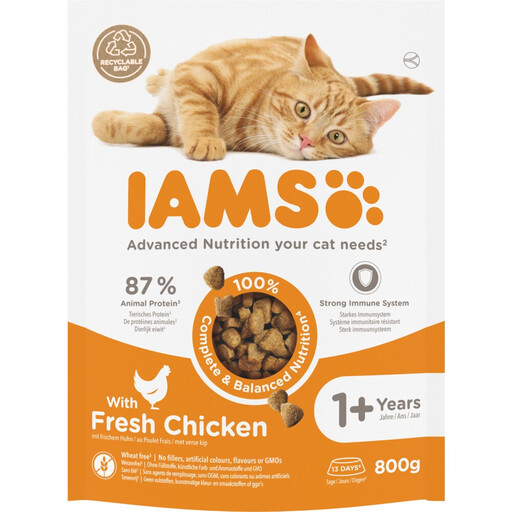
Why This Fits Their Persona: A good fit for anyone seeking complete dry food for adult cats, with chicken named as an ingredient and a compact 800 g pack.
The selection is based on verifiable product information: adult formula, complete food and an 800 g pack.
According to the manufacturer, the formula contains fresh chicken, omega 3 and 6, and 87% animal protein. These are brand claims; check the label for the current composition.
We have put together a current selection of products that meet these criteria and comply with the relevant EU labelling requirements.
Wet food generally contains considerably more moisture and is available in pouches, cans or trays. Dry food has a longer shelf life after opening and is easy to weigh out. Both can be complete foods; check the legal product designation and feeding guidelines to confirm this.
Choose a product clearly labelled for kittens, such as Purina One Junior, Whiskas Junior or Felix Junior. Check the age range. Kitten food suitable up to 12 months is not automatically intended for adult cats.
Weigh out the daily portion and use the table on the packaging as a starting point. Take treats into account and do not combine wet and dry food without adjusting the quantities. Your cat’s weight, activity level and body condition ultimately determine whether the portion needs to be adjusted.
