
Vandaag of morgen in huis

Kwaliteit gegarandeerd

Welkomstaanbiedingen ontgrendelen: GRATIS bezorging | Tot 80% korting | Gratis 30 dagen JoyPlus-proefperiode
Download de app
A bag of cat food with words like “natural”, “premium” or “supports digestion” sounds appealing, but it doesn’t always tell you enough about the actual composition. For cat owners, three things really matter: does the food suit your cat’s life stage, is it complete cat food, and do the ingredients match your individual cat’s needs?
The wrong choice can lead to waste, a cat that refuses to eat, or a bag that doesn’t last as long as you expected. With these practical checks, you can compare dry cat food, wet cat food, kitten food and senior cat food in a level-headed way.
“With chicken”, “with lamb” or “with fish” doesn’t automatically mean that ingredient makes up the largest part of the recipe. Always check the ingredients list and any percentages given. For example, with Felix Original Mix Selection in Jelly, each variety contains 4% of the named ingredient, such as beef, chicken, tuna or salmon. That’s quite different from a recipe that is mainly made up of one animal protein source.
Grain-free cat food contains no cereals, but that doesn’t make it automatically right for every cat. The overall nutritional value, protein content, fats, minerals and suitability for the cat’s life stage are still what matter. What’s more, a grain-free option is not the same as a veterinary diet.
A 5 kg or 10 kg bag may have a lower price per kilo, but only if your cat actually likes it and the food stays fresh after opening. When trying a new flavour or if your cat has a sensitive stomach, a smaller bag is often the wiser choice. Store dry cat food in a cool, dry place and keep it well sealed. Wet food must be refrigerated after opening according to the pack instructions and used in good time.
Choose food that is clearly intended for your cat:
A product described as “complete pet food” or complete nutrition in the product information can be used as daily food according to the instructions on the pack. Always check the type and life stage on the label.
The analytical constituents give you more to go on than marketing language. Farmina N&D Quinoa Cat Digestion Lamb contains, according to the product information, 36% crude protein, 20% crude fat, 2% crude fibre and 10% moisture. Farmina N&D Prime Cat Lamb lists the same percentages for protein, fat, fibre and moisture.
Wet food, on the other hand, contains much more moisture. Gourmet Perle Mini Fillets, for example, lists 80% moisture, 12.5% protein and 2.5% fat. So don’t compare dry and wet food on protein percentage alone: the moisture content affects the concentration per product.
Look at the first ingredients, the animal protein sources listed, and any cereals or pulses. For a cat with a known food reaction, the full composition matters more than the flavour name.
When introducing new cat food, make the transition gradually, usually over about seven days. Gradually mix more of the new food with the old. Follow the feeding guide on the pack and adjust the portion according to your cat’s weight, activity level and body condition. Always provide fresh drinking water.
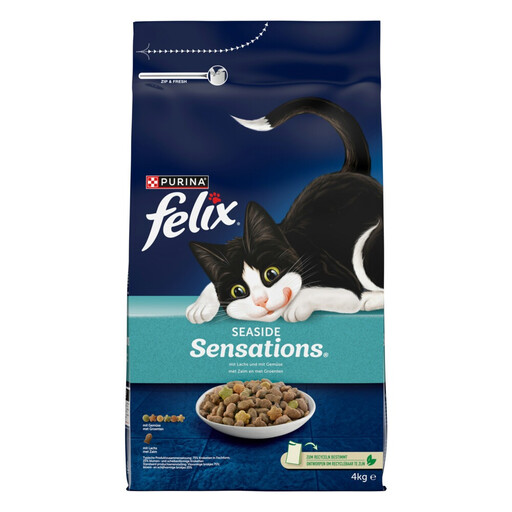
Why this fits the profile: A practical bag of dry food for adult cats, with fish varieties such as salmon and mackerel. The 4 kg bag is suitable for daily use once your cat has accepted this flavour.
The product information states that it is complete and balanced nutrition for adult cats. Do check the feeding guide and the full ingredients list.
4 kg content; dry kibble; fish varieties with, according to the product information, 4% dried salmon or mackerel per respective variety.
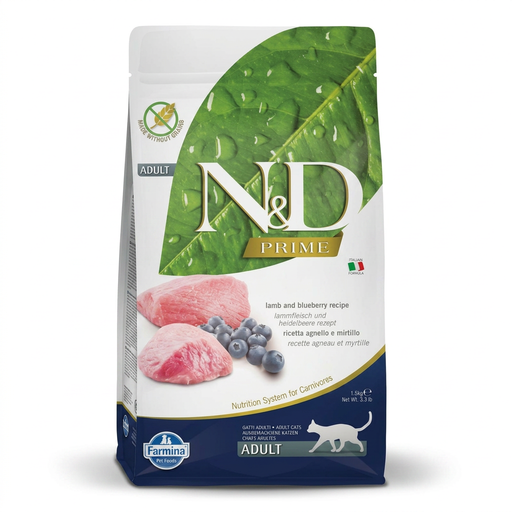
Why this fits the profile: For owners looking for a grain-free formula with lamb, herring, egg and added vitamins and minerals.
The composition lists fresh and dried lamb, lamb fat and herring rather than just a general flavour name. According to the product information, the food is complete.
1.5 kg bag; grain-free; 36% crude protein and 20% crude fat according to the stated analysis.
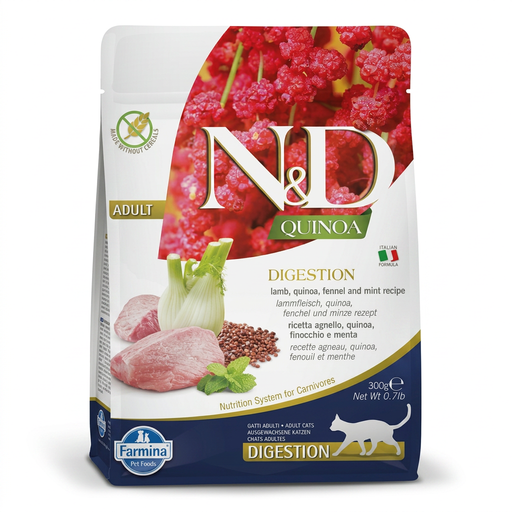
Why this fits the profile: The small bag is handy for trying it out first with a cat for which you are considering cat food for a sensitive stomach.
The product description mentions quinoa and a grain-free formula. These are verifiable features; they do not constitute a medical guarantee.
300 g content; lamb, herring meal and quinoa in the ingredients list; 36% crude protein and 20% crude fat according to the product data.
Dry cat food is easy to portion and store. Wet cat food comes in individual portions and usually contains a lot of moisture, but needs to be kept in the fridge after opening. A combination can be practical, as long as you adjust the total daily amount.
A multipack of cat food is handy for households with several cats or for owners who want to offer different flavours. Gourmet Perle Mini Fillets, for example, comes in a pack of 60 pouches of 85 g. Felix Original Mix Selection contains 44 pouches of 85 g. Just check that all the varieties are suitable for your cat’s life stage and compare the price per 100 grams.
For kittens, options include Farmina N&D Prime Kitten Chicken, Farmina N&D Ocean Kitten Cod and Felix Premium Quality Junior. If you want to compare different types of kitten food, you can also browse the mixed kitten food range.
We’ve put together a full, up-to-date list of products that fully meet these strict selection criteria and comply with current European safety regulations.
Complete cat food is, according to the product labelling, intended to be given as a full daily diet. Always check whether the pack mentions your cat and its life stage, for example kitten or adult cat. Treats and complementary foods do not automatically have the same designation.
Gradually mix the new food with the familiar food over about seven days. Start with a small proportion of the new food and increase it step by step. Don’t forget to provide fresh drinking water and follow the feeding guidelines on the pack.
That depends on the brand, pack size, portion size and daily amount. Compare the price per 100 grams and the recommended portion size. With wet food, you are also paying for the higher moisture content, whereas dry food can often be stored for longer after opening.
