
Vandaag of morgen in huis

Kwaliteit gegarandeerd

Welkomstaanbiedingen ontgrendelen: GRATIS bezorging | Tot 80% korting | Gratis 30 dagen JoyPlus-proefperiode
Download de app
Choosing the right cat food depends on more than just what your cat likes the taste of. Age, activity level, whether they have been neutered, body condition and the food’s nutritional composition all play a bigger part. Yet packaging often makes it difficult to compare products. Terms such as “premium”, “natural” or “grain-free” sound appealing, but they don’t always tell you enough about whether a product is suitable for everyday feeding.
Cat food with chicken, fish or lamb can tempt even fussy cats. However, first check whether it is labelled as complete pet food. A complete product is intended as a cat’s main daily food. A treat or topper is usually complementary pet food and doesn’t automatically contain all the nutrients your cat needs each day.
For example, INABA Fun Bites Cat Chicken Wraps Tuna with Cheese are described as a complementary treat. According to the product information, the snack contains 93% moisture and should be given alongside your cat’s usual food, not as a complete replacement for it.
Grain-free cat food contains no grains, but that doesn’t automatically make it suitable for every cat. Check the protein source, fat and fibre content, energy content and the life stage the food is intended for, too. A recipe with chicken, fish or lamb may also contain other animal or plant-based ingredients.
When choosing grain-free cat food, the full ingredients list is therefore more important than one prominent claim on the front of the pack.
A 5 or 10 kg bag may seem like good value, but only if your cat takes to the food and you store it correctly. Once opened, its aroma and crunchiness can fade. If you’re unsure, try a smaller pack first, especially when switching to adult cat food, kitten food or food for neutered cats.
Choose a product that clearly suits your cat’s needs:
A product description may mention additional features, such as DHA, taurine or fibre. Be careful how you interpret such claims: according to IAMS product information, certain kitten recipes are enriched with DHA and taurine. This is a description from the brand, not a guarantee of an individual result.
Check the label for:
Dry cat food contains little moisture compared with wet food. Make sure your cat always has access to fresh drinking water. Wet food or moist cat treats can provide extra moisture, but don’t automatically use them to replace your cat’s entire main meal.
A recipe with chicken, fish or lamb may be a good choice if your cat has a clear preference. However, check whether the flavour mentioned is present in a meaningful quantity. For example, according to the product information, Iams Naturally Adult Cat Dry Food Salmon & Rice contains 4.1% salmon and 4.1% rice. Fish is mentioned in g'woon Adult Cat Bites with Fish, while cereals are also part of the recipe.
If your cat has a known food sensitivity, read the label carefully and ask a vet for advice if symptoms persist. A grain-free formula is not the same as a product that is free from all potential allergens.
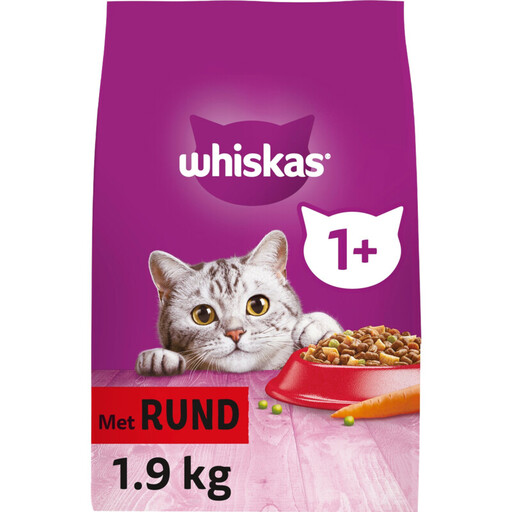
Why it suits this profile: A practical pack for adult cats, with clear information on use and storage.
The product information says this is complete dry food for adult cats, so you won’t mistake it for a treat.
1.9 kg pack; designed for adult cats; store in a sealed, dry pack.
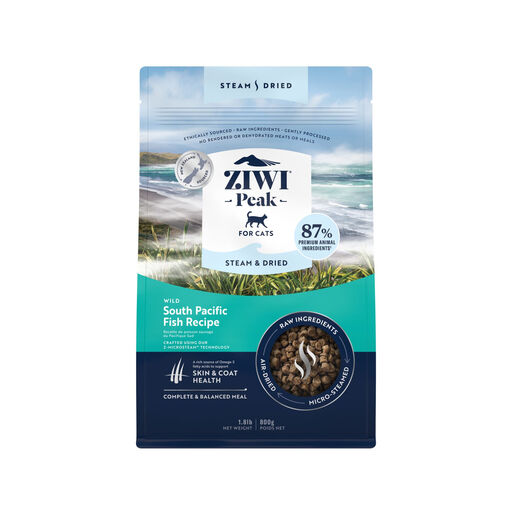
Why it suits this profile: For owners looking for a fish-based recipe and a higher stated protein content, and who are happy to compare the ingredients carefully.
The product information describes it as a complete food and lists fish-rich ingredients and analytical values, helping you look beyond the front of the pack.
At least 40% crude protein according to the product details; fish as a key ingredient group; 800 g pack.
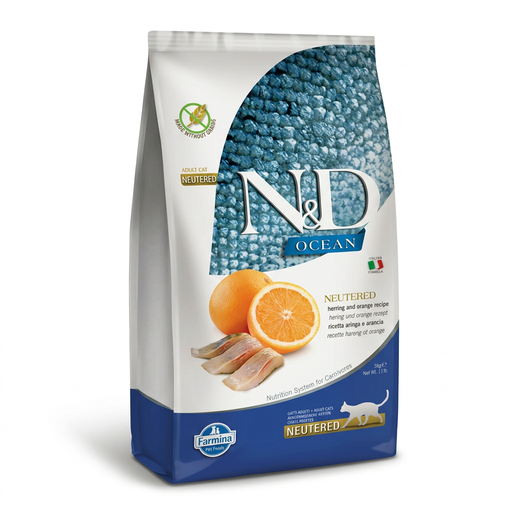
Why it suits this profile: Designed for adult neutered cats and suited to owners who pay attention to grain-free recipes, portion sizes and analytical values.
The pack is large, but the product information also includes feeding guidelines and analytical details. This helps you estimate the daily portion in advance.
Grain-free according to the product details; 11% fat; 5 kg pack; herring as the main protein source.
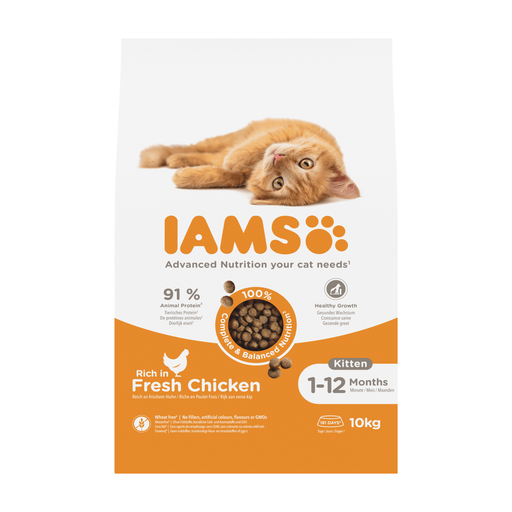
Why it suits this profile: A large pack for households with a kitten that eats kitten food every day and where it can be stored properly.
The product is specifically labelled as kitten/junior food. This helps you avoid accidentally choosing adult cat food for a growing cat.
10 kg pack; chicken recipe; according to the product description, the kitten formula contains DHA, taurine and a fibre mix, among other ingredients.
We’ve put together a complete, up-to-date list of products that meet these strict selection criteria and the applicable European safety requirements.
When introducing a new product, make the change gradually over around seven days. Start with a small amount of the new food and increase it step by step. This makes it easier to see whether your cat accepts it. Use the portion on the pack as a guide, but also take your cat’s weight, activity level and body condition into account.
Store dry food in a sealed container in a cool, dry place. Once opened, wet cat treats should be stored according to the label and used promptly. Give cat biscuits and treats as extras, and reduce the amount of main food if needed.
Choose kitten food that is specifically intended for kittens and labelled as complete pet food. Check the feeding guidelines for your kitten’s age and weight. A kitten formula isn’t automatically suitable for adult cats.
Complete dry food can be used as a main food if the label says so. Make sure your cat also has fresh drinking water. Some owners combine dry food with wet food or moist cat treats, but count the total amount to avoid overfeeding.
This depends on your cat’s weight, the food’s energy content, the pack size and how many treats you give. Work out the cost by dividing the price by the number of grams, then multiply this by the estimated monthly amount. A larger pack is only better value if your cat tolerates the food well and you can store it in an airtight container.
