
Vandaag of morgen in huis

Kwaliteit gegarandeerd

Welkomstaanbiedingen ontgrendelen: GRATIS bezorging | Tot 80% korting | Gratis 30 dagen JoyPlus-proefperiode
Download de app
Choosing a bag of cat food can seem straightforward. However, products vary considerably in their age recommendations, ingredients, moisture content, portion sizes and pack sizes. A low price per bag, for example, may not be such a good deal if your cat needs larger portions. A flavour name such as “chicken” or “fish” may also tell you more about the smell than the actual amount of that ingredient in the food.
With this guide, you can compare dry cat food, wet cat food, kitten food and adult cat food using information you can check. This makes it easier to find the right everyday food for your cat and avoid a purchase you regret.
The front of the pack often features a large picture of chicken, beef, lamb or fish. So always check the ingredients. For example, the product information for Felix Double the Tasty Beef and Chicken states that beef and chicken each make up 2% of certain kibbles. This means the permitted description refers to the flavour, not necessarily a recipe with a high proportion of beef or chicken.
Even cat food with fish may contain a large proportion of cereals, vegetable protein extracts and animal derivatives. The ingredients list gives you a more realistic picture than the front of the pack.
A kitten needs different cat food from an adult cat. Kitten food and junior cat food are formulated for growing cats, while adult cat food is intended for cats from around one year old, depending on the label.
Always check:
A product labelled as complete and balanced can be used as everyday food for cats in the stated life stage. If your cat has a medical condition or specific dietary needs, check with a vet first.
A large bag of dry food often costs less per kilogram, but it needs to be sealed properly once opened. Wet food tends to cost more to transport and package, but it also provides your cat with plenty of moisture. So compare not just the shop price, but also the recommended daily amount.
Also check the best-before date, storage instructions and kibble size. A large pack may not be practical if your cat eats slowly and the food will be open for a long time.
Check the ingredients list and analytical constituents. Important values include:
Compare products within the same category. Dry cat food generally contains much less moisture than wet cat food, so their protein and fat percentages are not directly comparable.
For example, Felix Junior dry food lists 35% protein, 12% fat, 8% crude ash and 2% crude fibre. Purina One Junior with chicken and cereals lists chicken as its first ingredient and, according to the product information, is intended for kittens from weaning to twelve months.
A suitable pack will clearly state which cats the food is intended for. Examples include “Junior”, “Kitten”, “Adult” or “1+”. Use the feeding table on the pack as a starting point, then adjust the portion according to your cat’s weight, activity level and body condition.
If you feed your cat both dry and wet food, reduce the total daily amount. For example, the product information for Felix Seaside Sensations recommends 50 grams of dry food plus one 100-gram pouch of wet food for a 4 kg cat on a mixed diet. These guidelines are averages; individual needs may vary.
Wet cat food generally contains plenty of moisture and often comes in pouches or trays. Once opened, cover it and keep it in the fridge, then use it within the time stated on the pack. It’s best served at room temperature, following the product instructions.
Dry cat food is easy to measure and store, but fresh drinking water should always be available. A resealable bag or storage container helps preserve its aroma and quality.
If you’re looking for a particular flavour, you can choose cat food with chicken, fish, beef or lamb. If you suspect a food sensitivity, check all the ingredients carefully: a flavour shown on the front doesn’t always mean the food contains just one source of animal protein.
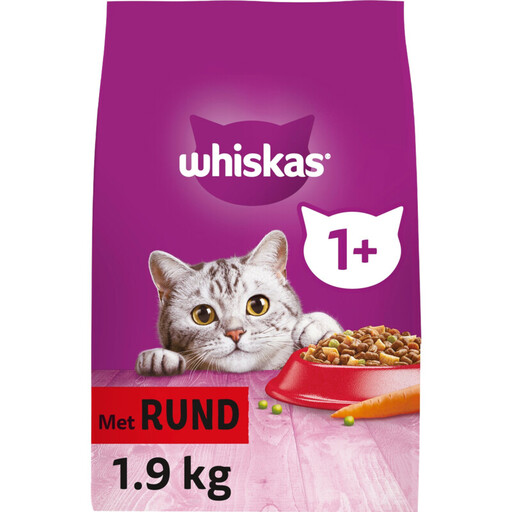
Why it suits this profile: The 1.9 kg pack is manageable if you’re buying dry food for the first time and don’t want to stock up on a very large amount. According to the product information, it’s intended for adult cats.
The product page specifies that it’s for adult cats and includes feeding recommendations and storage instructions. Still, check the feeding table on the pack rather than relying on the flavour name alone.
Dry kibble, a 1.9 kg pack and, according to the product information, no added artificial colours or flavourings.
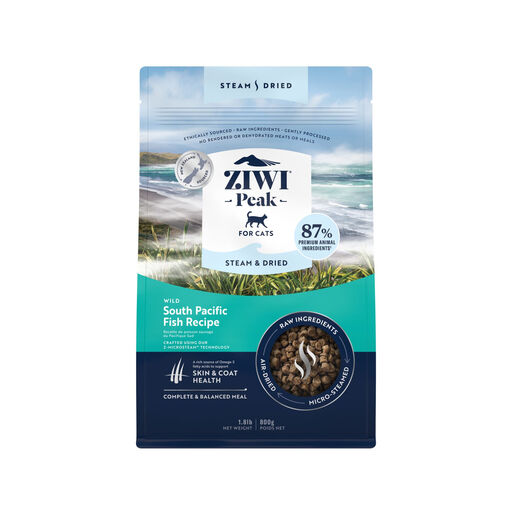
Why it suits this profile: This air-dried cat food may appeal if you’re looking for a compact pack and a distinctive fish recipe, and are happy to compare product specifications carefully.
The product information lists the ingredients and analytical values, including at least 40% crude protein and no more than 12% moisture. According to the product information, the food is complete and balanced.
Air-dried texture, fish as a prominent ingredient group and clear analytical values on the product page.
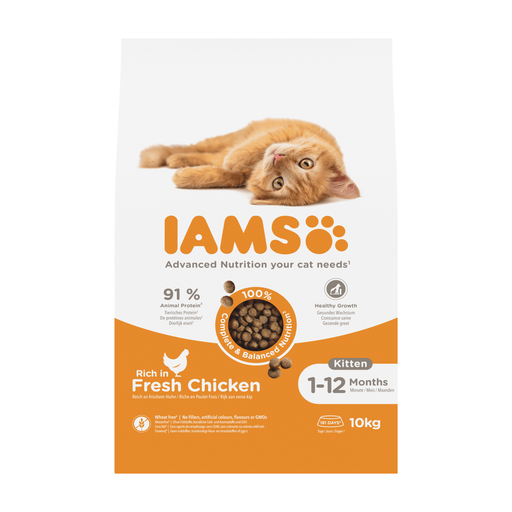
Why it suits this profile: The large pack is practical for households with a growing kitten or several cats, provided you keep the food dry, sealed and within its best-before date.
The product description clearly identifies it as kitten/junior food with chicken. According to IAMS’ own product information, the formula contains DHA and a fibre blend with prebiotics and beet pulp; always check these claims against the label.
10 kg of dry food, a chicken recipe and a formula for kittens’ growth stage.
The right choice depends on more than just the brand. Felix offers both junior dry food and wet food in jelly, as well as fish varieties. Whiskas has dry food for adult cats and junior products. IAMS is available as cat food with chicken, lamb or tuna, including in large bags. Purina One offers, among other options, Junior with chicken and Adult with salmon.
For every brand, check the same things: life stage, whether it is complete food, ingredients, analytical values, daily portion and pack size. A brand name is no substitute for reading the label.
We’ve put together a full, up-to-date list of products that meet these strict selection criteria and the applicable European safety regulations.
Dry food usually costs less per kilogram and is easy to store. Wet food contains plenty of moisture and comes in portions. Work out the cost based on the amount of food your cat needs each day, not just the price of the bag or box.
Keep dry food in a cool, dry place and seal it well. Once opened, wet food should be covered, refrigerated and used according to the instructions on the pack. Throw away any leftovers if the smell, colour or texture changes noticeably.
Gradually mix the new food with the old, for example over about a week. Start with a small amount of the new food and increase it step by step. Keep an eye on your cat’s appetite, stools and body condition. If problems persist, speak to a vet.
