
Vandaag of morgen in huis

Kwaliteit gegarandeerd

Welkomstaanbiedingen ontgrendelen: GRATIS bezorging | Tot 80% korting | Gratis 30 dagen JoyPlus-proefperiode
Download de app
Cat food packaging is often covered in tempting pictures and eye-catching claims. But a picture of chicken, fish or beef doesn’t always tell you how much of that ingredient is actually in the recipe. A large bag may also seem like good value, but your cat might not like the food, or it could quickly lose its aroma once opened.
Use this practical guide to focus first on what really matters: the type of animal, life stage, food format, ingredients, portion size and shelf life.
“with chicken” or “with beef” sounds clear, but check the percentage in the ingredients. For example, Felix Double the Tasty Beef and Chicken states that the recipe contains 2% beef and 2% chicken. The packaging therefore describes a beef and chicken flavour variety; that’s not the same as a product made mainly from these meats.
So, when choosing chicken, fish or beef cat food, the ingredients list is more important than the front of the packaging.
Dry cat food contains little moisture and is usually easy to portion and store. Wet cat food in jelly or gravy contains more moisture and is often sold in portions. So a 405 or 415 g tin might look large, but the daily amount varies from product to product and from cat to cat.
The feeding guide on the label is a starting point. Your cat’s age, weight and activity level, as well as any snacks or other food, all affect how much you should give them.
Always check the label on the packaging. Cat food for adult cats is intended for a different life stage from kitten food. A multipack such as g'woon Chunks in Jelly Fish and Meat Variation Junior contains 12 portions of 100 g and, according to the product information, is formulated for kittens. The same information states that it isn’t intended for adult cats.
Pay attention to the type of animal, too. Dog food for adult dogs, such as g'woon Chunks in Jelly With Chicken 415g, isn’t intended as cat food. Chicken dog food isn’t a substitute for a complete cat food either.
Look for a label such as complete and balanced cat food or “complete food” for the right life stage. Also check whether the product is intended for:
A product description may say “complete” or “100% complete and balanced”. Treat this as information from the manufacturer and, if in doubt, check the current packaging.
Don’t just look at the flavour; check the ingredients and analytical constituents, too. For example, Felix Adult dry food with beef and chicken lists 30% protein, 11% fat, 3% crude fibre and 8% crude ash. For other products, some analytical values aren’t included in the available product information.
That doesn’t automatically mean a product is unsuitable. It does mean you should base your comparison on the values that are actually listed. If your cat has an allergy, check the full ingredients list as well. For example, a product containing fish isn’t necessarily suitable for a cat that can’t tolerate fish.
Choose a pack size that suits how much you use at home. A 2 kg bag of cat food can be practical for a household with one adult cat, but only if you can keep it properly sealed. Smaller packs, such as 800 g cat food, are more convenient if you want to try different flavours.
With wet food, the main differences are between tins and multipacks:
Always provide fresh drinking water with dry food. When switching foods, it’s best to mix the new food in gradually over several days to avoid sudden changes.
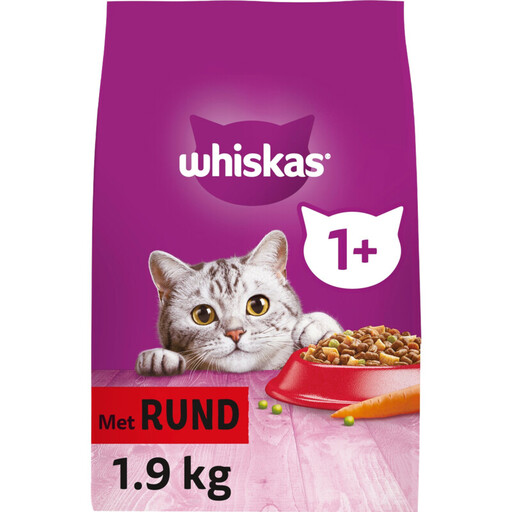
Why it suits this profile: The 1.9 kg bag offers a generous size for anyone who wants to portion out dry food every day without buying several smaller packs. According to the product information, it’s intended for adult cats.
The life stage and food format are clearly stated. The pack is large enough to compare the cost per portion, but it needs to be sealed properly after opening.
Dry food for adult cats, in a 1.9 kg bag, with ingredients including meat and animal derivatives.
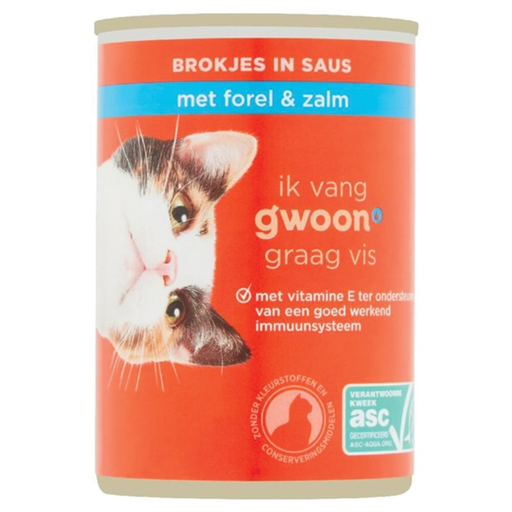
Why it suits this profile: This wet cat food is intended for adult cats and combines salmon and trout in sauce. It’s a good fit for shoppers who prioritise the food format and flavour variety.
The flavour is clearly described as salmon and trout in sauce. If you want to avoid fish, always check the current ingredients list.
415 g of wet food, served in sauce and, according to the product information, intended as a complete food for adult cats.
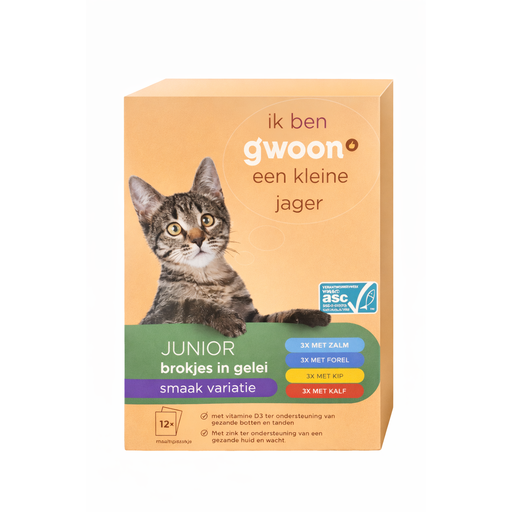
Why it suits this profile: The 12 portions of 100 g are practical for kittens and make it easier to portion out meals. According to the product information, this kitten food isn’t intended for adult cats.
It’s clearly labelled for kittens. The smaller portions mean there’s less opened wet food left over after a meal.
12 x 100 g, a mix of fish and meat, and a product description focused on kittens.
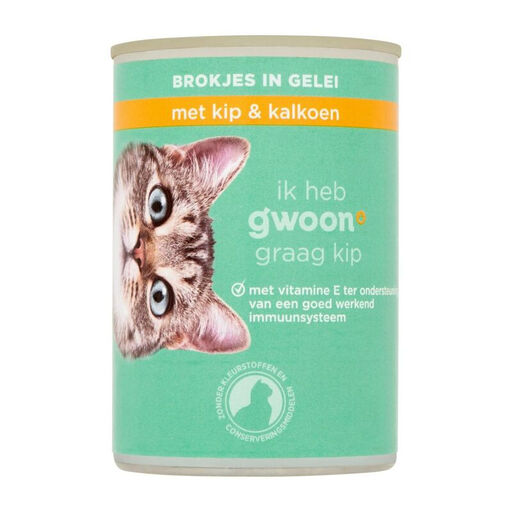
Why it suits this profile: This wet cat food for adult cats comes in a 405 g tin, with chicken and turkey in jelly. It’s a straightforward choice if you’re looking for a larger portion.
The variety, size and intended age group are clearly stated. According to the product information, leftovers should be refrigerated and used within two days.
405 g per tin, jelly as the food format, and chicken and turkey listed as ingredients.
We’ve put together a complete, up-to-date list of products that meet these strict selection criteria and current European safety regulations.
Dry cat food contains little moisture, is easy to weigh out and can usually be stored for longer after opening if the bag is kept tightly sealed. Wet cat food contains more moisture and is sold in tins, trays or pouches. The right choice depends on your cat’s preferences, your storage habits and the feeding guide on the packaging.
Always follow the label. For the wet food products mentioned, unused portions should be covered, kept in the fridge and used within two days. Store dry food in a cool, dry place in a sealed container or bag. For every pack, check the use-by date and the food’s smell and appearance, too.
That depends on the price per kilogram and the daily portion. So don’t just compare the price of a tin or multipack; work out the cost per 100 g or per day. Factor in leftovers, storage time and whether your cat will eat the whole product.
