
Vandaag of morgen in huis

Kwaliteit gegarandeerd

Welkomstaanbiedingen ontgrendelen: GRATIS bezorging | Tot 80% korting | Gratis 30 dagen JoyPlus-proefperiode
Download de app
As a cat owner, you naturally want the very best food for your pet. But the shelves are lined with packages making bold claims about "natural ingredients" and "complete nutrition." It's easy to get lost in marketing jargon and end up with a product that doesn't meet your cat's specific needs. This guide will help you make informed choices based on facts, not slogans.
Before you make a choice, it's helpful to know where things often go wrong. Many cat owners unwittingly fall into the same traps.
To avoid these pitfalls, you can focus on a few concrete specifications on the packaging. This will help you separate marketing from facts.
Cats are obligate carnivores and require animal-based proteins. Critically examine the ingredients list. A declaration like "70% veal, liver, lungs, heart" is far more specific and generally better than "meat and animal by-products (of which 4% is chicken)". A high percentage of clearly named meat is a good indicator of high-quality, healthy cat food.
Grain-free cat food is popular, and for cats with sensitive digestion or allergies, it can be a great solution. However, it's not an automatic guarantee of superior quality. More important is the digestibility of the carbohydrates. Some cats tolerate small amounts of rice or potato perfectly well. The absence of grains is primarily important if your cat has a demonstrable negative reaction to them.
The choice between wet cat food and dry kibble depends on your cat's needs and your personal preference.
A combination of both can also be an excellent strategy to leverage the benefits of each.
Not every food is suitable for every cat. Below are a few popular choices, tailored to specific cat and owner profiles.
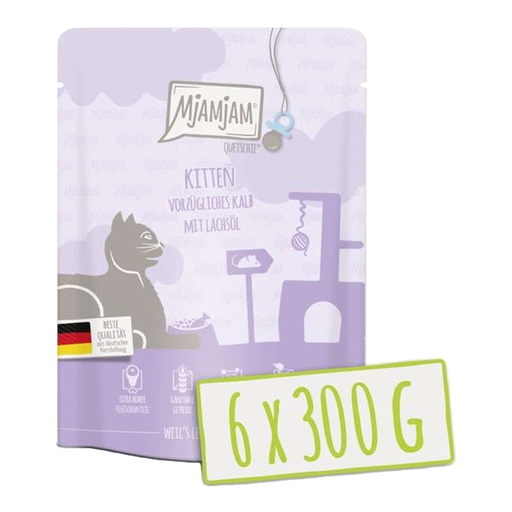
Why it's a match: This kitten food is specially formulated for growth. The focus is on high-quality nutrients essential for young cats, rather than a generic formula.
This food sidesteps the 'one-size-fits-all' trap by offering a recipe specifically tailored to kittens. The ingredients list is transparent and not misleading.
Contains 70% meat and animal by-products (veal, liver, lungs, etc.), is grain-free, and includes salmon oil for healthy development.
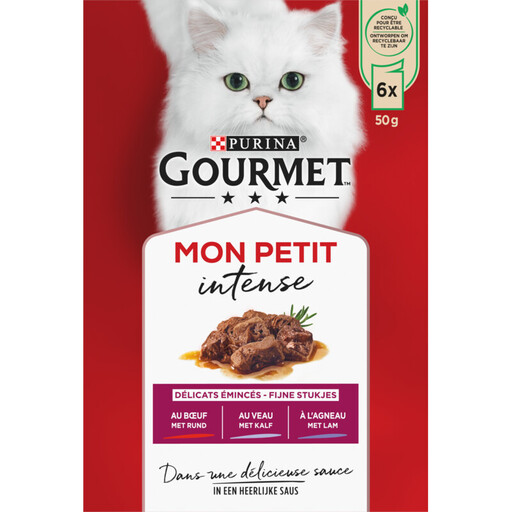
Why it's a match: Ideal for cats that prefer several small meals or get bored easily. The small 50g portions ensure every meal is fresh, leaving no leftovers.
This product doesn't focus on a single exotic flavour but offers variety in a practical package. It solves the problem of waste and diminished freshness.
Small, individually wrapped portions for maximum freshness and variety. According to the manufacturer, Gourmet, no artificial colours, preservatives, or flavourings have been added.
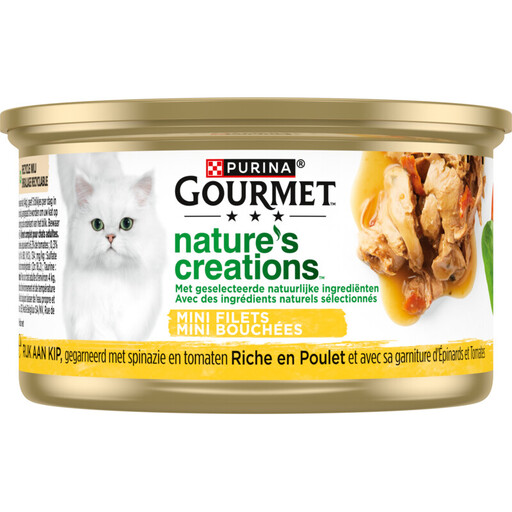
Why it's a match: For those who value recognisable ingredients. This food is made with what the manufacturer describes as "selected, high-quality natural ingredients."
It avoids the vague "natural" claim by specifying the ingredients of natural origin, such as chicken, tomatoes, and spinach. There are no added colourants.
A recipe with recognisable ingredients. With a protein content of 12.5%, it's a solid choice for an adult cat's wet food.
We have compiled a complete, up-to-date list of products that meet these selection criteria and current regulations.
Pay attention to your cat's digestion and skin. Symptoms like a dull coat, itching, or digestive issues can indicate a sensitivity to grains. In that case, switching to grain-free cat food can be a good step. For most cats without these issues, however, grains in limited quantities are not a problem.
This depends on your cat's weight, age, and activity level. An average adult cat weighing 4 kg needs about 200 to 300 grams of wet food per day, divided into at least two meals. The precise feeding guidelines are always on the product's packaging, as with Gourmet cat food or MjAMjAM cat food.
Yes, this is a common and effective method, also known as 'mixed feeding'. It gives your cat the benefits of both: the hydration from wet food and the dental benefits and convenience of kibble. Just be sure to monitor the total calorie intake to prevent weight gain.
