
Vandaag of morgen in huis

Kwaliteit gegarandeerd

Welkomstaanbiedingen ontgrendelen: GRATIS bezorging | Tot 80% korting | Gratis 30 dagen JoyPlus-proefperiode
Download de app
A new cat food bowl may seem like a simple purchase, but the wrong shape or size can cause frustration every day. A bowl that slides across the floor, is too deep or proves difficult to clean is often replaced after a short time. Attractive terms such as “ergonomic”, “anti-gulp” and “whisker-friendly” only mean something once you understand the features behind them.
Look out for these three common pitfalls:
A raised cat food bowl can be useful if your cat would rather not eat close to the floor or you want to keep the feeding area more organised. The right height depends on your cat’s build and eating habits. A bowl that’s too high may actually be uncomfortable.
An angled bowl can bring the food towards the front. For the model with a 15° angle, this feature is explicitly listed in the product information. The term whisker-friendly cat bowl is often used for wide, shallow designs intended to minimise contact with a cat’s whiskers. So always check the diameter and depth rather than relying on the name alone.
A stainless steel cat food bowl is generally practical for everyday use, as stainless steel doesn’t have a porous surface like some unglazed materials. The selected model is listed as being made from SUS304 stainless steel. For each product, check that the material is actually stated in the specifications and that the bowl is suitable for the type of food you use.
A ceramic cat bowl can be stable and often fits in well with your home. However, be sure to distinguish between a ceramic food bowl and a ceramic mug or drinking cup. A decorative product isn’t automatically designed for long-term use as a pet bowl. Check its capacity, opening, stability and care instructions before using it as a food or water bowl.
Wash food and water bowls regularly with warm water and washing-up liquid. Check stainless steel for sharp edges and inspect ceramic bowls for cracks. Damaged surfaces can be harder to keep clean.
A non-slip cat food bowl is particularly useful on smooth floors such as tiles, laminate or PVC. A separate silicone mat can help reduce spills, but remember to consider the space available around the feeding area too. A large mat won’t always fit under a narrow cupboard or in a feeding station.
For cats that eat their kibble quickly, an anti-gulp cat bowl or cat slow feeder can be a practical choice. Obstacles in the bowl divide the food into several small sections. According to the product description, this model is designed to slow down eating. It isn’t a substitute for nutritional advice or medical care.
Also check the capacity. A bowl of around 400 ml may be suitable for a cat or small dog, but the practical amount depends on the type of food and portion size.
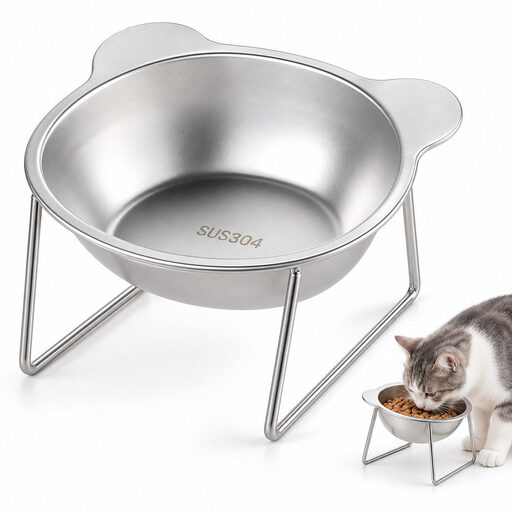
Why it suits this profile: This cat food bowl combines a raised position with a 15° angle. It’s a good fit if you’re looking for a straightforward, practical design without extra feeding features.
The product specifications list SUS304 stainless steel, the angle and a whisker-friendly design. That means you don’t have to rely on vague marketing terms alone.
SUS304 stainless steel, a raised design and a stated angle of 15°.
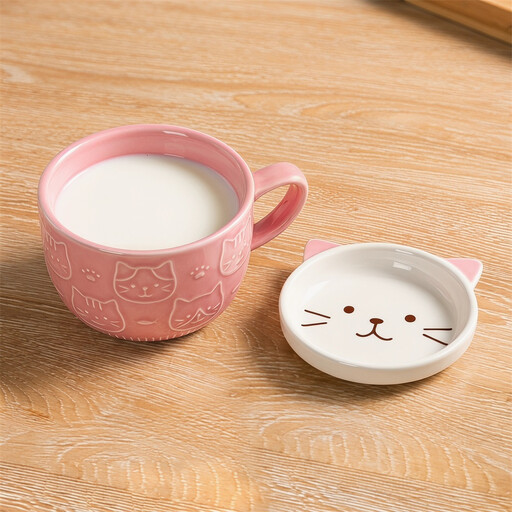
Why it suits this profile: If you like the look of ceramic, this decorative model may be worth considering. The product information lists a capacity of 300 ml; before using it as a cat bowl, check that its shape is practical and that it’s stable enough.
The capacity is stated, but this isn’t a bowl specifically designed for pets. This makes it clear that a mug shouldn’t automatically be considered a food bowl.
Ceramic design and a 300 ml capacity; suited to shoppers who prioritise shape and appearance.
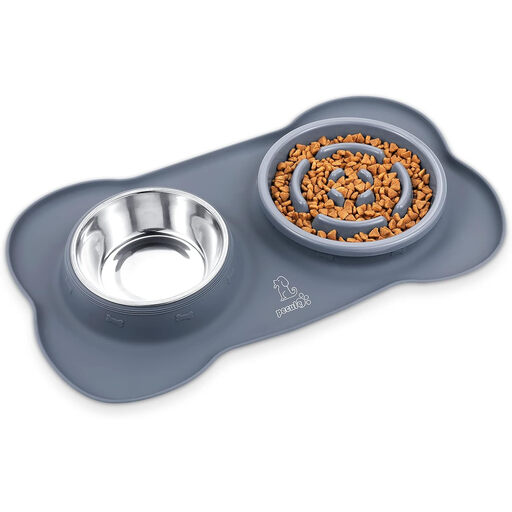
Why it suits this profile: This set is designed for households with a cat or small dog that want a slow feeder, water bowl and spill mat in one solution.
The raised obstacles are designed to slow down eating. The silicone mat also helps prevent slipping and spills.
3-in-1 set with a 400 ml slow feeder, a 400 ml stainless steel water bowl and a foldable silicone mat.
Place the bowl on a flat surface, preferably not right next to the litter tray. Use a separate cat water bowl to keep food remnants out of the drinking water. If you’re using a set for a cat and a small dog, check that the capacity and height are suitable for each pet.
Check silicone and stainless steel regularly for cracks, warping or sharp edges. According to the Pecute set’s product information, both bowls are dishwasher-safe; always follow the instructions for the specific product. The water bowl in this set isn’t designed to be a slow feeder. So keep an eye on your pet’s water intake separately.
We’ve put together a full, up-to-date list of products that meet these strict selection criteria and the applicable European safety regulations.
Rinse the bowl daily and wash it regularly with warm water and washing-up liquid. Wet food leaves residue more quickly than dry food. A smooth, non-porous surface is usually easier to keep clean.
Not necessarily. Consider the height, your cat’s posture and how they eat. A low or angled model may be comfortable, but preferences vary from one cat to another. Let your cat get used to it gradually, and replace the bowl if eating or drinking seems difficult.
No. A slow feeder can affect eating speed by adding obstacles to the bowl, but results vary from cat to cat. Choose a model that’s large enough, supervise your cat while they use it and stop using it if it becomes damaged. If eating problems persist, it’s best to consult a vet.
