
Vandaag of morgen in huis

Kwaliteit gegarandeerd

Welkomstaanbiedingen ontgrendelen: GRATIS bezorging | Tot 80% korting | Gratis 30 dagen JoyPlus-proefperiode
Download de app
Pet food packaging is often covered in appealing phrases such as “with beef”, “natural” or “complete meal”. That sounds clear, but it does not always tell you what your pet is actually getting. When choosing cat food and dog food, the animal species, life stage, composition and portion size are particularly important.
For households in the Netherlands, ease of storage and the price per meal also matter. A large bag of dry cat food may seem economical, while a tin of wet food needs to be used quickly once opened. The following checks will help you avoid buying food that is not right for your cat or dog.
“With chicken” or “with beef” is not a complete nutritional analysis. Check the ingredients list and look at the percentage given for the named ingredient. For example, the product information for Felix Double the Tasty Beef and Chicken 800g states that certain kibbles contain 2% beef and 2% chicken. The flavour name alone is therefore no reason to assume that the food consists mainly of beef or chicken.
The same applies to cat food containing fish: fish and fish derivatives may only make up part of the composition. Always check the full ingredients list.
A kitten needs different food from an adult cat. The same applies to a puppy and an adult dog. Check whether the packaging clearly states adult, junior, kitten or another life stage.
A product such as g'woon Chunks in Jelly Fish and Meat Variation Junior 12 x 100g is intended for kittens according to the product description. G'woon Chunks in Jelly With Chicken 415g, on the other hand, is aimed at adult dogs. Do not confuse these categories based only on the packaging or flavour.
Dry food is generally practical to use after opening, but it should be kept tightly sealed in a cool, dry place. Tinned or portion-packed wet food requires more attention: leftovers should be covered and stored in the fridge and, according to the product information, usually used within two days.
Choose a pack size that matches your pet’s daily consumption. For one cat, a 4 kg bag may remain open for longer than is ideal; for several pets, a multipack may help reduce waste.
Start with the basics:
For special dietary requirements, allergies or medical conditions, it is advisable to consult a vet. Product information does not replace individual nutritional advice.
Look on the label for wording such as complete pet food or complete and balanced pet food. This means that, when used according to the stated instructions, the product has been formulated as a daily diet. Also check:
Not every product page lists every analytical constituent. Missing values are not proof of a better or less suitable composition. Use the label on the packaging as your final check.
Dry cat food and dry dog kibble are easy to measure and store. They contain relatively little moisture, so fresh drinking water should always be available. Examples include Whiskas Adult Dry Cat Food with Beef 1.9kg, Whiskas Adult Dry Cat Food with Chicken 800g and g'woon Adult Cat Bites with Fish 2kg.
Wet cat food and wet dog food contain plenty of moisture and are often supplied in tins, trays or pouches. Serving temperature, fridge storage and shelf life after opening vary by product. Adjust the amount according to weight, age, activity level and body condition, rather than relying solely on the flavour variant.

Why it suits this profile: A manageable bag for anyone looking for dry food for an adult cat and wanting to try a smaller quantity first.
The product information explicitly mentions adult cats, the 800 g pack size and a recommended storage method.
Dry food; 800 g pack; complete food for adult cats according to the label.
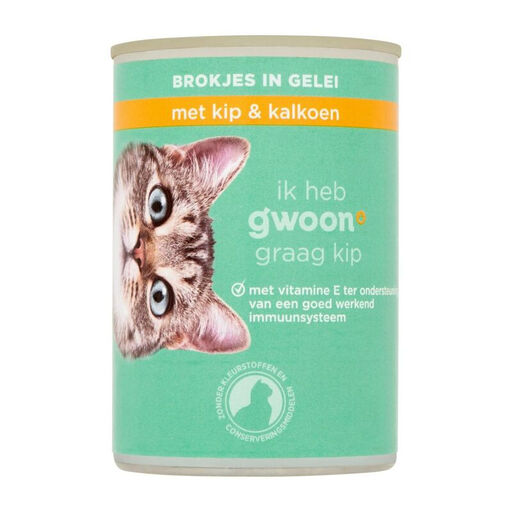
Why it suits this profile: Suitable for anyone looking for wet cat food for an adult cat, with pieces of chicken and turkey in jelly.
The product page lists the target group, ingredients and storage period after opening. This allows you to check your choice rather than relying solely on the flavour name.
405 g tin; chicken and turkey in jelly; complete wet food for adult cats according to the product description.
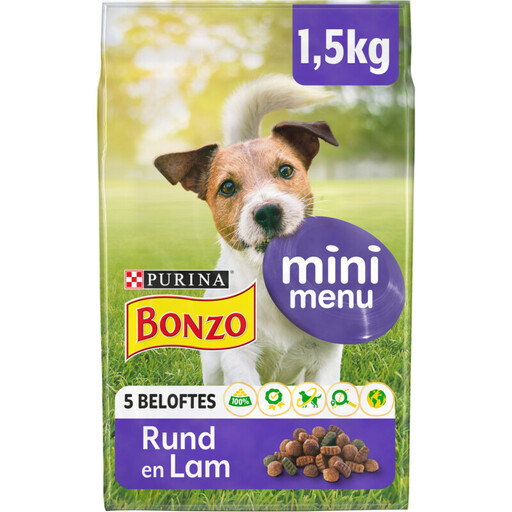
Why it suits this profile: Aimed at owners of a small adult dog who are looking for smaller kibbles and a beef-and-lamb variety.
The product description mentions both the adult life stage and suitability for small dogs weighing up to 10 kg. This makes the selection more specific.
Smaller kibbles; beef and lamb variety; described as complete and balanced food for adult small dogs.
When buying pet food online, do not look only at the price of a single pack. It is better to compare the price per 100 grams or per daily portion. Also consider the following points:
For even more choice, you can also browse the kibble category. This makes it easier to compare options by food type, animal species and pack size.
We have put together a complete, up-to-date list of products that fully meet these strict selection criteria and the applicable European safety regulations.
That depends on the brand, pack size and daily portion. Dry food is often easy to buy in larger quantities and store. Wet food contains more moisture, but is usually sold in tins, pouches or multipacks. Compare the price per 100 grams as well as the amount your pet needs each day.
Always follow the label. For several of the products mentioned, the instructions state that leftovers should be covered, stored in the fridge and used within two days. Do not leave wet food at room temperature for extended periods, and serve it according to the usage instructions.
Gradually mix the new food into the current food, for example over seven to ten days when this is recommended on the packaging. Monitor your pet’s appetite, stools and weight. If problems persist or your pet has specific dietary requirements, contact a vet.
