
Vandaag of morgen in huis

Kwaliteit gegarandeerd

Welkomstaanbiedingen ontgrendelen: GRATIS bezorging | Tot 80% korting | Gratis 30 dagen JoyPlus-proefperiode
Download de app
Cast iron pans are popular with home chefs, families and hobby cooks who want one pan for multiple cooking methods. The material holds heat for a long time and is suitable for searing, braising, baking and serving. However, not every cast iron pan is equally practical for your kitchen.
A heavy pan that doesn’t fit on your hob, a capacity that’s too large for a small household, or an unclear finish can quickly lead to a disappointing purchase. These checkpoints will help you compare models on the features that really matter in everyday use.
A 24 cm pan may have a capacity of 4.2 litres, while the actual base is smaller. So alongside the diameter, always check the base size, height and capacity. The base is especially important for induction hobs: a cooking zone typically heats the magnetic surface it makes contact with.
Cast iron is heavy. A 22 cm model can already weigh nearly 4 kg, without any ingredients. A large cast iron roasting pan of 40 cm can weigh over 11 kg including the lid. So check whether you have enough cupboard space and whether you can safely move the pan from hob to oven or table.
Also pay attention to the dimensions including the handles. A pan may fit on the hob, but not in your oven or dishwasher.
Some cast iron pans are suitable for induction, gas, ceramic, electric and the oven. Other models have a more limited specification. A braising pan for induction must have a magnetic base. If you want a pan for both oven and induction, also check the maximum oven-safe temperature for the knob, lid and handles.
The suitability of the products below is based on the supplied product specifications. Always check the current product page before purchasing.
An enamelled cast iron pan has a smooth layer on the inside. This layer generally makes cleaning easier and means you don’t have to season the pan first. With enamel, it’s best to use wooden, silicone or plastic utensils and avoid abrasive sponges.
Untreated cast iron can work well for high temperatures, but requires more maintenance. You need to store the pan dry and keep the protective oil layer topped up. For everyday use, many households therefore choose enamelled cast iron.
Use this practical guide:
A pan that’s too large can be awkward for small portions. A pan that’s too small, on the other hand, will quickly overflow with soup, stew or a one-pot dish.
A well-fitting lid helps keep heat and moisture inside the pan. Check whether the knob is oven-safe and whether the handles are large enough for oven gloves. With a cast iron frying pan, pouring spouts are practical for draining fat or sauce, but bear in mind the weight of the pan and the fact that the handle often gets very hot.
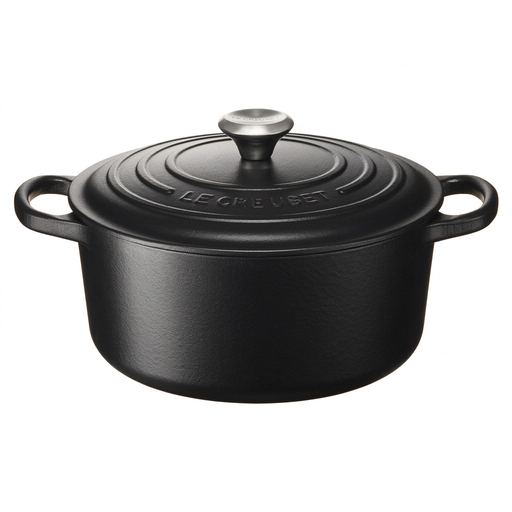
Why this fits the profile: The 3.3 litre capacity is manageable for everyday meals and portions for around 2 to 3 people. According to the product information, the pan is suitable for induction, other hobs and the oven.
The capacity and dimensions are clearly stated, so you’re less likely to buy a pan that’s too large. According to the description, the enamelled interior can be cleaned by hand or in the dishwasher.
3.3 litre capacity, approx. 3.93 kg, large handles and a matt, enamelled interior.
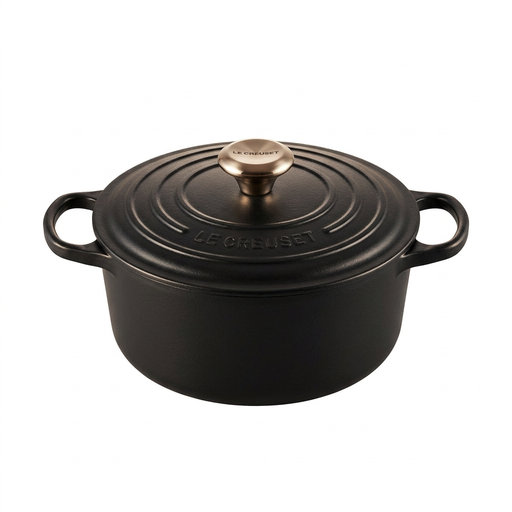
Why this fits the profile: This Le Creuset cast iron pan combines a 4.2 litre capacity with a lid and wide handles. That suits families who make stews, soups and oven meals.
The specifications state a round shape, 24 cm diameter and 4.2 litre capacity. This means you can compare the capacity with your household needs rather than just going by colour or brand name.
Suitable for induction and oven according to the product description, with an enamelled finish and a weight of approx. 4.3 kg.
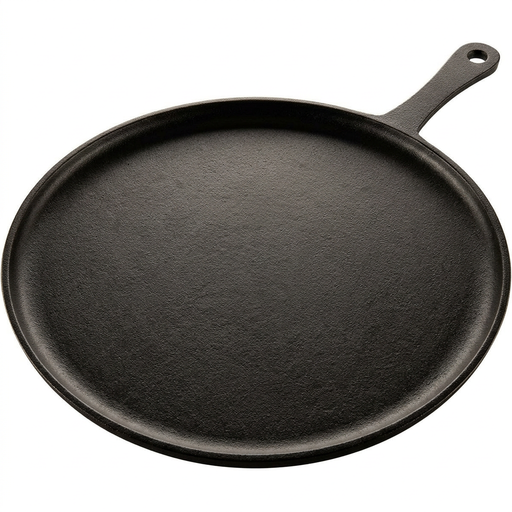
Why this fits the profile: For those who often make pancakes or crêpes, a dedicated crêpe pan is more practical than a deep braising pan. This model has a diameter of 27 cm and, according to the product information, comes with a batter spreader.
The pan is specifically designed for thin batter. Do check the hob compatibility: the supplied specification mentions gas, ceramic, electric and halogen, but not induction.
27 cm diameter and a supplied batter spreader; suitable for targeted cooking applications.
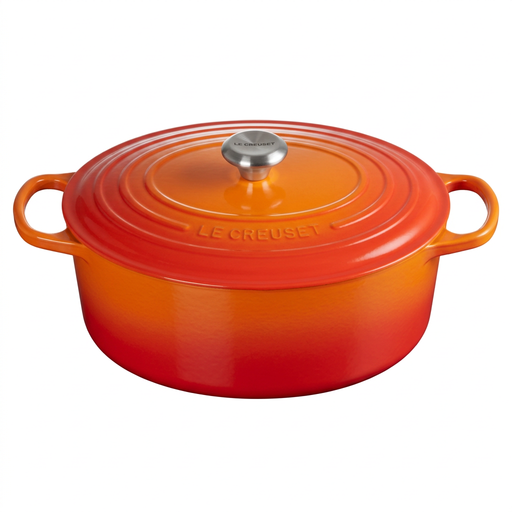
Why this fits the profile: The stated capacity of 13.9 litres is intended for large gatherings and generous family dishes. The oval shape is practical for long cuts of meat or multiple portions.
The capacity, external dimensions and weight of approx. 11.4 kg can be checked in advance. This allows you to assess whether your oven, hob and storage space are suitable.
13.9 litre capacity, enamelled cast iron, lid and, according to the product information, suitable for all heat sources including induction.
Not every dish calls for cast iron. A cast iron frying pan is suitable for searing, but a lighter non-stick pan can be more convenient for eggs. For tabletop dishes, a raclette grill with eight mini pans is suitable for groups of 2 to 8 people. According to the product information, the Fritel SG 2180 has a natural stone plate, 1500 watts of power and removable parts.
If you have limited fixed cooking space, a portable induction hob can be a great solution. The Rommelsbacher CT 3420/IN has two cooking zones, a total power of 3400 watts, pan recognition, a timer and a child lock. Only use pans with a ferromagnetic base on it.
We’ve put together a full, up-to-date list of products that fully meet these strict selection criteria and comply with current European safety regulations.
That depends on the model. Cast iron is usually magnetic, but always check the product specification and the diameter of the base. An enamelled pan marked “suitable for induction” can generally also be used on gas, electric or ceramic hobs if that is explicitly stated.
The lifespan depends on the material, enamel finish and maintenance. Avoid thermal shock, don’t run cold water directly into a hot pan, and don’t use metal utensils on an enamelled interior. Follow the manufacturer’s care instructions and check regularly for damage.
Cast iron heats up slowly, but holds heat for a long time. So heat the pan gradually and don’t automatically use the highest setting. Turn the heat down once the pan is up to temperature. The actual energy consumption depends on the hob, cooking time, pan size and the amount of food.
