
Vandaag of morgen in huis

Kwaliteit gegarandeerd

Welkomstaanbiedingen ontgrendelen: GRATIS bezorging | Tot 80% korting | Gratis 30 dagen JoyPlus-proefperiode
Download de app
A cast iron pan can be part of your kitchen for years, but only if its size, finish and heat source suit the way you cook. Many buyers focus mainly on its appearance or a well-known brand name. As a result, they sometimes end up with a heavy pan that doesn’t fit their hob, is too small for the family or turns out to be difficult to clean.
This buying guide helps you turn product claims into features you can check. That way, you can find the right cast iron casserole, cooking pot, wok or crêpe pan for induction, gas and oven use.
An enamelled cast iron pan has a smooth coating over the cast iron. This generally makes the surface easier to clean than untreated cast iron. However, careful use is still important. Metal utensils, abrasive cleaners and sudden temperature changes can damage the enamel.
With untreated cast iron, you also need to take extra care to prevent moisture and rust. So check whether the product is enamelled and what cleaning method the manufacturer recommends.
A pan may be suitable for gas and electric hobs, but that doesn’t automatically mean it’s suitable for induction or oven use. Always check the product specifications. Some models are simply labelled “all hobs”, without clearly stating the maximum oven temperature or whether they’re suitable for induction.
An induction pan needs a magnetic base or must be made from a material suitable for induction. For an oven-safe pan, also check that the lid, knob and handle can withstand the same temperature as the pan.
A diameter of 20 or 22 cm may seem large enough, but usable capacity can vary depending on the shape and height. A 14 cm, 1.3-litre mini cast iron pan can be practical for one person. For two to three people, a capacity of around 2.4 to 3.3 litres is more suitable. Families often need a larger cooking pot.
Also consider the weight. Cast iron retains heat well, but a heavy pan is less easy to move, especially when it’s full.
A traditional cast iron pan is made from solid cast iron. This material heats up relatively slowly and retains heat for a long time, making it well suited to roasting, slow cooking and cooking over a low heat. So heat the pan gradually and don’t use an extremely high setting when it’s empty.
With an enamelled cast iron pan, the enamel forms a protective layer. Product information often mentions features such as rust resistance or easier cleaning. Treat these as claims made by the brand, and always follow the care and use instructions. We recommend using wooden or plastic utensils and avoiding rinsing the pan with cold water immediately after cooking.
Use these guidelines as a starting point:
A cast iron wok usually has a wide cooking surface and is suitable for stir-frying, provided it’s designed for that purpose. A crêpe pan, by contrast, is low and wide. A cast iron crêpe pan is therefore less versatile than a casserole, but gives you more room to work when making pancakes and crêpes.
A well-fitting lid helps keep moisture in the pan while slow cooking. Check that the product is actually supplied as a pan with a lid. The Le Creuset Signature Round Casserole Dish, 20 cm, comes with a lid and has a stated capacity of 2.4 litres.
Pay attention to the handles: cast iron gets hot, even if a handle looks comfortable to hold. Use oven gloves, and check whether a pan with a plastic handle is oven-safe. The product specifications are what matter, not just the general product title.
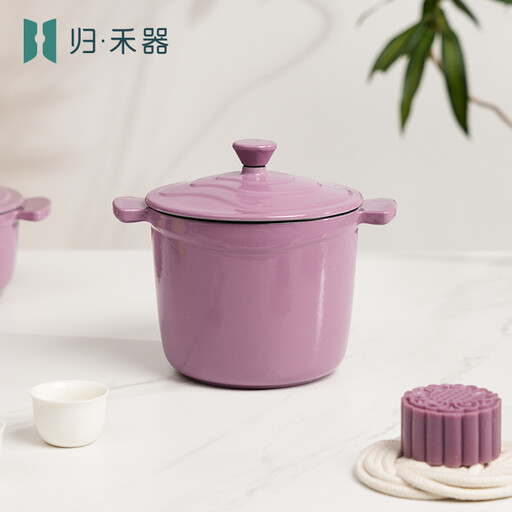
Why it suits this cooking profile: Its compact size is ideal for small portions of porridge, soup or sauce, or a single serving. According to the product information, this pot is suitable for induction.
The diameter and capacity are clearly stated, so you don’t have to rely on the product photo alone. The enamelled finish means you don’t need a traditional seasoning routine, but careful cleaning is still important.
14 cm diameter, 1.3-litre capacity and, according to the product information, suitable for induction hobs.
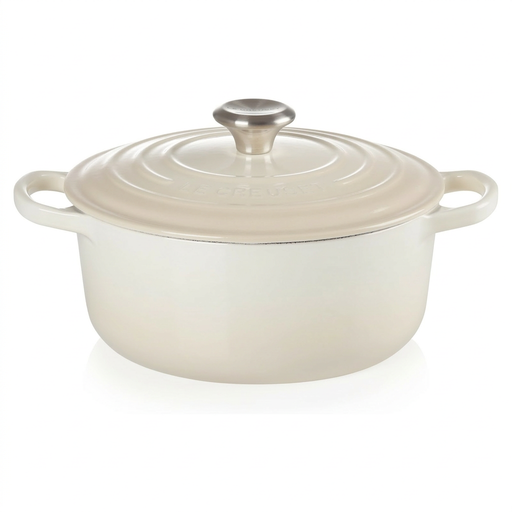
Why it suits this cooking profile: This enamelled cast iron cooking pot is designed for everyday cooking for two to three people. It comes with a lid and large handles, and according to the product information, it’s suitable for induction and oven use.
The specifications list the capacity, diameter, finish, lid and heat sources separately. This makes it easier to compare the product with a standard casserole.
2.4-litre capacity, lid included, enamelled finish and, according to the product information, suitable for induction and oven use.
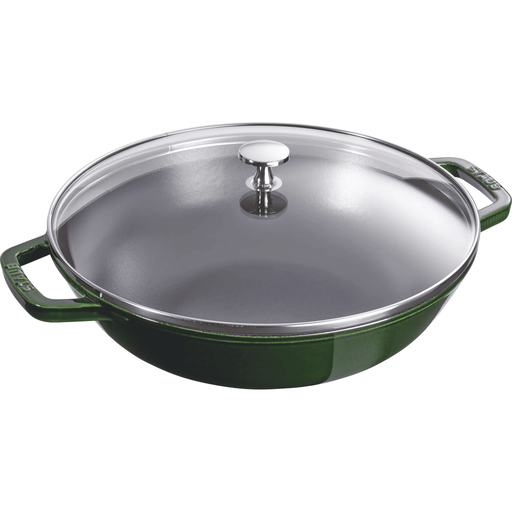
Why it suits this cooking profile: The 30 cm diameter gives you plenty of room for stir-frying and larger portions. According to the product information, the pan is designed to heat up quickly and retain heat for a long time.
Its distinctive wok shape and diameter make it easy to tell apart from a deep cast iron casserole. Before buying, check the full details to make sure it’s compatible with your particular hob.
30 cm diameter and a shape suited to stir-frying, sautéing and cooking for several people.
A cast iron casserole with a lid is particularly well suited to dishes that need to cook gently. A low-sided crêpe pan or mini cast iron pan serves a different purpose. So choose based on the recipes you make, not just the material.
We’ve put together a complete, up-to-date list of products that meet these strict selection criteria and the applicable European safety requirements.
It can be, but always check the product specifications. According to their product information, enamelled models such as the Guiheqi pot and various Le Creuset pans are suitable for induction. The flat base needs to make good contact with the hob.
Its lifespan depends on the material, coating and care. An enamelled pan needs to be protected from knocks and thermal shock. Untreated cast iron needs to be dried carefully to help prevent rust. So follow the manufacturer’s care instructions and avoid using the pan in ways it isn’t designed for.
Energy use depends mainly on the hob, cooking time and temperature. Cast iron retains heat for a long time, so once the pan is hot, you can often continue cooking on a lower setting. Heat the pan to suit the dish, and don’t leave it empty on the hob for longer than necessary.
