
当日/次日达

品质保障

开启新人专享福利: 全场免邮 | 低至 2 折 | 免费试用 30 天 JoyPlus 会员
下载 Joybuy
A cast-iron pan can last for years, but only if the type of pan suits your hob, recipes and cleaning routine. Many disappointing purchases happen because shoppers focus mainly on the colour, brand name or a claim such as “non-stick”. The details that affect everyday use are often further down in the product information.
An enamelled cast-iron pan has a glass-like coating on the inside and outside. This coating generally makes the surface easier to clean and means you do not need to season the pan in the same way as uncoated cast iron.
With an uncoated cast-iron frying pan, maintenance is more important. After washing, dry the pan immediately and lightly grease it to help prevent rust. A product without a non-stick coating may also catch more easily if the pan has not been seasoned properly or is used while too cold.
A 30 cm pan sounds spacious, but you should also check the weight, height and overall length including the handles. For example, a 30 cm Staub wok can hold approximately 4.4 litres, while a compact 14 cm pan has a capacity of around 1.3 litres. These are two completely different uses.
With an induction hob, also check the diameter of the flat base. A round wok may have a smaller base than its total diameter. As a result, the entire cooking surface of the pan may not be heated directly by the induction zone.
Cast iron retains heat for a long time. This is useful for frying and slow cooking, but handles can become extremely hot. If a pan has a wooden handle, you should also check whether the handle is suitable for the desired oven temperature. Always use oven gloves and avoid moving a hot pan suddenly into cold water. This can damage the material or enamel.
Choose uncoated cast iron if you are prepared to season the pan and dry it carefully after every use. This type is suited to traditional frying, grilling and cooking over gas or a campfire.
Choose enamelled cast iron for stews, sauces, soups and everyday use with less maintenance. A cast-iron roasting pan or cast-iron casserole with a lid is suitable for dishes that cook slowly. However, watch out for damage to the enamel coating and, where recommended in the product information, use wooden or silicone utensils.
Use these guidelines as a starting point:
Also check whether the pan fits in your oven and whether the weight is manageable. A heavy pan is stable, but less convenient to move with one hand.
For a cast-iron pan for induction, the product description should explicitly mention induction compatibility. The same applies to gas, electric, ceramic, halogen and oven use. Do not rely on the material alone; the shape of the base and the handle also determine whether the pan is suitable.
With uncoated cast iron:
An enamelled pan usually requires less maintenance, but allow it to cool completely before rinsing it. Always check whether the pan is dishwasher-safe; product information may vary from one model to another.
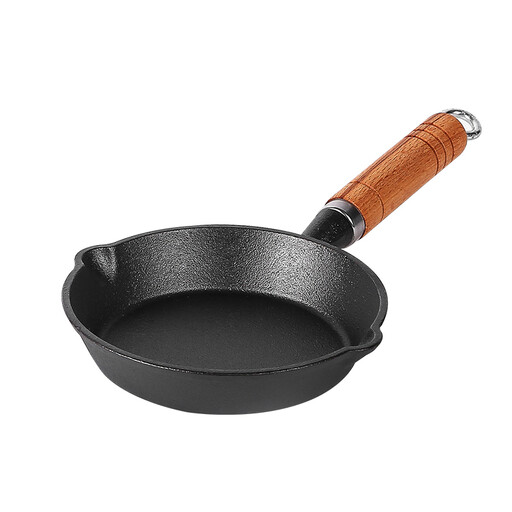
Why it suits this profile: The small diameter is ideal for single servings, sauces, butter or small side dishes. According to the product information, the pan can be used on gas, electric, ceramic and induction hobs, as well as in the oven; check that the wooden handle is suitable.
The product information clearly states that this pan is uncoated. You therefore know in advance that seasoning, hand-washing and immediate drying are part of using it.
10 cm diameter, induction compatibility and a wooden handle. Its compact size is ideal for small portions.
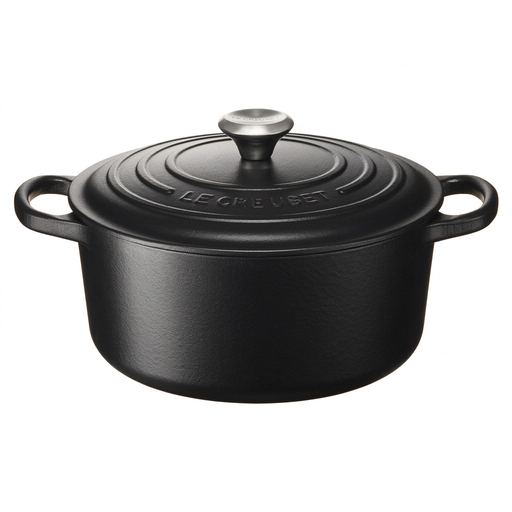
Why it suits this profile: This enamelled pan has a capacity of 3.3 litres and, according to the product description, is suitable for all hobs, including induction, as well as oven use.
The dimensions, capacity and heat sources are clearly stated. This allows you to check in advance whether 22 cm and 3.3 litres are suitable for your household.
Enamelled interior, 3.3-litre capacity, suitable for oven and induction use, plus large handles.
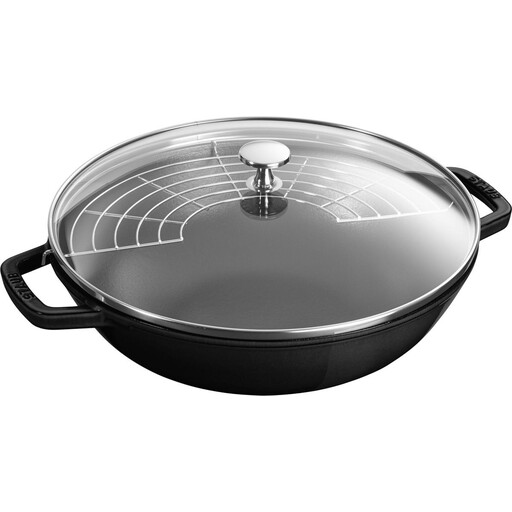
Why it suits this profile: According to the product information, the wok has a capacity of 4.4 litres, a height of 12 cm and an enamelled cast-iron construction. This makes it suitable for stir-frying, slow cooking and larger meals.
The product details specify the 3.3 kg weight, capacity and suitability for induction and oven use. You can therefore take portability and storage space into account.
30 cm diameter, 4.4-litre capacity, enamelled surface and suitable for all the heat sources mentioned.
We have put together a complete, up-to-date selection of products that fully meet these strict selection criteria and the applicable European safety requirements.
Yes, provided the product information lists induction as a suitable heat source and the base makes good contact with the cooking zone. In particular, check the diameter of the flat base when buying a wok or round pan. Lift the pan rather than sliding it across a glass hob to help prevent scratches.
Its lifespan depends on the material, enamel coating and maintenance. Uncoated cast iron can be seasoned again when the surface no longer performs as well. With enamelled cast iron, it is important to handle the pan carefully and avoid knocks, metal utensils and sudden changes in temperature. Store the pan in a dry place and follow the manufacturer’s care instructions.
Many models are oven-safe, but this does not automatically apply to every handle, knob or lid. Check the stated oven resistance and maximum temperature. A cast-iron pan for the oven is useful for stews, bread, gratins and dishes that are first browned on the hob.
