
Vandaag of morgen in huis

Kwaliteit gegarandeerd

Welkomstaanbiedingen ontgrendelen: GRATIS bezorging | Tot 80% korting | Gratis 30 dagen JoyPlus-proefperiode
Download de app
A cast iron pan can last for years, but not every model suits every kitchen. Home cooks often focus primarily on colour, brand, and price. As a result, important factors such as weight, hob compatibility, and maintenance are sometimes overlooked. Particularly with an induction hob or a compact Dutch kitchen, the wrong choice can quickly become impractical.
This guide explains what to look for in cast iron cookware. Following that, you will find a selection tailored to different cooking styles, from daily frying to slow cooking and wokking.
Cast iron retains heat for a long time, but this also means a pan can be quite heavy. A large cast iron casserole dish of 4 litres or more is less practical if you need to move it regularly. Therefore, check not only the diameter but also the weight including the lid.
A Le Creuset Signature Casserole of 40 cm, for example, has a capacity of 14.8 litres and weighs 11.4 kg according to the product information. That size is more suited to large portions than to daily cooking for one or two people.
Enamelled cast iron has a surface coated with an enamel layer. This generally makes the pan easier to clean and prevents the need to season the surface in the same way as raw cast iron. The layer does require careful use: sharp metal utensils, abrasive scouring pads, and large temperature fluctuations can damage the surface.
A regular cast iron frying pan without enamel requires more attention to drying and rust prevention. So, check which type of finish you are buying and follow the manufacturer's care instructions.
An induction-compatible cast iron pan usually works well on induction, but the base must be flat enough and the diameter must match the cooking zone. A 30 cm pan will not automatically heat efficiently on a small induction zone. Also check whether the pan is suitable for your other heat sources, such as gas, ceramic, electric, or halogen.
Cast iron is suitable for techniques where heat retention is important, such as searing, braising, and slow cooking. An enamelled interior is practical for sauces, tomatoes, and other moist dishes. With raw cast iron, you must dry it carefully after cleaning and lightly oil the surface if necessary.
Also watch out for inconsistencies in product information. A product page might list "cast iron" as the main material, while the handles, knob, or interior are made of a different material. This difference affects oven use and maintenance.
Use this guide as a starting point:
A cast iron casserole with a lid often has less cooking surface than a frying pan with the same outer diameter. Therefore, look at the internal measurement and not just the size on the packaging.
Explicitly check whether the pan is suitable for induction and the oven. Also pay attention to the maximum oven temperature of the knob, handles, and any coating. A pan may be oven-safe, while a plastic or wooden component is not.
The product description for several Le Creuset models mentions use on all heat sources and in the oven. For the crêpe pan, gas, ceramic, electric, and halogen are mentioned. Always check the current product specifications before ordering, especially when using an induction hob.
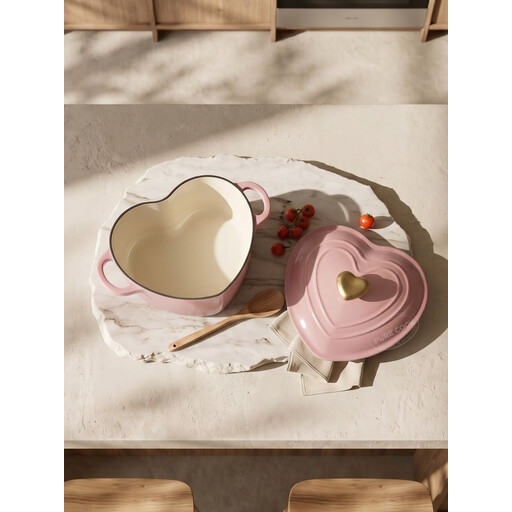
Why this fits: A compact pan for one-pot dishes, soup, and small stews. According to the product description, this model is suitable for gas and induction and can be used in the oven.
The diameter of approximately 19 to 20 cm keeps the size manageable. The enamel layer means, according to the description, you can use the pan immediately without seasoning.
Enamelled cast iron, lid included, and suitable for induction and oven according to the product information.
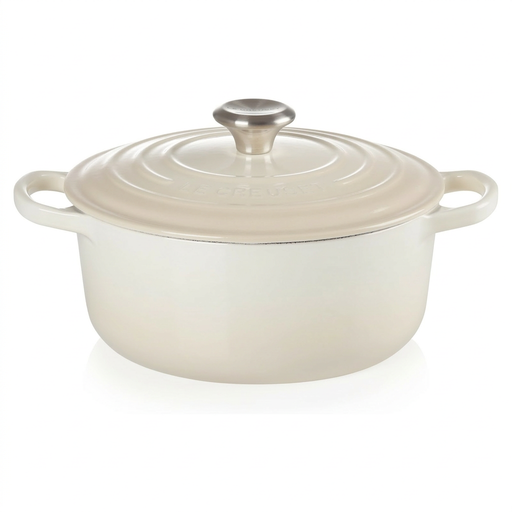
Why this fits: For those seeking a compact casserole that can also be brought to the table. The product specifications mention a capacity of 2.4 litres and use on induction and in the oven.
The size is clearly specified for approximately two to three people. This reduces the chance of buying an unnecessarily large and heavy casserole.
2.4 litre capacity, enamelled finish, lid, and stated suitability for all hobs and the oven.
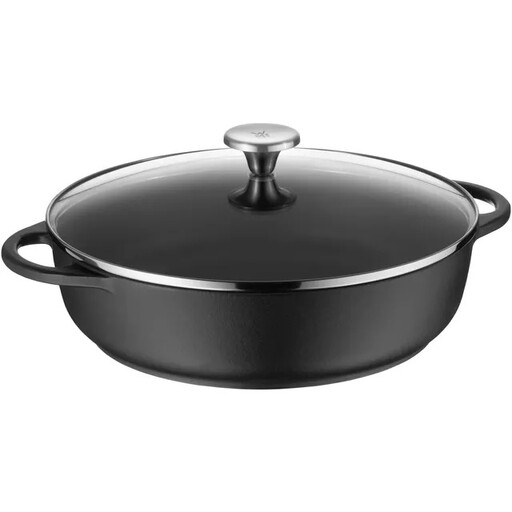
Why this fits: A spacious cast iron casserole for stews and meals for multiple people. According to the product description, this model is suitable for all common heat sources and the oven.
The 28 cm diameter provides more cooking surface than a compact pan. The manufacturer also states that you should avoid sharp metal utensils to protect the coating.
28 cm diameter, oven-safe according to the product information, and dishwasher-safe. However, avoid abrupt temperature changes.
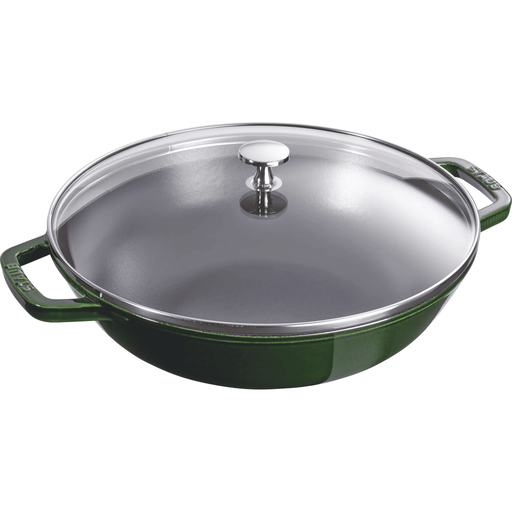
Why this fits: For stir-frying, sautéing, and dishes where a spacious pan is desired. The product information mentions a diameter of 30 cm and cast iron as the material.
The diameter is clearly stated, so you can check if the wok fits your cooking zone. Be aware of the higher weight of cast iron compared to thin sheet steel.
Spacious 30 cm cooking surface and a construction that, according to the product description, absorbs heat quickly and retains it for a long time.
Browse a current selection of cast iron products and compare dimensions, finish, heat sources, and usage scenarios before making your choice.
A 27 cm cast iron crêpe pan is handy for pancakes but serves a different function than a deep casserole. A 22 cm, 2.6 litre cast iron fondue pot is again aimed at serving and keeping warm. So, choose based on your dishes, not just on the material.
Yes, many models are suitable for induction. Always check this in the product specifications and ensure a flat base and appropriate diameter. Not every accessory or pan shape heats equally efficiently on every induction zone.
The lifespan depends on the material, enamel layer, use, and maintenance. Cast iron itself is durable, but enamel can be damaged by impacts, abrasive agents, or thermal shock. With careful use, a pan can remain a long-term part of your kitchen.
The pan does not use its own fuel; energy consumption is primarily determined by the hob, temperature, and cooking time. Because cast iron retains heat for a long time, you can sometimes lower the heat early when stewing. The heavy material does heat up gradually, so a suitable cooking zone is important for quick cooking.
