
Vandaag of morgen in huis

Kwaliteit gegarandeerd

Welkomstaanbiedingen ontgrendelen: GRATIS bezorging | Tot 80% korting | Gratis 30 dagen JoyPlus-proefperiode
Download de app
A quality cast iron casserole is an investment for life. It's the pan you pass down to the next generation, filled with stories of successful stews and family dinners. But the market is saturated with options and marketing promises. How do you ensure your investment pays off and you don't end up with a heavy, cumbersome pot gathering dust in the cupboard?
As a Joybuy Product Recommendation Officer, I see where things go wrong every day. Many people fall into the same traps. Let's review the most common ones so you can avoid them.
To avoid a poor purchase, it's important to look beyond the colour or brand. Focus on the specifications that truly make a difference in the kitchen.
The enamel layer is crucial. It protects the cast iron from rust and means you don't have to season the pan. There are two types of enamel for the interior:
The quality lies in its durability. High-end pans have multiple, carefully applied layers that are resistant to thermal shock and scratches.
The shape of the casserole dish is not a matter of taste, but of function.
For the size, you can use the following guideline:
Do you cook on an induction hob? Then a completely flat base is essential. Cast iron is naturally magnetic and therefore suitable for induction, but a concave or convex base makes poor contact with the cooktop. This leads to energy loss and frustratingly slow heating. Brands like Le Creuset and Staub are known for their strict quality control, resulting in a perfectly flat base that guarantees maximum efficiency on induction.
Based on these objective criteria, we have selected a number of pans that suit different cooking styles and households.
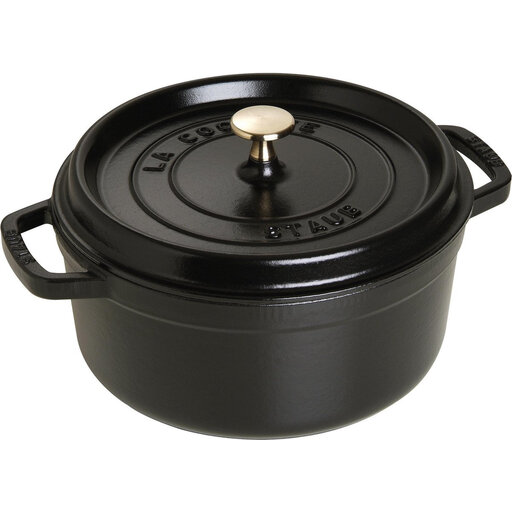
Why This Fits Their Persona: Ideal for those looking to take their first serious step. The 24 cm size is a perfect all-rounder for daily meals for 2 to 4 people, from a quick pasta to a slow-cooked stew.
The matte black enamel is highly durable and resistant to high temperatures, minimising the risk of chipping. The base is perfectly flat for optimal contact with induction hobs.
The lid features 'picots' that evenly distribute condensation over the dish. According to Staub, this results in more tender meat and juicier vegetables.
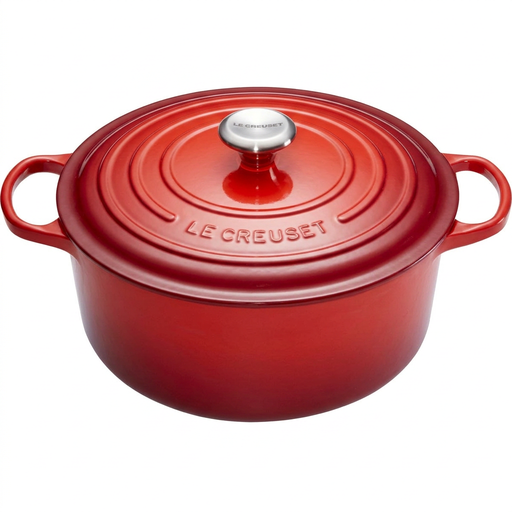
Why This Fits Their Persona: For the cook who regularly entertains family and friends and values precision and design. The 5.3-litre capacity is spacious enough for most family dishes, and the iconic colour is a showstopper on the table.
The light-coloured enamel interior makes it easy to monitor the searing process and prevents delicate sauces from burning. The size is a deliberate choice for a family, not too big and not too small.
Exceptionally even heat distribution for a perfectly controlled stewing process. The large handles provide a secure grip, even with oven mitts.
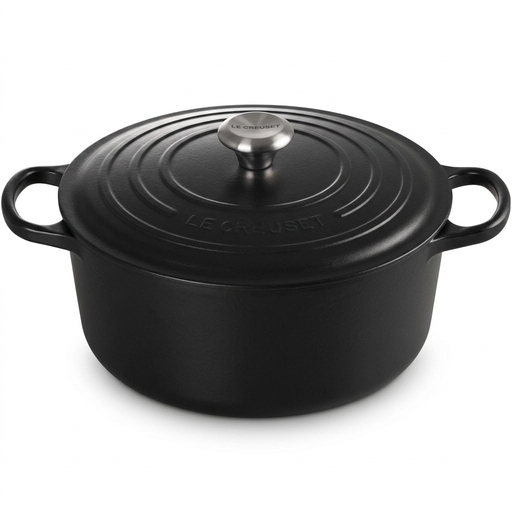
Why This Fits Their Persona: Built for large quantities. With an 8.1-litre capacity, this pan is perfect for preparing meals for 8-10 people, making large batches of soup, or for the serious batch-cooker.
This is a deliberate investment in capacity. It prevents the frustration of a pan that's too small during holidays or dinner parties, and its durable construction is built for the weight and intensity of large meals.
Enormous capacity combined with the reliable, even heat distribution of Le Creuset. The pan can go directly from the hob to the oven thanks to its stainless steel knob.
We have compiled a complete, up-to-date list of products that fully meet these strict selection criteria and local regulations.
In theory, yes, because cast iron is magnetic. In practice, however, the flatness of the base is decisive. A lower-quality pan may have a slightly concave or convex base, causing poor contact and preventing it from working properly on an induction hob. Opt for a brand known for its precise finish to avoid problems.
Maintenance is simple but requires some care. Always let the pan cool down completely before cleaning to avoid thermal shock. Wash it by hand with warm water, a soft sponge, and a little washing-up liquid. Avoid abrasive scourers and harsh cleaning agents. Although some pans are labelled as dishwasher-safe, hand washing can significantly extend the life of the enamel coating and the shine of the exterior.
Both are top-tier French brands, but there are subtle differences. The most visible is the interior: Le Creuset typically uses a smooth, cream-coloured enamel, while Staub opts for a matte black, slightly rough enamel. Additionally, the lid of a Staub casserole pan often features 'picots' (small nubs) that, according to the manufacturer, ensure a continuous 'self-basting' of the dish. The choice is personal and depends on your cooking preferences.
