What should you look for when buying?
Start with the ingredient you need to avoid, then consider flavour, preparation and packaging. The NVWA states that allergen information for pre-packed products appears on the label.
| What to consider |
What should you look for? |
Who is this important for? |
| Avoiding the right allergen |
Check the ingredients, listed allergens and any relevant cross-contamination warnings. If you have a cashew allergy, don’t choose cashews. |
If I need to avoid gluten, peanuts or another type of nut, I check the specific variety and its warnings first. For around 39% of consumers, avoiding allergens other than milk or lactose is their top priority when buying. |
| Milk or lactose |
Work out which diet you follow, then check the milk ingredients and allergen information accordingly. |
If milk or lactose is a concern for my diet, I want to distinguish between milk sugar and milk proteins. For around 23% of consumers, milk or lactose is their top priority when buying. |
| Choosing unsalted |
Check whether the variety is unsalted; assess the allergen information separately. |
If cashews fit my diet and I’m looking for an unsalted snack to eat every day, I focus on that product feature. For around 23% of consumers, an unsalted everyday snack is their top priority when buying. |
| Quantity and storage |
Compare the net weight and follow the storage instructions on the pack. The pack size is not a recommended serving. |
If I buy cashews for regular study sessions, I want to choose a pack that suits how I use them and know how to store them. For around 15% of consumers, quantity and convenience are their top priorities when buying. |
Cashews on Joybuy
The products below are cashews; they differ in preparation, salt content and the product information available. Check the packaging for the ingredients and allergens relevant to your diet.
 No image available
Jiazhouyuanye Original Flavour Large Cashew Nuts, 160 g
The product description lists cashew kernels as an ingredient; also check the packaging for information relevant to your avoidance diet.
The description says the nuts are ready to eat and recommends storing them in a sealed container in a cool, dry place once opened.
Contains cashew and is not suitable for anyone with a cashew allergy.
View product
 No image available
g'woon roasted, unsalted cashews, 200 g
If you can eat cashews and are looking for unsalted nuts, this variety is described as roasted and unsalted.
The product information lists cashews as an ingredient and suggests eating them as a snack. Check the packaging for allergen information relevant to your diet.
Contains cashew and is not suitable for anyone with a cashew allergy.
View product
 No image available
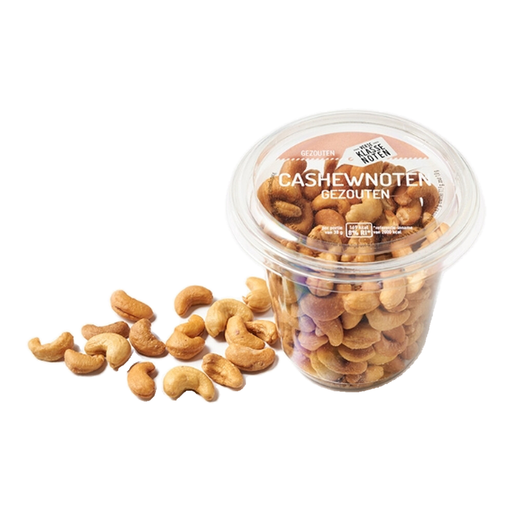
Verse Klassenoten salted cashews
If you’re specifically looking for unsalted cashews, this salted variety won’t suit your preference.
The product information lists cashews and salt as ingredients. Check the packaging for allergen information relevant to your diet.
Contains cashew and is not suitable for anyone with a cashew allergy.
View product
 No image available
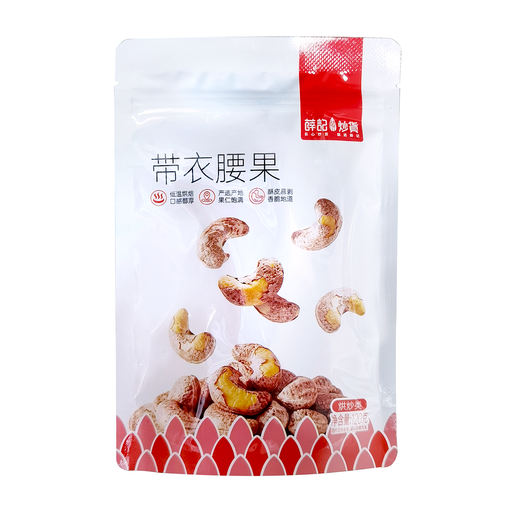
Xue Ji Chaohuo salted cashews with skin, 120 g
If you’re looking for salted cashews with the skin on, the product name makes these features clear; they don’t indicate whether the product is suitable for an avoidance diet.
The product description says they’re ready to serve and should be stored in a cool, dry place.
Contains cashew and is not suitable for anyone with a cashew allergy.
View product
 No image available
Duyvis Dry Roasted Cashews, 125 g
If you’re looking for dry-roasted cashews, the product name describes the preparation method.
The product information lists gluten, wheat and peanuts as allergens, and also mentions salt. This variety is therefore unsuitable if your diet requires you to avoid these ingredients.
Contains cashew and is not suitable for anyone with a cashew allergy.
View product
Frequently asked questions
Can a cashew-free snack be suitable for someone with a cashew allergy?
No. Cashews are a tree nut allergen in their own right, as the Dutch Food Allergy Foundation explains. A claim that another ingredient is absent doesn’t change that.
Does lactose-free mean suitable for someone with a milk allergy?
No. According to the Netherlands Nutrition Centre, lactose intolerance concerns milk sugar, while a milk allergy is a reaction to milk proteins. So don’t treat a lactose-related assessment as proof that a product is suitable for someone with a milk allergy.
What allergen information is shown on pre-packed snacks?
The NVWA states that allergen information must appear on the label of pre-packed products. This includes, among other things, cereals containing gluten, peanuts, nuts and milk, including lactose. Also check the specific pack for information about cross-contamination.
What changed on 1 January 2026 for cross-contamination warnings?
Since 1 January 2026, Dutch rules have set out how and when businesses must warn about allergens that may be present unintentionally. According to the NVWA, the production date is the key factor; stock packed earlier may still be sold if the food is not unsafe. So the introduction date doesn’t mean that every pack will have the same label.
How should you store the Jumbo cashews covered in this article?
Jumbo Unroasted Cashews 140 g should be stored in a cool, dry and dark place. For another variety, follow the storage instructions on its packaging.


