
Households sharing snacks
You’re looking for enough cashews for several people and want to choose a quantity that suits how much you use, rather than automatically opting for the largest bag.


A large pack of cashews makes sense if you use them regularly or share them; a smaller bag may be more practical for one person or less frequent snacking. Compare the net weight and the salt and preparation options, and choose a size you can store as directed on the packaging. Unroasted and unsalted do not mean the same thing.
You’re looking for enough cashews for several people and want to choose a quantity that suits how much you use, rather than automatically opting for the largest bag.
You want to have unsalted cashews ready to snack on while studying, then choose a preparation method and quantity that suit your needs. This says nothing about academic performance.
You’d rather buy a smaller quantity, such as 200–250 g, so you don’t have to open a larger pack. Check that the size suits how you use them.
First, work out how many cashews you’ll eat yourself or share with others. Then consider the salt content, preparation method and how to store the opened pack separately.
| What to consider | What to look for | Who is this most important for? |
|---|---|---|
| Pack size | Choose a net weight that suits how much you use yourself or share with others. | If I’m considering a larger bag, I want the contents to match how much I use myself or share with others; around 42% of consumers prioritise this consideration. |
| Unsalted option | Read the product name and label: unsalted and unroasted are different characteristics. | For a snack I regularly have ready, I want cashews that are explicitly labelled unsalted; around 25% of consumers prioritise this choice. |
| Stock and storage | Choose a quantity that suits how much you use, and follow the storage instructions on the packaging. | If I eat alone or don’t eat cashews often, I don’t want to open more than I’ll use; around 17% of consumers focus mainly on managing their supply this way. |
| Flavour and preparation | Check separately whether the cashews are salted and how they have been prepared. | If I’m looking for a savoury option, I want to be able to assess the salt content and preparation method separately; around 16% of consumers prioritise this choice of flavour. |
A description of how cashews are prepared doesn’t necessarily tell you whether salt has been added. A salted product may also be made without added oil.
Check the salt option and preparation method separately in the product name and on the packaging.
Quality can deteriorate after opening. For opened, unsalted cashews, the Netherlands Nutrition Centre recommends six months in a kitchen cupboard and one year in the freezer; quality may decline after that.
Choose a size that suits how much you use and follow the storage advice on the packaging.
An option if you’re looking for unroasted cashews in a larger pack.
The range reviewed includes salted and unsalted options, including a value pack.
Alesto’s product description features a roasted, unsalted option.
TRADER JOE'S is an option to compare across different pack sizes and preparations.
A smaller option if you’re looking for unroasted, unsalted cashews.
An option to consider if you’re comparing savoury or oven-roasted varieties.
Joybuy cashews for snacking, from larger packs to share to smaller options. Check the salt information for each product.
 Image unavailable
The 500 g pack and lightly salted option are well suited to regular snacking or sharing.
The product description says these cashews have purple skins and are lightly salted.
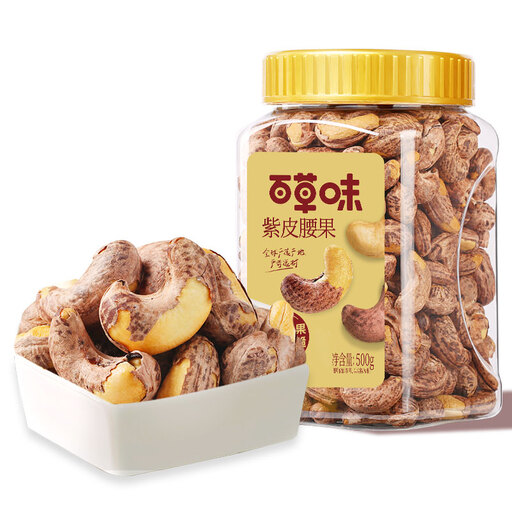 Image unavailable
The product description lists a 500 g pack for snacking or sharing, in a lightly salted option.
‘180 grade’ appears in the product name; the description also mentions using them in baking.
 Image unavailable
The 160 g pack is a good fit if you’re looking for a smaller quantity to snack on or add to yoghurt and muesli.
The product description says these are 100% cashew kernels and ready to eat.
 Image unavailable
This smaller pack is a good option if you’re after a savoury cashew snack rather than a large supply.
The product information says they are dry-roasted with sea salt and no added oil; the description mentions 4–5 servings.
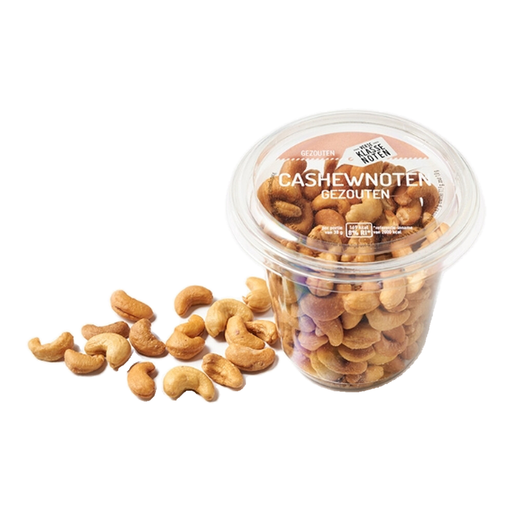 Image unavailable
The 150 g pack is a smaller option if you’re looking for salted cashews.
The product information lists roasted cashews and sunflower oil.
No. Unroasted and unsalted are separate characteristics. ALDI lists a 250 g bag of roasted, unsalted cashews; PLUS lists a 200 g bag of unroasted, unsalted cashews. Check both characteristics separately.
At a reference serving size of 25 g, 500 g makes twenty servings and 250 g makes ten. The Netherlands Nutrition Centre uses 25 g as an example of a handful of nuts; this is not individual dietary advice.
For opened, unsalted cashews, the Netherlands Nutrition Centre recommends six months in a kitchen cupboard and one year in the freezer; quality may decline after that. Also follow the storage advice on the packaging and look out for signs of spoilage.
The NVWA says that allergens must be clearly listed on the labels of prepacked foods. Cashews are an allergen; if you’re sharing snacks, also check the packaging for up-to-date information about other allergens.
No. The NVWA warning of 20 May 2026 concerned 170 g packs of TRADER JOE'S unsalted cashews, with barcode 2003020120930 and a best-before date of 23-09-2026. Do not eat this specific product; the warning does not automatically apply to other packs.