
Protein-conscious study breaks
You want to eat cashews while studying and are mainly interested in the amount of protein in your own serving, rather than just a prominent claim on the pack.


For 25 g of unsalted cashews, the Netherlands Nutrition Centre gives a general reference value of 5.3 g of protein and 154 kcal; this is not automatically the nutritional value of every pack. So choose based on the label for the exact product and the amount you actually eat, and consider protein and energy together. If you also do strength or endurance training, assess cashews as part of your overall diet.
You want to eat cashews while studying and are mainly interested in the amount of protein in your own serving, rather than just a prominent claim on the pack.
You have something to eat during several study breaks and want to keep an eye on portion size, salt and packaging that you can reseal properly.
You’re combining exam revision with strength or endurance training and want your snack to fit into your overall protein intake. According to the Netherlands Nutrition Centre, people who do these sports have a higher protein requirement; most people who exercise don’t need special protein shakes or bars if they eat a healthy, varied diet.
Start with the label on the exact pack and calculate the nutritional values for the amount you eat. Then check the salt content, variety and how to store the rest of the pack.
| What to consider | What to look for | Who is this important for? |
|---|---|---|
| Protein per serving | Compare the protein and energy values on the label, and calculate both for the same serving size. | If I mainly want to know how much protein my serving provides during a study break, I also check the energy value. Around 40% of consumers prioritise protein per serving. |
| Serving size and salt | Check the salt per 100 g and work out how much salt is in your serving. A pack isn’t automatically one serving. | If I snack at several different times, I want to be able to match the amount and salt content to my serving. Around 30% of consumers give serving size and salt top priority. |
| Variety and how you’ll use it | Read the product name, preparation method, ingredients and net weight; check the allergen information on the pack. | If I’m looking for a particular variety or want to take nuts with me to a place to study, I want to know exactly what’s in the pack. Around 20% of consumers look at this first. |
| Packaging and storage | Choose a pack size that suits how much you use and follow the storage advice on the packaging. | If I want to avoid having unused stock, I choose a pack that suits how much I use and that I can store properly. Around 10% of consumers give pack size and storage top priority. |
The Netherlands Nutrition Centre’s general reference for 25 g of unsalted cashews is 5.3 g of protein and 154 kcal. If you eat a different amount, both values will change.
Calculate the protein and energy for the same serving size, and use the nutritional information on the pack for a specific product.
Duyvis describes Cashews Original as oven-roasted without added oil. A separate nutritional listing by Flink for Duyvis Oven Roasted Salted Cashews, 125 g, gives 49 g of fat and 1.5 g of salt per 100 g.
Check the preparation method, fat and salt as separate details; don’t let one product description take the place of the nutrition table.
A Joybuy listing says ‘dry roasted’ in the title and ‘Cashews Sea Salt’ in the description. These names alone don’t confirm that it’s the same variety as Duyvis Oven Roasted Salted Cashews.
Check the full product name, pack size and product information before comparing one variety with another.
The Netherlands Nutrition Centre advises storing nuts in a well-sealed container in a dry place, as they are susceptible to mould.
Choose a pack size you’ll use and reseal it properly after every study break.
Includes options such as Cashews Original and the 125 g salted oven-roasted variety.
Lists a product called AH Unsalted Cashew Nuts.
Lists several varieties, including unsalted cashews in 200 g and 500 g packs.
Lists Way To Go! Unsalted Cashew Nuts.
Lists Trader Joe’s roasted, unsalted cashews in a 250 g pack.
Lists PLUS Unsalted, Unroasted Cashew Nuts in a 200 g bag.
These Joybuy products are cashew options to compare for a study break; check the nutritional values, ingredients and packaging for each variety.
 No image available
An option for comparing the nutritional values of a ready-to-eat cashew snack with your usual serving.
Ingredients: 100% cashew kernels. Per 100 g: 19.8 g of protein, 604 kcal and 0.028 g of salt.
According to the product information, these are ready to eat; once opened, store in a cool, dry place and keep sealed.
 No image available
A roasted variety whose nutritional values you can compare against your serving size.
Per 100 g: 18 g of protein, 586 kcal and 0.92 g of salt. The product information states that there are 4–5 servings per pack.
The description says these are roasted without added fat or oil. The allergen information lists cashew, gluten, wheat and peanuts; check the packaging.
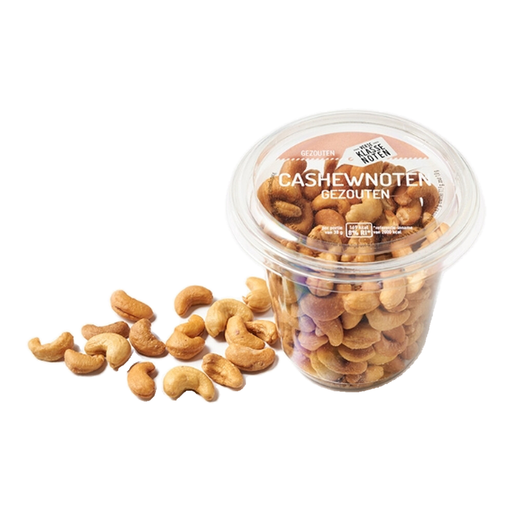 No image available
A salted option to compare if you’re specifically looking for a savoury cashew variety.
The ingredients list 98% cashews, sunflower oil and 1% salt. Per 100 g: 21.0 g of protein, 2.555 kJ of energy and 1.0 g of salt.
The product information gives a pack size of 150 g; check the allergen information on the packaging.
 No image available
A roasted, unsalted variety to compare with other preparation methods and serving sizes.
Per 100 g: 18.67 g of protein, 596 kcal and 0.067 g of salt.
The product information gives a pack size of 200 g and advises storing in a cool, dry place and keeping sealed once opened.
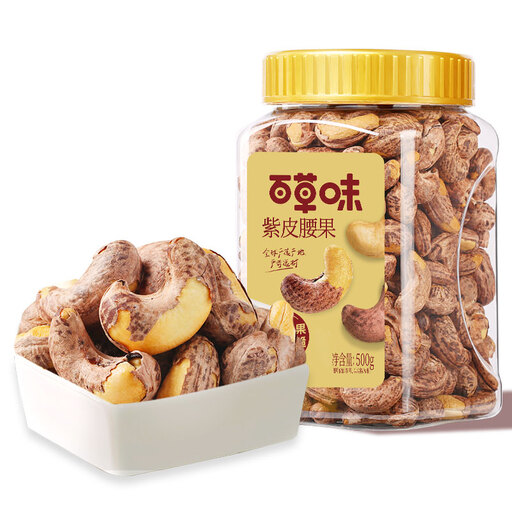 No image available
A larger pack to consider if you also want to think about how to store what’s left.
The ingredients list cashew kernels and salt. Per 100 g: 16.4 g of protein, 679 kcal and 1.2 g of salt.
The product information suggests eating these as a snack or using them in baking. Contains cashew nuts; bear nut allergies in mind.
The Netherlands Nutrition Centre gives 5.3 g of protein and 154 kcal for 25 g of unsalted cashews. This is a general nutritional reference, not the label for every supermarket variety.
Not automatically. According to the Netherlands Nutrition Centre, people who do strength or endurance training have a higher protein requirement than those who don’t exercise, but most people who exercise don’t need special protein shakes or bars if they eat a healthy, varied diet. Consider cashews as part of your overall diet, not as an essential recovery food.
Check the allergen information on the current packaging. According to the NVWA, allergen information must appear on the label of pre-packed products; nuts are among the allergens that consumers must be informed about. Don’t assume a nut snack is suitable for everyone.
Store nuts in a well-sealed container in a dry place. The Netherlands Nutrition Centre recommends keeping them somewhere cool if possible, for example at 10 to 15 °C. Also follow the storage advice on the packaging.
The NVWA warning dated 20 May 2026 concerns 170 g packs of Trader Joe’s unsalted cashews, barcode 2003020120930, with a best-before date of 23-09-2026. The warning reports possible metal fragments and says not to eat these cashews. The date has now passed; the warning is relevant if you still have this pack and does not automatically apply to other sizes or batches.