
Students who exercise
You’re looking for a snack or something to add to a meal, and want to know how much protein a serving provides. If you do intense strength or endurance training, consider that contribution as part of your overall diet.


Whether you want to snack on cashews or add them to meals, choose based on how they’re prepared and compare the nutritional values per serving. Based on product labels from PLUS, Jumbo and Albert Heijn, and product information from Duyvis, a 25 g reference serving of four specific varieties provides 4.63 to 5.25 g of protein. The Netherlands Nutrition Centre says recreational athletes who eat a varied diet don’t need special protein products. So consider cashews as part of your overall diet.
You’re looking for a snack or something to add to a meal, and want to know how much protein a serving provides. If you do intense strength or endurance training, consider that contribution as part of your overall diet.
Choose a pack size that matches how much you’ll actually use. If you live independently, storage instructions and the space you have for food also matter.
You want to eat cashews on their own as well as use them in meals, and choose what else goes into them. A variety containing only cashews differs from nuts with oil or a seasoning mix.
Start with the portion you actually eat. Then choose the preparation method, packaging and ingredients to suit your kitchen and how you’ll use them.
| What to consider | What to check when buying | Who should pay extra attention? |
|---|---|---|
| Protein per serving | Compare the label value per 100 g and calculate it for the portion you eat. | If I eat cashews around the time I exercise, I want to know what my usual portion provides. Around 36% of consumers prioritise the protein they get per eating occasion. |
| Packaging and budget | Choose a net weight that suits how much you use and the storage space you have; follow the storage instructions after opening. | When planning my food shop, I want to choose an amount that matches what I’ll use up. Around 29% of consumers prioritise their food budget. |
| Preparation and storage | Check whether the nuts are unroasted, roasted or seasoned, and what the packaging says about storage. | If I snack and cook in my student room, I’m looking for a variety that works for both. Around 21% of consumers prioritise convenience in the kitchen and when storing food. |
| Salt, added ingredients and allergens | Read the ingredients list and allergen information, including any warnings about possible traces. | If I need to check for added ingredients or allergens, I read the label on the exact pack. Around 14% of consumers prioritise ingredients; allergens are something everyone should be aware of. |
Jumbo lists 21 g of protein and 622 kcal per 100 g for the cashews reviewed. A 25 g reference serving therefore provides 5.25 g of protein and 155.5 kcal.
Calculate both protein and energy for the amount you actually eat.
The unsalted varieties reviewed from Albert Heijn and Jumbo contain sunflower oil; the PLUS variety lists only cashews as an ingredient.
Check the ingredients list separately from the salt information.
Duyvis describes Cashews Original as roasted without added oil, but lists 1.5 g of salt per 100 g for this variety.
Check the salt value for the exact variety, even if the preparation method stands out on the pack.
Cashews Original is a savoury, seasoned oven-roasted snack in a 125 g pack.
AH Unsalted Cashews are a baked variety in a 250 g pack.
The unsalted value pack reviewed contains 500 g of cashews.
Lidl sells cashews as part of its Alesto range and presents Way To Go cashews as a fair trade option.
The Trader Joe’s variety described is made up of roasted, unsalted cashews in a 250 g pack.
PLUS Unsalted Unroasted Cashews are a plain variety in a 200 g pack.
These product options are cashews for snacking, baking or adding to dishes. Compare the protein and salt values, preparation method and ingredients for each variety.
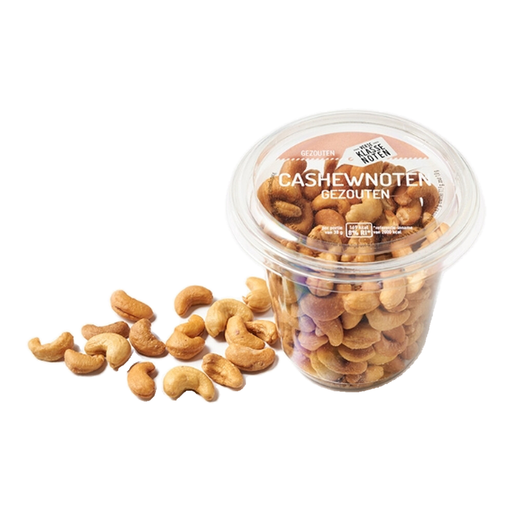 No image available
The product description lists snacking and baking as possible uses.
The nutrition table lists 21 g of protein and 1.2 g of salt per 100 g; a 25 g reference serving provides around 5.25 g of protein.
The ingredients are cashew kernels and salt.
 No image available
The product description suggests snacking on them or adding them to yoghurt, muesli or baked goods.
The nutrition table lists 19.8 g of protein and 0.028 g of salt per 100 g; a 25 g reference serving provides around 4.95 g of protein.
The description states that the product contains 100% cashew kernels and recommends sealing the pack after opening.
 No image available
The description calls these a savoury, seasoned snack roasted without added oil.
The nutrition table lists 18 g of protein and 0.92 g of salt per 100 g; a 25 g reference serving provides around 4.5 g of protein.
The allergen information lists cashew, gluten, wheat and peanuts. Check the packaging of the variety you buy.
 No image available
The product description suggests using them for snacking, cooking and baking.
The nutrition table lists 18.67 g of protein and 0.067 g of salt per 100 g; a 25 g reference serving provides around 4.67 g of protein.
The ingredients list contains cashews as the only ingredient. The description recommends storing in a cool, dry place and closing the pack securely after opening.
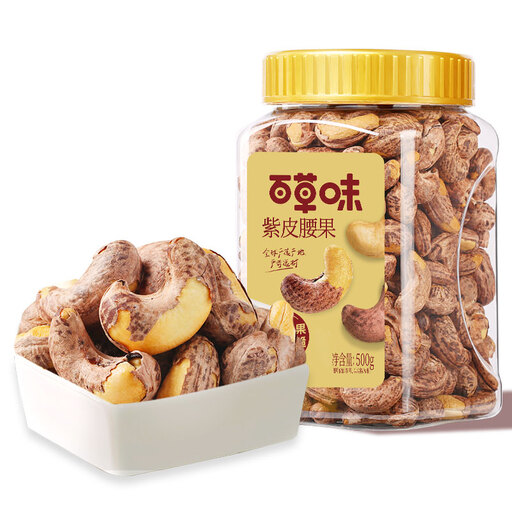 No image available
The product description lists snacking and baking as possible uses.
The nutrition table lists 16.4 g of protein and 1.2 g of salt per 100 g; a 25 g reference serving provides around 4.1 g of protein.
The ingredients are cashew kernels and salt. The description recommends storing in a cool, dry place.
According to the Netherlands Nutrition Centre, recreational athletes who eat a varied diet don’t need special protein shakes or bars. Consider cashews as part of your overall diet.
For dedicated strength athletes looking to build muscle, the Netherlands Nutrition Centre recommends 1.2 to 2 g of protein per kilogram of body weight per day, depending on their goals. This isn’t personal advice; for guidance tailored to your circumstances, the Centre recommends speaking to a sports dietitian.
Follow the instructions on the packaging of the variety you buy. The Albert Heijn and Jumbo products reviewed should be stored in a cool, dry and dark place; Albert Heijn also recommends closing the pack securely after use.
Read the ingredients list and allergen information on the pack you buy, including any warnings about possible traces. The NVWA includes cashew in its official list of nut allergens.
No. The NVWA warning dated 20 May 2026 concerns 170 g packs of Trader Joe’s unsalted cashews with a best-before date of 23-09-2026, due to the possible presence of metal fragments; do not eat the affected product. The warning doesn’t automatically apply to other packs or varieties.