
Travellers who want to eat less fat
You want to compare the fat content on the label without mistaking a description of how the cashews are prepared for a claim about their nutritional composition.


If you want to eat less fat while travelling, compare the fat content per 100 g and the amount you actually eat; a smaller portion doesn’t change the product’s composition. Oven-roasting without added oil does not, by itself, prove that a product contains less fat. For solid foods, the European Commission defines the ‘low fat’ claim as no more than 3 g of fat per 100 g.
You want to compare the fat content on the label without mistaking a description of how the cashews are prepared for a claim about their nutritional composition.
You want to decide for yourself how many cashews to eat while waiting or travelling, rather than treating the whole pack as one portion.
You’re looking for a shop at the airport and want to distinguish store information from the local availability of a specific product.
First decide what matters most to you: the product’s composition, how much you eat, convenience while travelling or the way the cashews are prepared. Then compare the information on the packaging.
| What to consider | What to look for | Who might prioritise this? |
|---|---|---|
| Actually less fat | Compare the fat content per 100 g and check what a claim is being compared against. The Netherlands Bakery Centre explains that a reduced-content claim means at least 30% less than in comparable products. | If eating less fat is my main reason for choosing, I want to see a substantiated comparison, not just a different preparation method. Around 36% of consumers make reducing fat their top priority. |
| Portion size | Voedingscentrum lists 12,2 g of fat per 25 g handful of unsalted cashews. For your own portion, also check the label on the product you buy. | If my main aim during a trip is to limit how much I snack on, I decide in advance how many grams to take with me. Around 29% of consumers put portion control first. |
| Buying and taking them with you | Schiphol confirms there is an Albert Heijn and two to-go locations on Plaza; this does not confirm that a specific cashew variety is in stock. Keep an opened pack tightly sealed. | If I want to choose a snack at the airport, ease of buying and carrying it matters most to me. Around 21% of consumers prioritise airport and packaging convenience. |
| Flavour and salt | Choose unsalted, unroasted or roasted cashews to suit your preference, and compare the salt and fat content separately on the label. | If I care more about a particular flavour or preparation than fat or portion size, I look for that variety first. Around 14% of consumers prioritise flavour or their preferred salt level. |
Preparation method, salt level and total fat are different product characteristics. Duyvis describes Cashews Original as roasted without added oil; this does not measure the product’s total fat content.
Check the fat content and the precise claim separately from the description of how the cashews are prepared.
A pack may contain more than you want to eat in one sitting. The nutritional information per 100 g is not the same as the amount you actually eat.
Decide your portion in grams beforehand and use the nutritional information on the pack to work out the values for that amount.
Airport security and customs at your destination apply different rules.
Check the import regulations for your destination before taking any leftover cashews with you.
A claim about fat does not mean that cashews or other allergens are absent. Stichting Voedselallergie describes nut allergy as a reaction to proteins in nuts.
Don’t use a reduced-fat claim as a safety criterion if you have a cashew allergy; check the allergen information on the packaging.
These brands and supermarket ranges offer different ways to compare preparation methods, salt levels and packaging. None of these characteristics, on its own, proves that a product is low in fat.
Duyvis describes Cashews Original as oven-roasted without added oil and lists a 125 g pack.
Royal Schiphol Group confirms there is an Albert Heijn at Schiphol, with two to-go locations on Plaza. Albert Heijn also has a product page for unsalted cashews.
Jumbo lists, among other options, unroasted cashews in a 200 g pack, as well as dry-roasted varieties.
The Dutch product page lists unsalted cashews.
ALDI lists Trader Joe’s roasted, unsalted cashews in a 250 g pack.
PLUS lists cashews that are both unsalted and unroasted, in a 200 g pack.
These Joybuy products include different types of cashews for comparing nutritional values, salt, preparation and pack size. This list is not a recommendation for a low-fat cashew product.
 No image available
A good option if you’re looking for cashews with no added ingredients and want to choose your own portion size.
The product description lists cashew kernels as the only ingredient. The fat content is 47,7 g per 100 g; the pack contains 160 g.
 No image available
A good option if you’re looking for oven-roasted cashews without added oil; this preparation method does not, by itself, prove that the product contains less fat.
The fat content is 43 g per 100 g. The description lists 4–5 servings per pack and sea salt. Listed allergens are cashew, gluten, wheat and peanut.
 No image available
A good option if you’re looking for salted cashews and want to compare nutritional values for the same amount.
The fat content is 44 g and the salt content 0,9 g per 100 g. The pack contains 500 g; the description lists cashews and salt.
 No image available
A good option if you’re looking for roasted, unsalted cashews; these characteristics alone say nothing about whether the product is low in fat.
The fat content is 46,67 g and the salt content 0,067 g per 100 g. The pack contains 200 g and should be tightly sealed after opening.
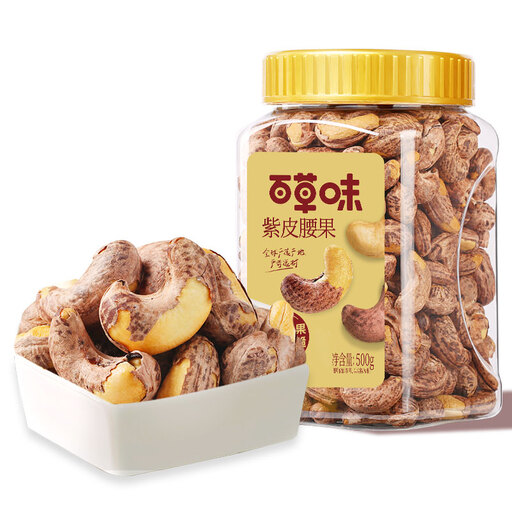 No image available
A good option if you’re looking for salted cashews; compare the composition with your own preferences and portion size.
The fat content is 60,1 g and the salt content 1,2 g per 100 g. The description lists salt as an ingredient and cashew as an allergen.
No. For solid foods, the European Commission defines the ‘low fat’ claim as no more than 3 g of fat per 100 g. ‘No added oil’ describes how a product is prepared, not the total fat content of the cashews.
No. The net weight and your portion size are two different things. Decide how many grams you want to eat and calculate the nutritional values for that amount using the information on the label.
Royal Schiphol Group confirms there is an Albert Heijn supermarket and two to-go locations on Plaza. This store information does not confirm that a specific cashew variety is in stock.
No. Royal Schiphol Group distinguishes between security rules and customs regulations at your destination. Check the import requirements separately for your travel route.
No. A fat claim does not mean that cashews or allergens have been removed. Stichting Voedselallergie describes nut allergy as a reaction to proteins in nuts, so don’t use a reduced-fat claim as a safety criterion.