
Breakfast supplies for the household
You regularly use cashews at breakfast and want to choose an amount that suits how much your household gets through. If you buy a larger bag, it’s important to be able to store it properly once opened.


A large bag is a good fit if you regularly prepare breakfast portions and can store the rest properly. If you use cashews less often, a smaller bag is usually more practical. Then check the label: unroasted, roasted, added salt and oil are all separate characteristics.
You regularly use cashews at breakfast and want to choose an amount that suits how much your household gets through. If you buy a larger bag, it’s important to be able to store it properly once opened.
You want to keep morning prep to a minimum and may be able to prepare portions in advance. The Netherlands Nutrition Centre lists nuts as an addition to a breakfast with foods such as yoghurt, fruit and granola.
You want to know whether cashews are unsalted or unroasted, and whether oil or flavourings have been added. Also check the allergen information on the packaging of the variety you choose.
| What to consider | What to look for | Who is this important for? |
|---|---|---|
| Suitable pack size | Compare the net weight with how much you use and check whether the bag can be sealed properly. | I want to choose an amount I’ll actually use up, without opening more than I need. Around 25% of consumers put choosing an amount that suits their usage first. |
| Quick portioning | Check whether the nuts are ready to use and whether you can prepare portions in advance. | On a busy morning, I want to be able to grab my breakfast and go. Around 25% of consumers make minimising preparation their top priority. |
| Ingredients and preparation | Check separately whether the nuts are unsalted or unroasted, and whether oil or flavourings have been added. | If I’m looking for a particular list of ingredients, I want to be able to distinguish salt, oil and flavourings on the label. Around 25% of consumers put ingredients first. |
| Storage after opening | Follow the packaging instructions and store cashews in a cool, dark, dry place in a well-sealed container. The Netherlands Nutrition Centre recommends using an airtight container. | I want to be able to store and use the rest of an opened bag properly. Around 25% of consumers make managing their supplies their top priority. |
A larger pack is only practical if you’ll use the cashews and can store the opened bag properly.
Choose an amount based on how much you use, and store the rest sealed in a cool, dark, dry place.
A product can be roasted without added oil and still contain salt and flavourings. Duyvis lists 1.5 g of salt per 100 g for Cashews Original.
If you’re looking for an unsalted variety, check the preparation method, ingredients and salt content separately.
The AH 100 g pack checked lists four 25 g portions. This information applies to that specific pack; it isn’t personal portion advice.
Check the portion information for the variety you choose and, if needed, prepare a separate portion in advance.
According to the Netherlands Nutrition Centre, cashews can go rancid or become tough, and mould can develop if they aren’t stored properly.
Store the nuts in a cool, dark, dry place in a well-sealed container, and follow the instructions on the packaging.
The range includes different pack sizes and preparation methods for cashews.
Jumbo offers an unsalted cashew variety in a 500 g pack.
Lidl offers unsalted cashews and also lists its fairtrade Way To Go variety.
ALDI lists TRADER JOE’S cashews in a 500 g pack. They’re roasted and available in salted and unsalted varieties.
PLUS lists unsalted, unroasted cashews and an unsalted fairtrade variety, both in 200 g packs.
Duyvis Cashews Original is a savoury option in a 125 g pack.
This selection includes smaller unsalted packs, larger bags, and salted or savoury-flavoured varieties.
 Image unavailable
This smaller pack could suit anyone who likes to have cashews ready to add to yoghurt or muesli.
Ingredients: 100% cashew kernels; no added salt.
 Image unavailable
A 200 g pack for anyone looking for roasted, unsalted cashews.
Preparation: roasted. Ingredients: cashews.
 Image unavailable
This larger pack is for anyone who wants to keep ready-to-eat cashews at home.
Net weight: 500 g. Salt: 0.9 g per 100 g.
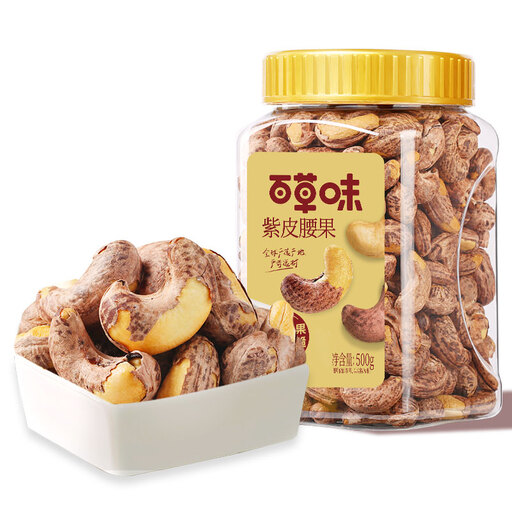 Image unavailable
A larger pack for anyone looking for ready-to-eat cashews who can store the bag properly once it’s open.
Net weight: 500 g. Lightly salted; salt: 1.2 g per 100 g.
 Image unavailable
This smaller pack could suit anyone looking for a savoury, dry-roasted variety.
The product information lists salt and flavourings, with 0.92 g of salt per 100 g.
No. ‘Unroasted’ describes how the cashews are prepared, while ‘unsalted’ means no salt has been added. PLUS lists only cashews as an ingredient for its unsalted, unroasted variety. For other products, check both characteristics separately on the label.
Not necessarily: the AH 100 g pack checked lists four 25 g portions. This information applies to that specific pack; it isn’t personal portion advice. If needed, prepare a separate portion in advance.
Store cashews in a cool, dark, dry place in a well-sealed container. The Netherlands Nutrition Centre lists rancidity, toughness and mould as things to look out for. Also follow the instructions on the packaging.
Check the ingredients list and allergen information on the packaging of the variety you choose. The NVWA requires allergen information to appear on the label of prepacked foods, with allergens clearly identifiable in the ingredients list. An exception applies when the allergen is already clear from the product name. Cashews themselves are an ingredient in the products in this article.
No. Don’t assume whole cashews are an appropriate portion for children. The Jumbo, PLUS and Albert Heijn product pages checked warn that young children can choke on nuts. Follow the warning on the packaging of the product you choose.