An unsalted option is a good choice if you’re mainly looking for a nut snack. If you’re keeping an eye on protein, compare the nutrition information per 100 g with your own portion. A protein figure alone doesn’t prove that a product meets the requirements for a ‘high protein’ claim, nor does it tell you whether the snack fits your personal fitness goal.
Who might find these options useful?
Active people with a protein goal
You want to know how a portion contributes to your overall protein intake, without taking a product name as a promise of sports recovery. The Netherlands Nutrition Centre (Voedingscentrum) emphasises that athletes’ protein needs depend on their goals and overall diet.
If you prefer unsalted snacks
You’re looking for cashews to enjoy on the go or between meals, and want the option to choose an unsalted variety. The Netherlands Nutrition Centre includes unsalted nuts in its general dietary advice.
If you’re sharing cashews
You’re buying for several people and comparing quantity, flavour and allergen information. The Netherlands Food and Consumer Product Safety Authority (NVWA) emphasises that allergen information must be available before purchase, including for loose products that haven’t been sold yet.
What should you look for when choosing?
First consider how you’d like the cashews prepared and whether you want them salted. Then compare the nutrition information with the portion you actually eat.
| What to consider |
What to look for |
Who is this important to? |
| Protein and claims |
Compare the nutrition information per 100 g and calculate the amount for your portion. Treat a nutrition claim as a separate claim. |
If I want to match my protein intake to a goal, I need to be able to assess how much my portion contributes; around 31% of consumers prioritise protein content. |
| Salt and portion size |
Check whether the variety is unsalted and adjust the amount to suit what you eat. |
If I’m mainly looking for an unsalted snack, I also want to know how much I’m actually eating; around 25% of consumers prioritise choosing unsalted products and managing portion sizes. |
| Flavour and preparation |
Check whether the cashews are unroasted, roasted, salted or made without added oil. |
If flavour or preparation is my main consideration when choosing a snack, I want to see that specific detail on the packaging; around 19% of consumers prioritise flavour and preparation method. |
| Allergens |
Read the allergen information on the exact product packaging; if buying loose, ask before purchasing. |
If I’m buying for a group, I want to check the allergen information before sharing anything; around 13% of consumers prioritise this information. |
| Quantity and storage |
Choose a net weight that suits the number of people eating, and follow the storage advice once opened. |
If I’m buying cashews for several people, I want to choose an amount that suits how they’ll be used and store any leftovers properly; around 12% of consumers prioritise quantity and being able to store leftovers. |
Common purchasing pitfalls
-
Taking a protein figure as proof that a product is suitable for sports nutrition
A nutrition claim and an athlete’s protein needs are two different things. The European Commission explains that nutrition claims may only be used if they are included in the relevant list and meet the applicable conditions.
Compare the nutrition table for the exact variety with your own portion, and consider it as part of your overall diet. Don’t assume the packaging promises sports recovery.
-
Confusing ‘no added oil’ with ‘unsalted’
A description of how a product is prepared doesn’t automatically tell you how much salt it contains. Duyvis describes Cashews Original as oven-roasted without added oil; this doesn’t confirm that the variety is unsalted.
Check the salt information and preparation method separately on the packaging of the variety you choose.
-
Treating the whole bag as one portion
The net weight of a pack isn’t the same as the amount you eat. An opened bag also needs to be stored appropriately.
Think about how many people will be sharing, serve out a portion and follow the storage advice on the packaging. For opened unsalted cashews, the Netherlands Nutrition Centre gives general storage guidance, including signs such as rancidity, a tough texture or mould.
-
Forgetting allergen information when sharing
When cashews are taken out of their original packaging and put in a bowl, other people can no longer check the label.
Keep the packaging beside the bowl. For loose products, allergen information should be available before purchase; ask if it isn’t clearly displayed.
Brands to consider
Duyvis
The product descriptions distinguish between Cashews Original and Cashews Sea Salt.
- Duyvis describes Cashews Original as oven-roasted without added oil, and Cashews Sea Salt as seasoned with sea salt.
- These preparation descriptions don’t prove a higher protein content or better sports recovery.
Albert Heijn
AH Unsalted Cashews is a specific unsalted option from a supermarket.
- The product page confirms the type of product.
- Check the packaging for the latest nutrition and allergen information, as these can change.
Jumbo
The range includes unsalted, salted, unroasted and dry-roasted cashews.
- The product listings offer different preparation methods and pack sizes, including unsalted packs of 200 g and 500 g.
- Range listings aren’t a ranking and don’t, by themselves, show a protein benefit.
Lidl
The Dutch product page lists unsalted cashews.
- This product is relevant if you’re specifically looking for unsalted cashews.
- The product listing doesn’t support any brand-wide nutritional or sports performance benefit.
Aldi
The listed range includes TRADER JOE'S roasted, unsalted cashews in a 250 g pack.
- The product listing combines roasted and unsalted.
- An NVWA warning concerns a separate 170 g product and shouldn’t automatically be applied to the entire product range.
PLUS
PLUS lists unsalted, unroasted cashews in a 200 g bag.
- The product name makes the preparation method and pack size clear.
- Product information and origin can change; these details don’t necessarily apply to all PLUS nuts.
Cashews at Joybuy
The products below have different preparation methods and salt levels. Compare the nutrition information per 100 g with your own portion and preferences; these figures alone don’t confirm a ‘high protein’ claim.
 No image available
Jiazhouyuanye Original Flavour cashew nuts, 160 g
The product information lists 19,8 g of protein and 0,028 g of salt per 100 g; see how much your portion contributes.
The ingredients list states 100% cashew kernels.
View at Joybuy
 No image available
g'woon Cashew Nuts Roasted & Unsalted, 200 g
The title says roasted and unsalted; the product information suggests enjoying them as a snack or using them in cooking and baking.
The nutrition table lists 18,67 g of protein and 0,067 g of salt per 100 g.
View at Joybuy
 No image available
Duyvis Dry Roasted Cashews, 125 g
This dry-roasted variety is a good option if you’re looking for roasted cashews; the product information lists sea salt.
The nutrition table lists 18 g of protein and 0,92 g of salt per 100 g.
View at Joybuy
 No image available
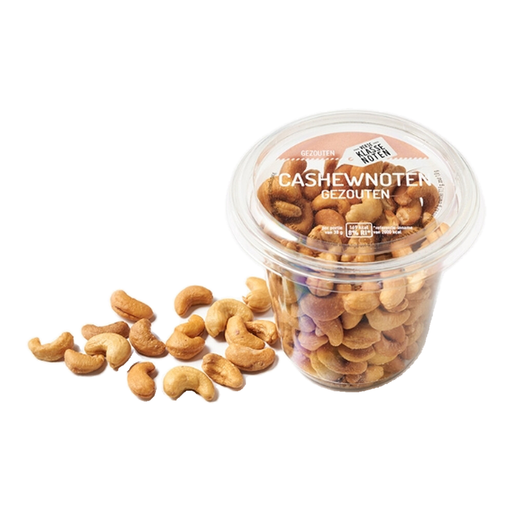
Verse Klassenoten Salted Cashew Nuts, 150 g
The product information describes freshly roasted, salted cashews.
The nutrition table lists 21,0 g of protein and 1,0 g of salt per 100 g.
View at Joybuy
 No image available
Three Squirrels Purple-Shell Cashews, 500 g
The product information describes roasted, lightly salted cashews in a 500 g pack.
The nutrition table lists 17,4 g of protein and 0,9 g of salt per 100 g.
View at Joybuy
Frequently asked questions
Does the amount of protein per 100 g mean the product can be called ‘high protein’?
No. A nutrition figure per 100 g doesn’t, by itself, prove that the ‘high protein’ claim can be used. The European Commission says nutrition claims must be included in the relevant list and meet the conditions that apply to them. So assess the nutrition information and the claim separately.
Does every athlete automatically need extra protein?
No, protein needs depend on your goal and overall diet. For keen strength athletes looking to build muscle, the Netherlands Nutrition Centre recommends 1,2 to 2 g of protein per kilogram of body weight per day, depending on their goals. This isn’t advice to get that amount from cashews.
What’s a typical portion of cashews?
The Netherlands Nutrition Centre’s general advice for adults is a handful of unsalted nuts, or 25 g. This is general dietary information, not a personal sports portion; a pack may contain several portions.
What allergen information must be available when cashews are sold loose?
For loose products, allergen information must be available in another way before purchase. The NVWA says the information can be provided in writing or verbally, with a clearly visible notice telling you that you can ask for it. For prepacked products, check the label.
Which Aldi cashews were covered by the NVWA warning?
The NVWA warning issued on 20 May 2026 concerned 170 g packs of TRADER JOE'S unsalted cashews with a best-before date of 23-09-2026, due to possible metal particles. Don’t eat the affected product. The best-before date has now passed, but that doesn’t make a pack you may have kept safe. The warning doesn’t automatically apply to other products or packs.


