
Picnickers keeping an eye on portions
You want to know how much energy your planned portion provides. For the 100 g pack examined, Albert Heijn lists four 25 g portions. This is an example for calculation purposes, not personalised dietary advice.


When choosing cashews for a picnic, focus on weighing your portion and checking the nutritional information for that exact product; unsalted or made without added oil does not mean low in calories. For solid foods, the European Commission sets a maximum of 40 kcal per 100 g for a ‘low calorie’ claim. The labels examined for AH, PLUS and Jumbo, as well as the separate Duyvis product listed by Flink, show 598–624 kcal per 100 g. Weigh your portion at home, and check the salt, ingredients and allergen information on the pack you take with you.
You want to know how much energy your planned portion provides. For the 100 g pack examined, Albert Heijn lists four 25 g portions. This is an example for calculation purposes, not personalised dietary advice.
You choose based on factors such as whether the cashews are unsalted or unroasted, and on the ingredients list. These qualities do not mean they are low in calories, so also check the energy per 100 g on the exact pack.
You want to sort out portions and packaging practically, while taking your guests’ allergies into account. Keep the ingredients and allergen information; product labels also warn that young children may choke on nuts.
When choosing cashews for a picnic, your decision mainly comes down to the portion you want, how they are prepared, the packaging and who you’ll be sharing them with.
| What to consider | What should you look for? | Who might find this most important? |
|---|---|---|
| Calories in your portion | Check the kcal per 100 g on the exact pack and weigh the amount you want to take with you. | If I want to know how much energy my own portion provides, I check both the label and the weight. Around 34% of consumers prioritise the calories in a portion. |
| Salt, oil and preparation | Check the ingredients list and salt content separately; don’t infer the energy value from the preparation description. | If I want a savoury flavour or am looking for fewer added ingredients, I compare the salt, oil and preparation details on the label. Around 20% of consumers make these their main selection criteria. |
| Portioning and taking them with you | Check the net weight, any stated portion sizes and the storage advice for the opened pack. | If I want to divide the cashews into portions at home for a day out, I look for quantities that are practical to take with me. Around 20% of consumers prioritise portion convenience. |
| Amount per pack | Choose a pack size that suits the amount you want to share at your picnic and can store according to the label. | If I’m choosing a pack for the amount I’ve planned, I compare the pack size and storage advice. Around 13% of consumers focus mainly on pack size. |
| Sharing safely | Check the current allergen information and consider who will be eating the cashews. | If I’m taking cashews for a group, I check the allergen information and bear young children in mind. Around 13% of consumers prioritise sharing safely. |
The preparation method or ingredients list alone does not tell you how much energy the product provides. For solid foods, the European Commission sets a maximum of 40 kcal per 100 g for a ‘low calorie’ claim.
Check the energy and salt values separately on the pack. A smaller portion may provide fewer calories than a larger one, but it does not make the cashews themselves low in calories.
Pack weight and portion size are not the same. The 100 g AH pack examined lists four 25 g portions.
Decide in advance how much you want to take, weigh it out and use the nutritional information for your particular product.
Cashews contain the cashew allergen; the packaging may also give information about the possible presence of other allergens. According to the Netherlands Food and Consumer Product Safety Authority, allergen information must appear on prepacked products.
Keep the original packaging or a legible photo of the label, and check who will be eating the cashews.
These product listings show why it’s worth checking the portion size, ingredients and label values for each product. They are not an assessment of a brand’s full range.
Duyvis describes Cashews Original as oven-roasted without added oil. This is the brand’s description of how the cashews are prepared, not an independent taste assessment.
The AH Unsalted Cashews examined come in a 100 g pack, with four 25 g portions listed.
The Jumbo Unsalted Cashews examined come in a 200 g pack, which you can divide into portions yourself.
The PLUS listings examined show the difference between an unroasted unsalted product and a roasted unsalted one.
Lidl lists unsalted cashews in a 500 g pack, available in store only.
ALDI lists Trader Joe’s roasted unsalted cashews in a 250 g pack.
These Joybuy products are cashews in a range of styles and pack sizes. Compare the nutritional information for the exact product and weigh your portion before deciding how much to take to the picnic.
 No image available
A good choice if you want to calculate the energy in a weighed portion using the label values for this product.
Ingredients: 100% cashew kernels. Energy: 604 kcal per 100 g. Net weight: 160 g.
 No image available
A good option if you’re considering a roasted product for a savoury picnic and want to take the salt content into account.
Energy: 586 kcal per 100 g. Salt: 0.92 g per 100 g. The product description says the cashews are roasted without added oil; the ingredients also include sea salt and flavourings. The allergen information includes gluten, wheat and peanuts.
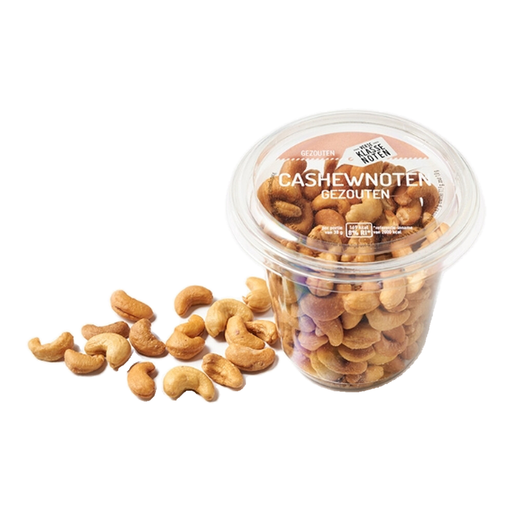 No image available
A good choice if you prefer a salted product and want to calculate the energy in a weighed portion.
The ingredients list states 98% cashews, sunflower oil and 1% salt. Energy: 2555 kJ per 100 g. Net weight: 150 g.
 No image available
A good choice if you’re looking for unsalted cashews and want to divide them into portions at home.
Energy: 596 kcal per 100 g. Salt: 0.067 g per 100 g. Cashews are listed as the ingredient. Net weight: 200 g.
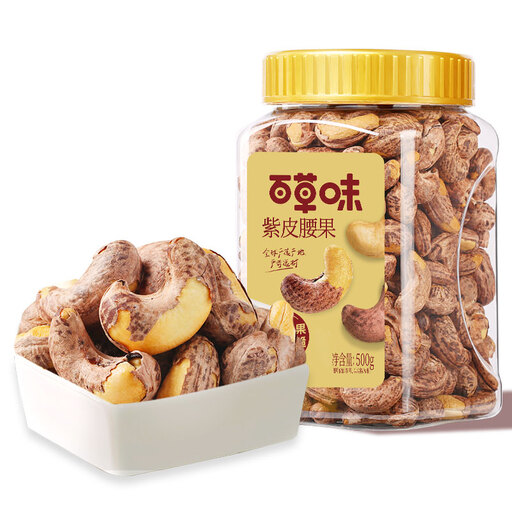 No image available
A good choice if you want to share a larger pack and calculate the energy in each weighed portion.
Energy: 679 kcal per 100 g. Salt: 1.2 g per 100 g. Net weight: 500 g.
No. A smaller portion does not make the product low in calories. For solid foods, the European Commission sets a maximum of 40 kcal per 100 g for this nutrition claim; the labels examined list 598 to 624 kcal per 100 g. Weighing a portion helps you calculate how much you’re eating, but it doesn’t change the product claim.
Multiply the kcal per 100 g shown on your pack by the number of grams, then divide by 100. For the unsalted cashews examined, Albert Heijn lists 622 kcal per 100 g; 15 g works out at 93.3 kcal using that label value. For a different product, use its own label.
Check the current allergen information on the exact pack and discuss any relevant allergies with the group. Cashews themselves contain cashew; a label may also mention the possible presence of other allergens. According to the Netherlands Food and Consumer Product Safety Authority, allergen information must appear on prepacked products.
No. The product labels examined warn that young children can choke on nuts. So don’t assume that an ordinary bag of whole cashews is suitable for young children.
The NVWA warning dated 20 May 2026 concerns Trader Joe’s unsalted cashews, 170 g, with barcode 2003020120930 and best-before date 23-09-2026. The warning advises against eating these cashews because they may contain metal fragments. The best-before date has passed; the warning applies to that specific pack and batch, not automatically to other ALDI products.