
Planning lunch supplies
If you regularly prepare packed lunches, a larger bag may fit your routine. Check the pack size and think about how you’ll store the rest in a sealed container at home.


A large bag could suit you if you regularly prepare packed lunches and can store the rest in a well-sealed container; a smaller bag may be a better fit if you only take cashews with you occasionally or like to mix things up. Choose a pack size based on how much you actually use and how you store the rest. The Netherlands Nutrition Centre recommends unsalted nuts, preferably unroasted or lightly roasted.
If you regularly prepare packed lunches, a larger bag may fit your routine. Check the pack size and think about how you’ll store the rest in a sealed container at home.
If you want unsalted cashews, check how they’re prepared too: unsalted doesn’t automatically mean unroasted.
If you only take cashews with you occasionally or like to vary your snacks, a smaller pack may be a better fit for how you use them.
Match the pack size to the number of lunches you prepare and how you store any cashews left over.
| What to consider | What to look for | Who it’s most relevant for |
|---|---|---|
| Quantity for regular lunches | Match the pack size to how much you use and the space you have to store the rest in a sealed container. | If I plan several lunches in advance, I want enough in stock without opening more than I can store. Around 23% of consumers prioritise having a suitable supply for regular lunches. |
| Salt and preparation | Check the packaging to see whether the nuts are unsalted, unroasted or roasted. | If I choose unsalted cashews, I also want to know how they’ve been prepared. Around 31% of consumers pay particular attention to salt and preparation. |
| Packing portions to take with you | Decide in advance how you’ll portion the nuts and which container you’ll take them in. | When I prepare lunches in advance, I want to be able to pack portions without having to reach into the large bag each time. Around 23% of consumers prioritise portioning in advance. |
| Size of the opened supply | Choose a quantity that suits how often you eat cashews, and follow the storage advice on the packaging. | If I only take cashews with me occasionally, I don’t want to open more than I’ll use. Around 15% of consumers pay particular attention to keeping their supply small and storing it properly. |
| Specific certification | Check that the certification on the packaging applies to that exact product. | If a certification affects my choice, I want to see it on the specific pack. Around 8% of consumers prioritise this. |
Preparation method and salt content are different things. Duyvis describes its Cashews Original as oven-roasted without added oil; that alone doesn’t mean they’re unsalted.
Check the exact product name, ingredients and salt information on the packaging.
Packaging in a protective atmosphere isn’t automatically resealable. A good seal is important for storing any cashews left over.
The Netherlands Nutrition Centre recommends storing cashews in a well-sealed container in a cool, dark, dry place. Follow the instructions on the packaging too.
An option to consider if you’re looking for roasted cashews.
The product information includes AH Terra Unroasted Cashews in a 500 g pack.
The range includes both smaller packs and a 500 g unsalted value pack.
The product page lists unsalted cashews.
Trader Joe’s product listings include 250 g packs of roasted unsalted cashews.
The product listings include 200 g packs of unsalted, unroasted cashews.
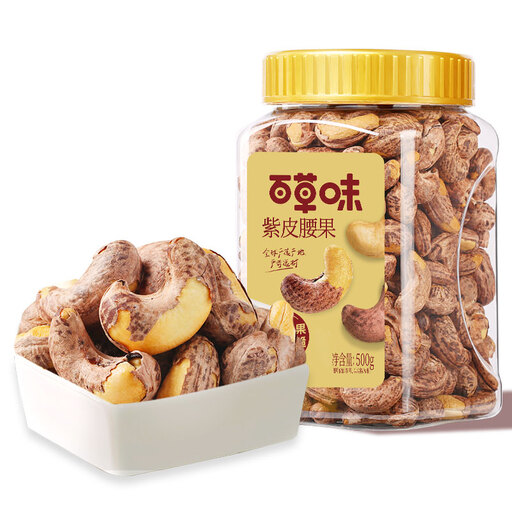
This selection at Joybuy includes larger packs for several lunches and smaller packs for anyone who’d rather not open as much at once.
 No image available
The 500 g pack may suit anyone who wants to divide a larger supply between several lunches.
The product information describes the cashews as lightly salted, with cashews and salt listed as ingredients.
 No image available
The 500 g pack is a larger quantity to divide between lunches.
The product information describes the cashews as salted and says they should be eaten immediately after opening.
 No image available
The 200 g pack may suit anyone who wants to open a smaller quantity at a time.
The title describes the cashews as roasted and unsalted. Keep the pack well sealed after opening.
 No image available
The 160 g pack may suit anyone who wants to open a smaller supply at a time.
The product information lists cashews as the only ingredient and recommends storing the opened pack in a sealed container in a cool, dry place.
 No image available
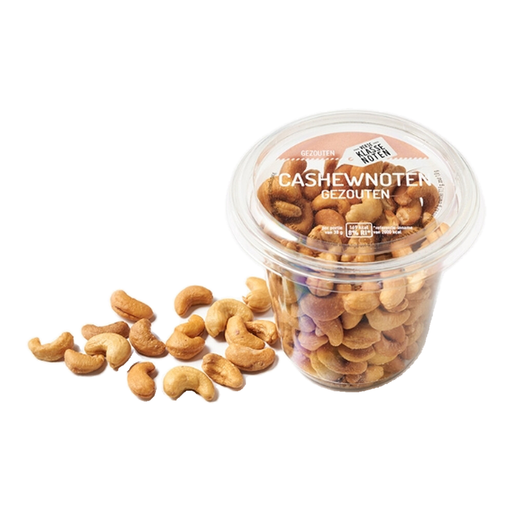
The 150 g pack may suit anyone who wants to take a smaller quantity with them.
The product information describes the cashews as roasted and salted, with sunflower oil and salt listed as ingredients. Keep the pack well sealed after opening.
Divide the weight on the pack by the portion size you choose. For example, a 500 g pack makes twenty 25 g portions, a 250 g pack makes ten and a 200 g pack makes eight. This is a calculation example, not a personal nutrition recommendation.
Store them in a well-sealed container in a cool, dark, dry place, and follow the instructions on the packaging. For opened unsalted cashews, the Netherlands Nutrition Centre gives general storage guidance of six months in a kitchen cupboard and one year in the freezer; this isn’t a product-specific quality guarantee.
Check the allergen information on the packaging of the exact variety. According to the Netherlands Food and Consumer Product Safety Authority (NVWA), allergen information must appear on the label of prepacked foods and be clearly distinguishable from the other ingredients; nuts are among the allergens that must be declared by law.
On 20 May 2026, the NVWA warned about 170 g packs of Trader Joe’s unsalted cashews with barcode 2003020120930 and best-before date 23-09-2026 because they may contain metal fragments. Do not eat this batch. The warning doesn’t automatically apply to other pack sizes or all ALDI cashews.
Jumbo warns on its product page that young children can choke on nuts. So don’t assume that whole cashews are suitable for this age group; the lunch and storage choices described here aren’t advice on suitability for young children.