What should you look for when choosing?
First decide which ingredient you need to avoid, then consider flavour, preparation and quantity. The percentages show consumers’ most important first purchasing consideration; if they have several needs, the figure reflects the one they prioritise.
| What to consider |
What to look for |
Who is this important to? |
| Excluding the right allergen |
Check for the specific allergen in the ingredients list and any relevant precautionary warning. If you have a cashew allergy, don’t choose cashews. |
When I’m choosing a snack for myself or a guest with an allergy, I first want to know whether the specific allergen to avoid could be present. Around 36% of consumers prioritise excluding allergens. |
| Checking that it’s gluten-free |
Look for a gluten-free claim or the Crossed Grain symbol, and check the label information for the exact variety. |
If I need to eat gluten-free, I don’t want to rely on words such as ‘plain’ or ‘unsalted’. Around 29% of consumers prioritise checking whether a product is gluten-free when making their first purchase decision. |
| Distinguishing between milk and lactose |
Work out whether you need to avoid milk ingredients or lactose, then check the relevant ingredients and allergen information. |
If I have a milk allergy or lactose intolerance, I want to know which substance is relevant to me; these are not the same thing. Around 21% of consumers prioritise avoiding milk or lactose. |
| Preparation and quantity |
Compare unroasted and roasted options, unsalted and seasoned varieties, net weight and storage advice. |
Once I’ve checked that the product suits my dietary needs, I mainly want to choose a suitable preparation and quantity for a night in front of the TV. Around 14% of consumers name snack style or quantity as their first purchasing priority. |
Cashews at Joybuy
These product picks are cashews for a night in front of the TV, with different preparation methods and pack sizes. Choose them only if cashews suit your diet, and check the information on the exact pack.
 No image available
Jiazhouyuanye Original Flavour Large Cashew Nuts 160 g
Only consider this if cashews suit your diet; the description says the product is ready to eat.
Ingredients: 100% cashew kernels. Suggested uses: eat as they are, add to yoghurt or muesli, or use in baking.
View at Joybuy
 No image available
Duyvis Dry Roasted Cashews 125 g
Only consider this roasted variety if the listed ingredients and allergens suit your diet.
Oven-roasted without added fat or oil; sea salt is listed in the ingredients. Allergen information lists cashews, gluten, wheat and peanuts.
View at Joybuy
 No image available
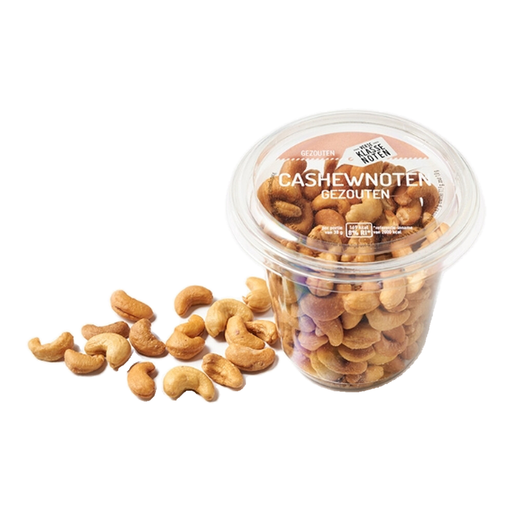
Verse Klassenoten Salted Cashew Nuts 150 g
Only consider this if cashews and the information on the pack suit your dietary needs.
The ingredients information lists cashews with skin and salt. Pack size: 150 g.
View at Joybuy
 No image available
g'woon Cashew Nuts Roasted & Unsalted 200 g
Only consider this roasted, unsalted variety if cashews suit your diet.
Cashews are listed as an ingredient and allergen. Salt: 0,067 g per 100 g. Pack size: 200 g.
View at Joybuy
 No image available
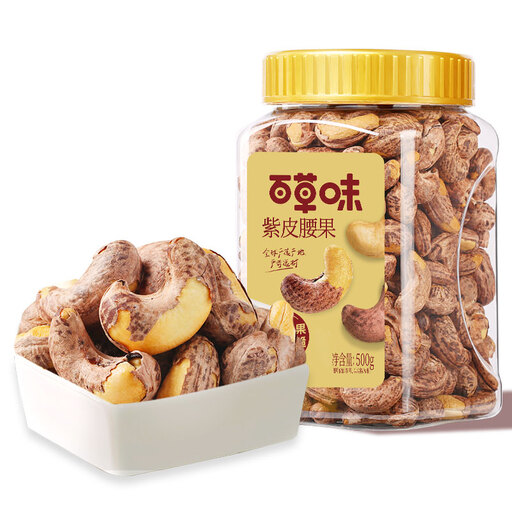
Be&Cheery cashews with purple skin 180 grade 500 g
Only consider this if cashews and the ingredients information suit your diet.
The ingredients information lists cashew kernels and salt. The product name specifies a 500 g pack.
View at Joybuy
Frequently asked questions
Are cashews an allergen-free snack?
No. Cashews are a tree nut allergen in their own right. A claim about gluten or lactose doesn’t make cashews suitable for someone who needs to avoid them because of an allergy.
Does lactose-free mean suitable for someone with a milk allergy?
No. Lactose intolerance concerns milk sugar, while a milk allergy concerns milk proteins. So check the ingredients and allergen information relevant to the substance you need to avoid.
Is ‘gluten-free’ a regulated claim?
Yes. Regulation (EU) No 828/2014 sets out the conditions for claims about the absence or reduced presence of gluten. The European Commission states that the regulation has applied since 20 July 2016. The Dutch Coeliac Society offers practical advice on reading labels to help you assess a pack.
What does a warning such as ‘May contain X’ mean?
This type of precautionary warning refers to the possible unintended presence of the allergen named. The Netherlands Food and Consumer Product Safety Authority announced that it would begin enforcing the Dutch rules on precautionary warnings from 1 January 2026; the Netherlands Nutrition Centre explains that such warnings should reflect a genuine risk of cross-contamination. Consider the warning in light of the avoidance advice you’ve been given.
Are whole cashews suitable for small children?
For the specific Ongezouten Cashewnoten 130 g pack, Jumbo warns that small children could choke on nuts. So don’t assume whole cashews are a suitable snack for small children; this warning applies to the pack mentioned.


