
Lunch snackers keeping track of calories
You want to keep enjoying cashews with lunch and know in advance how much energy a weighed portion provides. Check the weight of your portion and the kcal on the label for that specific variety.


The cashews reviewed are not low in calories: product information from Albert Heijn, Jumbo and PLUS lists 586 to 622 kcal per 100 g for the four varieties checked. For solid foods, the European Commission sets a maximum of 40 kcal per 100 g for the ‘low energy’ claim. So weigh your lunch portion and use the value per 100 g on the label to work out its energy content. Unsalted or made without added oil does not automatically mean low in calories, and according to Albert Heijn, Duyvis oven-roasted cashews can still contain salt.
You want to keep enjoying cashews with lunch and know in advance how much energy a weighed portion provides. Check the weight of your portion and the kcal on the label for that specific variety.
You want unsalted nuts and need to distinguish between unroasted, cooked in oil and oven-roasted varieties. Check the ingredients and salt content separately: unsalted does not automatically mean low in calories.
You buy cashews for several lunches and portion them out at home to take with you. Pack size and storage advice can help you choose; a larger pack is not the same as a larger lunch portion.
Compare the nutritional values per 100 g and calculate them for the amount you weigh out. This lets you compare varieties using the same portion size, while keeping salt, ingredients and packaging in mind separately.
| What to consider | What to look for | Who is this important for? |
|---|---|---|
| Energy per lunch portion | Check the kcal per 100 g and weigh your portion; calculate kcal per 100 g × portion weight / 100. | If you want to match the energy in your lunch to the portion you eat, calculating it from the label can help. Around 36% of consumers prioritise working out the energy in their portion. |
| Unsalted and ingredients | Read the ingredients list and salt per 100 g; unsalted does not mean oil-free or low in calories. | If unsalted nuts and a simple ingredients list matter to you, you can compare these separately from the kcal. Around 29% of consumers prioritise this. |
| Packaging for several lunches | Check the net weight and how many portions you want to make from the pack. | If you are shopping for several lunches, a pack is useful when you can portion and use its contents. Around 21% of consumers prioritise this planning. |
| Taking them with you and storage | Check the portion size and storage advice; seal the remaining nuts securely. | If you want to take a weighed portion with you and keep the rest at home, check the packaging and storage instructions. Around 14% of consumers say convenience and storage are their top priorities. |
These terms describe different qualities. The four varieties checked list 586 to 622 kcal per 100 g, which is above the threshold for the ‘low energy’ claim for solid foods.
Check energy, ingredients and salt separately. Weigh the portion you want to eat and calculate its energy using the value per 100 g.
The AH pack contains 170 g and lists a portion size of 25 g. So the pack may contain several portions.
Weigh out a portion in advance and seal the rest securely.
If you eat more than you portioned out in advance, you’ll get through your supply sooner. Preparing portions makes it easier to keep the amount you take with you separate.
The Duyvis variety checked lists fewer kcal per 100 g than the other products in the technical comparison, but it also contains salt. So the energy figures alone don’t show which variety best suits everyone’s preferences.
Decide whether energy per portion, eating unsalted nuts or the preparation method matters most to you. Then compare the relevant information on the labels.
On 20 May 2026, the Netherlands Food and Consumer Product Safety Authority warned about 170 g packs of Trader Joe’s unsalted cashews with a best-before date of 23-09-2026, due to possible metal fragments. The warning applies to that specific pack; an expired date does not make a pack you have stored safe.
If you still have that exact pack, do not eat the cashews. The warning does not apply to other packs or batches.
The Cashews Original product range described here is worth considering if you’re looking for oven-roasted cashews with a savoury flavour.
AH Cashewnoten ongezouten 170 g is a roasted own-brand variety for anyone who wants to portion out unsalted cashews themselves.
The unsalted own-brand packs reviewed, in 200 g and 500 g sizes, suit anyone who wants to make their own portions for several lunches.
PLUS Cashewnoten ongezouten ongebrand 200 g is worth considering if you want an unroasted variety with cashews as its only ingredient.
The Way To Go! product range mentioned here includes an unsalted cashew variety.
The ALDI product page mentioned here is for Trader Joe’s Cashewnoten geroosterd en ongezouten 250 g.
These Joybuy products are for anyone who wants to take cashews with them for lunch and weigh out their own portion.
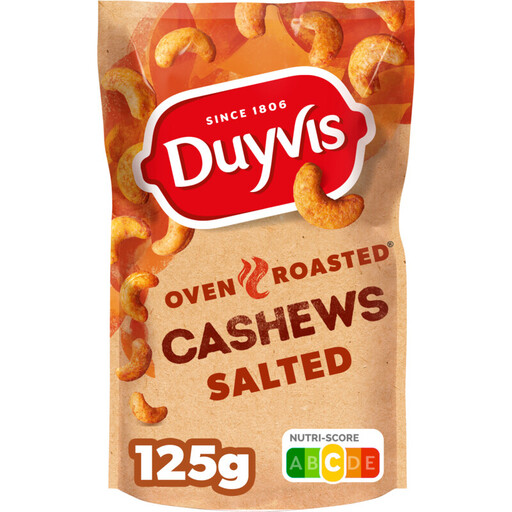 Image unavailable
Could suit you if you want an oven-roasted snack and prefer to weigh out your own lunch portion.
Joybuy lists 586 kcal and 0.92 g of salt per 100 g. The product description says they are roasted without added fat or oil.
 Image unavailable
Could suit you if you want an unsalted variety and prefer to decide on the portion size yourself.
Joybuy lists 596 kcal and 0.067 g of salt per 100 g; the ingredients list names cashews only.
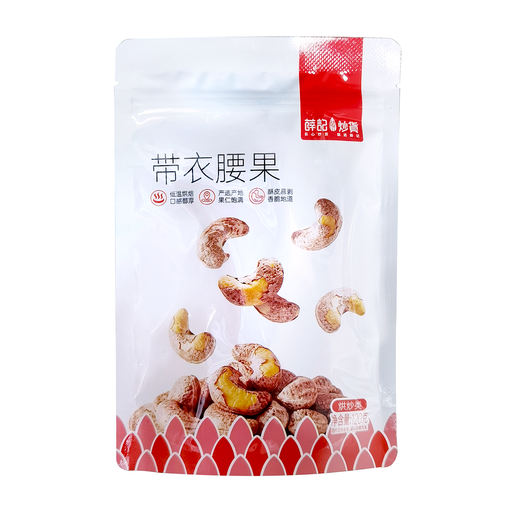 Image unavailable
Could suit you if you’re looking for a salted cashew variety in a 120 g pack.
Joybuy lists 596 kcal and 0.9 g of salt per 100 g; the ingredients are cashews and salt.
 Image unavailable
Could suit you if you want a product whose ingredients list names cashew kernels only.
Joybuy lists 604 kcal per 100 g and 100% cashew kernels as the ingredient. The pack contains 160 g; once opened, store it sealed.
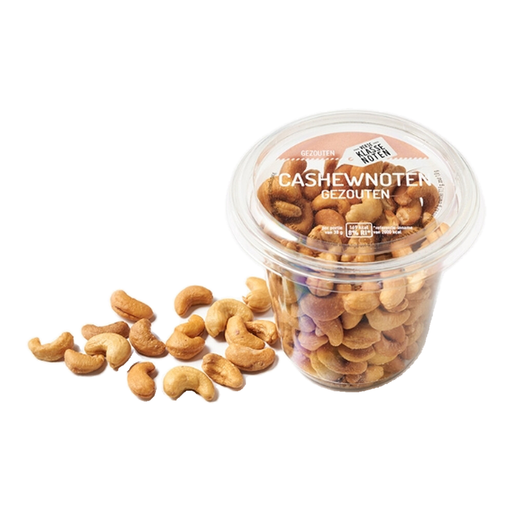 Image unavailable
Could suit you if you want to take a roasted, salted cashew variety with you and weigh out your own portion.
Joybuy lists 2555 kJ and 1.0 g of salt per 100 g. The ingredients list names 98% cashews, sunflower oil and 1% salt.
No, a small portion does not make the product itself low in calories. For solid foods, the European Commission allows the ‘low energy’ claim only when a product contains no more than 40 kcal (170 kJ) per 100 g. The cashew varieties checked are above that threshold, so it’s better to describe the calculated energy in your weighed portion.
Multiply the kcal per 100 g by your portion weight in grams, then divide by 100. For example, 15 g provides 93.3 kcal when the product contains 622 kcal per 100 g. The Netherlands Nutrition Centre gives 25 g as a reference portion for unsalted cashews; this is not a personal calorie limit.
According to the Netherlands Food and Consumer Product Safety Authority, information must be provided about allergens present, and the specific type of nut must be clearly identified. Ask whether a dish contains cashews, and check for any other ingredients that matter to you.
Store the nuts in a cool, dry place in a tightly sealed container, and follow the instructions on the pack. The Netherlands Nutrition Centre recommends storing them in a cool place.
No, the warning issued by the Netherlands Food and Consumer Product Safety Authority on 20 May 2026 concerns 170 g packs of Trader Joe’s unsalted cashews with a best-before date of 23-09-2026, due to possible metal fragments. If you still have that exact pack, do not eat the nuts, even though the date has now passed. The warning does not apply generally to other packs or batches.