
Calorie-conscious lunch snackers
You want to eat cashews alongside a shop-bought sandwich and keep track of the extra energy they provide. Compare the same weight in grams; the labels from Albert Heijn and Duyvis show that portion sizes can vary.


Choose based on how many grams you’d like to eat alongside your sandwich, and compare the energy per 100 g and per equal weighed portion. The varieties reviewed with energy information are above the European Commission’s threshold for ‘low energy’: no more than 40 kcal (170 kJ) per 100 g for solid foods. If salt matters too, prioritise unsalted varieties and check the ingredients, portion size and preparation method on the label.
You want to eat cashews alongside a shop-bought sandwich and keep track of the extra energy they provide. Compare the same weight in grams; the labels from Albert Heijn and Duyvis show that portion sizes can vary.
You’re mainly looking for unsalted nuts and also want to know whether oil has been added or the nuts are unroasted. The Netherlands Nutrition Centre recommends unsalted nuts; the Albert Heijn and Jumbo labels reviewed list sunflower oil, while the ingredients list for the PLUS variety reviewed lists only cashews.
You often take a snack with you and want a pack you can portion out at home. The Lidl and ALDI packs reviewed differ in size; the Netherlands Nutrition Centre recommends keeping nuts well sealed, cool, dark and dry after opening.
First compare the nutritional information per 100 g and work out the amount you want to take with you; check the label of the specific variety you’re buying.
| What to consider | What should you check? | Who is this most relevant to? |
|---|---|---|
| Energy per portion | Calories per 100 g and the weight of your portion. | If I’m watching my energy intake alongside my sandwich, I weigh my portion and compare calories per 100 g; around 36% of consumers put calorie control first. |
| Salt and ingredients | Salt per 100 g and whether the ingredients list includes oil, salt or herbs and spices. | If I mainly want unsalted nuts, I check the salt, oil and herbs and spices separately; around 29% of consumers prioritise an unsalted product. |
| Taking them with you and portioning | Net weight and whether you can seal and store the pack properly after opening. | If I want to prepare my lunch snack in advance, I look for a pack that’s easy to portion and store; around 21% of consumers prioritise taking snacks with them and preparing them ahead. |
| Pack size | Whether the pack size suits how often you eat nuts and how much you can store at home. | If I want a supply that suits my usage and storage space, I check the net weight; around 14% of consumers prioritise a suitable pack size. |
These descriptions relate to ingredients or preparation and don’t prove that the energy content is below the threshold for a ‘low energy’ claim.
Check the energy per 100 g on the label and work it out for the amount you weigh out.
A 25 g portion on one label isn’t directly comparable with a 30 g portion on another. As a result, a per-portion comparison can give a different impression from a comparison per 100 g.
Compare per 100 g first, then work out the figures for the same weight in grams for each variety.
The Lidl pack reviewed contains 500 g, so it isn’t automatically one lunch portion. A large pack also needs a suitable place to store what’s left.
Weigh out your lunch portion in advance and seal the rest well. The Netherlands Nutrition Centre recommends storing nuts somewhere cool, dark and dry.
According to the Netherlands Nutrition Centre, nuts that are rancid, chewy or mouldy may have lost their quality.
The NVWA warning issued on 20 May 2026 concerns 170 g packs of Trader Joe’s unsalted cashews with a best-before date of 23-09-2026, due to possible metal fragments. The warning applies to those specific packs, not to all cashews.
Check the product name, pack size and best-before date. Don’t eat a pack that matches the warning.
Duyvis describes Cashews Original as oven-roasted without added oil. This is the manufacturer’s description of that product range.
The Albert Heijn variety reviewed is an unsalted, roasted cashew product in a 170 g pack.
The own-brand variety reviewed is a 200 g bag of unsalted cashews.
The PLUS variety reviewed is unroasted and unsalted, and is sold in a 200 g bag.
The Dutch variety reviewed is unsalted and sold in a 500 g pack.
The Dutch ALDI variety reviewed is roasted and unsalted, in a 250 g pack under the Trader Joe’s label.
These cashews can be portioned out to go with your lunch sandwich; check the nutritional information, ingredients and allergen details for each variety.
 Image unavailable
These salted, oven-roasted cashews could suit you if you want to weigh out a savoury lunch snack.
The pack contains 125 g, and the product information lists sea salt.
The product information also mentions gluten, wheat and peanuts; check the packaging if you have any allergies.
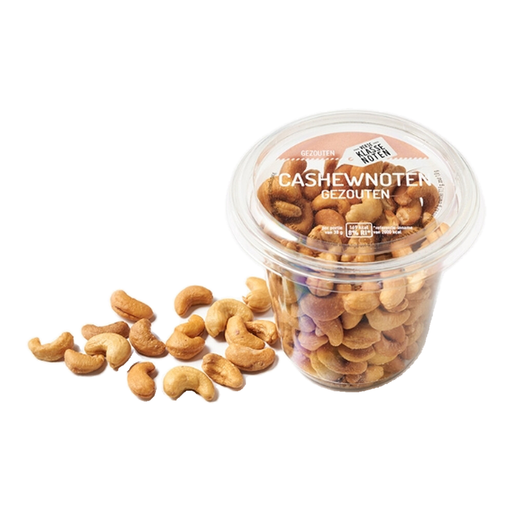 Image unavailable
These salted cashews could suit you if you’re looking for a savoury option and want to weigh out your own lunch portion.
The pack contains 150 g; the product information lists salt and sunflower oil.
 Image unavailable
This variety could suit you if you want to decide how much to have with your lunch sandwich.
The pack contains 160 g. The product information lists cashew kernels as the only ingredient; check the nutritional information on the pack if you want to compare energy per portion.
 Image unavailable
These roasted, unsalted cashews could suit you if you want to take unsalted nuts with you to have alongside your lunch sandwich.
The pack contains 200 g. The product information lists cashews as an ingredient; check the nutritional information and any warnings on the packaging.
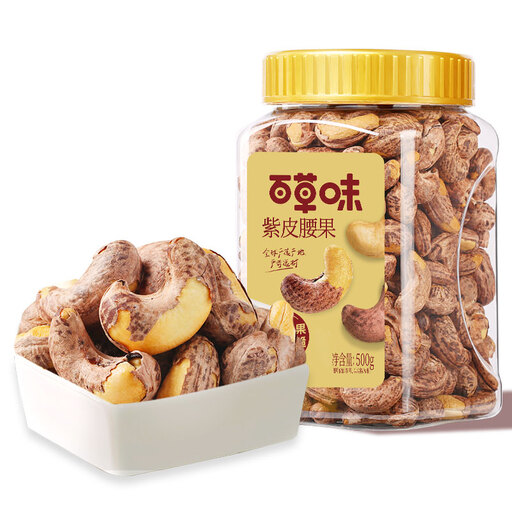 Image unavailable
The 500 g pack could suit you if you want to prepare several portions and have space to store the rest.
The product information lists salt; check the nutritional information and store the pack according to the instructions on the label.
Not based on the energy information reviewed. For solid foods, the European Commission sets the threshold for a ‘low energy’ claim at no more than 40 kcal (170 kJ) per 100 g. ‘Reduced energy’ requires a reduction of at least 30%, and the characteristic responsible for the lower energy content must be stated. A smaller portion doesn’t change the threshold per 100 g.
First compare the energy per 100 g and work out the figures for the same weight in grams for both products. Then weigh out the amount you actually want to eat alongside your sandwich; the portion shown on the label doesn’t have to match yours.
The Netherlands Nutrition Centre recommends storing unsalted cashews in a well-sealed container somewhere cool, dark and dry. According to its storage guide, six months in a kitchen cupboard and one year in the freezer are guidelines for opened unsalted cashews; follow the label and best-before date for an unopened pack.
Check the ingredients list and allergen warnings on the exact pack before eating the nuts. The PLUS variety reviewed warns of possible peanut traces; the product information for the Duyvis variety mentioned also lists gluten, wheat and peanuts.
No. The NVWA warning issued on 20 May 2026 names 170 g packs of Trader Joe’s unsalted cashews with a best-before date of 23-09-2026, due to possible metal fragments. Don’t eat a pack that matches this description; the warning doesn’t automatically apply to other packs or varieties.