
Portion-conscious snackers
If you want to keep serving cashews but would like to know how much energy your portion provides in advance, this guide is for you. Check the label and weigh your portion rather than relying on the word ‘unsalted’ alone.


Compare the energy per 100 g on the label and weigh your portion. That way, you can take both your product choice and serving size into account. The varieties reviewed are not low-calorie products; ‘unsalted’ and ‘no added oil’ don’t, on their own, tell you anything about their energy content. When planning your party, also consider allergens, young children and how to seal and store any leftovers.
If you want to keep serving cashews but would like to know how much energy your portion provides in advance, this guide is for you. Check the label and weigh your portion rather than relying on the word ‘unsalted’ alone.
If you want to choose between unroasted, fried and oven-roasted cashews, while assessing flavour, oil and salt separately, this guide is for you.
If you’re buying for several guests and need to consider pack size, portions, storage and safe serving, this guide is for you. Allergies and young children need extra attention.
Start by checking whether the product is suitable for your guests, then compare the labels and decide how many grams you want to serve.
| What to consider | What to look for | Who should consider this? |
|---|---|---|
| Energy per portion | Compare kcal per 100 g and weigh the amount you serve. Calculate the energy in your portion using kcal per 100 g × portion weight in grams ÷ 100. | If I want to keep track of the energy in my portion, I weigh the cashews and use the value on the label. Around 42% of consumers prioritise energy per portion above all else. |
| Ingredients and salt | Check the ingredients list, preparation method and salt content separately. ‘Unsalted’ doesn’t automatically mean that no oil has been added. | If I want to take additives and salt into account, I check both the ingredients and the nutritional information. Around 25% of consumers prioritise ingredients and salt. |
| Serving safely | Read the allergen information on the pack. Don’t give whole cashews to children under four; MDL Fonds warns of the risk of choking. | If I’m hosting guests with allergies or young children, I first check whether the nuts are suitable to serve. Around 17% of consumers prioritise suitability for their guests. |
| Quantity and storage | Match the net weight to the portions you’re planning and seal any leftovers well. Store nuts in a dry place. | If I’m buying for several guests, I plan the quantity around the portions and think about how I’ll store any leftovers. Around 16% of consumers prioritise party planning and choosing a suitable pack size. |
These terms don’t describe the overall energy content. The AH variety reviewed contains sunflower oil; Flink lists 604 kcal per 100 g for a specific Duyvis product.
Check energy, ingredients and salt as three separate factors.
For the PLUS and AH varieties reviewed, the calculated difference for a 25 g portion is 6 kcal. According to the calculation, 15 g of the PLUS variety provides 89.7 kcal, while 25 g provides 149.5 kcal.
First decide how much you’re serving and weigh it. Then compare products using the same portion size.
Pack sizes vary. According to the Netherlands Nutrition Centre, nuts should be stored in a dry place in a well-sealed container.
Choose a pack size to suit the portions you’re planning, and seal the pack well after use.
Leftovers need to be stored in a dry place in a well-sealed container. A large pack is only practical if you can store its contents properly.
Cashews are an allergen. The PLUS pack reviewed states that the product may contain peanuts. MDL Fonds says whole nuts are not safe for children under four because of the risk of choking.
Check with guests about allergies in advance, read the packaging and don’t give whole cashews to young children.
Worth considering for savoury party cashews and oven-roasted varieties.
The AH Ongezouten cashewnoten 100 g reviewed here are an example of a fried variety.
The range includes unroasted and unsalted cashews, among other options.
The product information for unsalted cashews describes a 500 g pack.
The product information describes Trader Joe’s roasted, unsalted cashews in a 250 g pack.
According to the product information, the PLUS Cashewnoten ongezouten ongebrand 200 g reviewed here contains only cashews.
These Joybuy products are cashews for anyone who wants to compare varieties and nutritional information, and weigh their own portions.
 Image unavailable
If you choose this variety, use the stated energy per 100 g to calculate your weighed portion.
Joybuy product information lists 100% cashew kernels, 604 kcal and 0.028 g of salt per 100 g, and a net weight of 160 g.
 Image unavailable
The stated energy content makes this variety easy to compare using the label. Weigh your portion if you want to keep track of the amount you eat.
Joybuy product information lists 586 kcal and 0.92 g of salt per 100 g. The product title describes the cashews as dry-roasted.
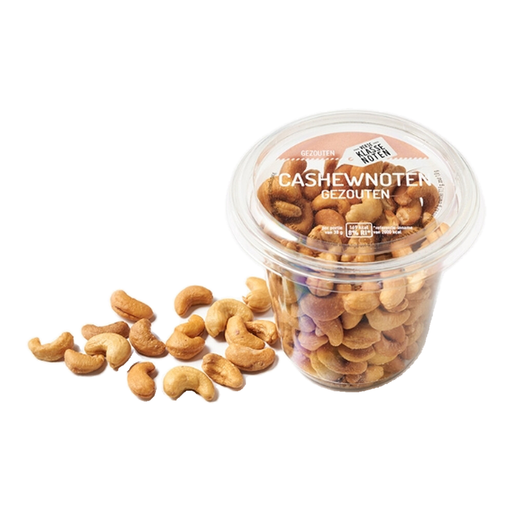 Image unavailable
If you’re considering a salted variety, compare both the energy and salt per 100 g with other labels.
Joybuy product information lists 2555 kJ, 1.0 g of salt per 100 g and a net weight of 150 g. The ingredients include 98% cashews and sunflower oil.
 Image unavailable
This variety is an option if you’re looking for roasted cashews with no added salt. Weigh your portion and compare the energy content.
Joybuy product information lists cashews as the only ingredient, 596 kcal and 0.067 g of salt per 100 g, and a net weight of 200 g.
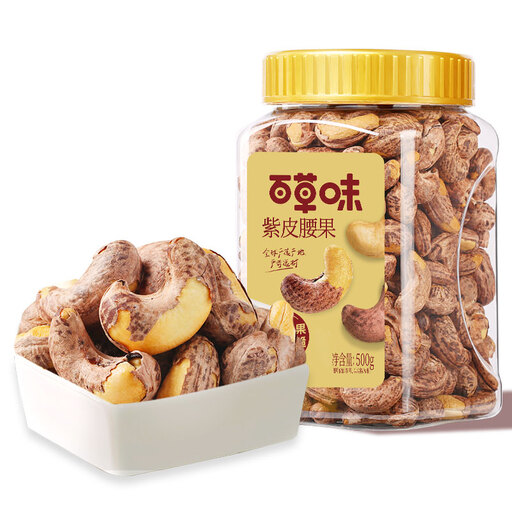 Image unavailable
The larger pack may suit a party with several guests if you plan portions in advance and can store any leftovers properly.
Joybuy product information lists 679 kcal and 1.2 g of salt per 100 g, with a net weight of 500 g. The ingredients include cashew kernels and salt.
According to the European Commission, the claim ‘low energy’ is only permitted for solid foods containing no more than 40 kcal (170 kJ) per 100 g. The cashew labels reviewed list values above this threshold; a smaller portion doesn’t change the value per 100 g.
Multiply the kcal per 100 g by the number of grams you’ve weighed, then divide by 100. For the PLUS variety reviewed, 15 g works out at 89.7 kcal and 25 g at 149.5 kcal. These are calculated amounts, not advice about your personal energy needs.
Check the allergen information on the packaging and speak to the guest concerned in advance. The products reviewed contain cashews; some packs also state that they may contain peanuts or other nuts. Being ‘unsalted’ doesn’t change the allergen information.
No. According to MDL Fonds, whole nuts aren’t safe for children under four because of the risk of choking. Don’t serve them whole cashews.
Follow the instructions on the pack and store the nuts in a dry place in a well-sealed container. The Netherlands Nutrition Centre recommends storing nuts in a dry place in a well-sealed container; Albert Heijn also says this for the AH pack reviewed.