
Snackers keeping an eye on fat and portions
You want to keep eating cashews, but distinguish between less fat per 100 g and less fat from eating a smaller amount. The label and a measured portion can help you assess these choices separately.


If you want less fat per 100 g, check the nutritional information for the exact product; if your main aim is to eat less, decide on your portion in advance. The labels we reviewed list 43 to 50 g of fat per 100 g, while the European Commission sets a maximum of 3 g of fat per 100 g for a ‘low fat’ claim on solid foods. So unsalted, unroasted or made without added oil does not automatically mean low in fat.
You want to keep eating cashews, but distinguish between less fat per 100 g and less fat from eating a smaller amount. The label and a measured portion can help you assess these choices separately.
You want a less salty snack to serve with drinks, so you compare unsalted varieties. That description alone does not tell you whether oil has been used or whether the product contains less fat.
You want to choose a suitable quantity and flavour, and have information about ingredients, allergens and storage to hand. So look beyond the packaging or a ‘light’ image.
| What to consider | What should you check? | Who is this important to? |
|---|---|---|
| Fat and portion size | Compare fat per 100 g, then decide how much to serve. The Netherlands Nutrition Centre gives 25 g as an example handful; this contains an average of 12.2 g of fat. | If I want to keep eating cashews but measure my portion, I look at both the label and the amount in my bowl. Around 34% of consumers prioritise fat and portion size. |
| Salt | Compare salt per 100 g and read the ingredients list; unsalted does not automatically mean oil-free. | If I’m looking for a less salty snack to serve with drinks, I want to check the salt content without assuming that the fat content is also lower. Around 20% of consumers prioritise salt. |
| Flavour and preparation | Check whether the nuts are unroasted, roasted or seasoned, and whether the product description matches the exact variety. | For a get-together, I’d rather choose based on flavour and preparation than on an assumed ‘light’ effect. Around 20% of consumers prioritise flavour and preparation. |
| Quantity and packaging | Choose a net weight that suits how much you want to serve, and follow the storage advice after opening. | If I’m shopping for a group, I want to have enough to serve without treating the pack size as a portion. Around 13% of consumers prioritise quantity and packaging. |
| Ingredients and sharing safely | Check the allergen information and keep the packaging to hand; if there’s a warning, also check the exact product and batch details. | If I’m sharing nuts with others, I want to be able to show them the ingredients and any relevant warnings. Around 13% of consumers prioritise food safety when sharing. |
These terms don’t mean the same thing as the total fat content. The Dutch labels we reviewed list values above the threshold for a ‘low fat’ claim.
Check the fat content per 100 g, and assess salt, ingredients and preparation as separate characteristics.
The size of the pack and the amount you serve are two different things. A larger bag may leave you with leftovers.
Decide in advance how much you want to serve, and follow the storage instructions on the pack for anything left over.
A title and product description may refer to different flavours. For example, the Joybuy page for Duyvis we viewed has a title referring to dry-roasted cashews, while the description mentions sea salt.
Before choosing, compare the full product name, flavour, net weight and ingredients for the exact variety.
The cashew varieties we reviewed are intended as savoury snacks; the specific characteristics vary by product.
AH Cashewnoten ongezouten is a specific option for anyone comparing unsalted roasted cashews.
The own-brand unsalted varieties we reviewed are available in different pack sizes.
Lidl lists unsalted and spicy roasted cashews; the Alesto range also includes a Fairtrade variety.
Under the Trader Joe’s brand, ALDI describes a 250 g variety of roasted, unsalted cashews.
PLUS Cashewnoten ongezouten ongebrand is an option for anyone looking for a simple ingredients list.
These Joybuy product picks are suitable for snacking or sharing; check the flavour, ingredients and nutritional information for each variety.
 Image unavailable
The ingredients list states 100% cashew kernels; the product description says they’re ready to eat.
Pack size: 160 g. The product description lists 47.7 g of fat and 0.028 g of salt per 100 g.
Contains cashew kernels; bear allergies in mind.
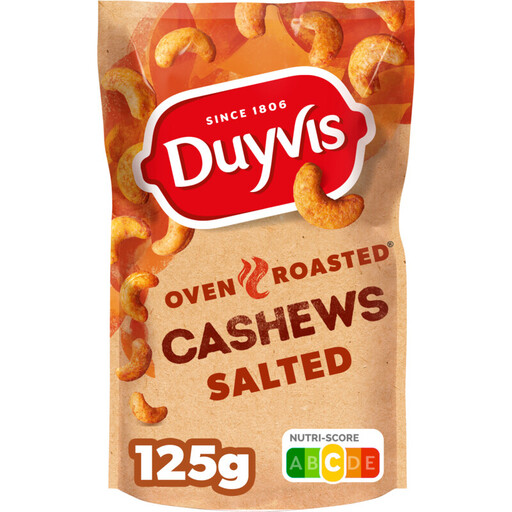 Image unavailable
The description says these oven-roasted cashews with sea salt make a savoury snack to serve with drinks.
Pack size: 125 g; the description says each pack contains 4–5 servings. This variety contains 43 g of fat and 0.92 g of salt per 100 g.
Bear the salty flavour in mind.
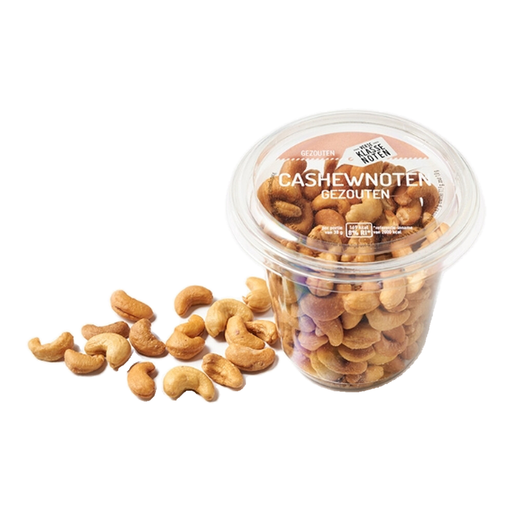 Image unavailable
The product description lists cashew kernels and salt; check the flavour and nutritional information if you’re planning to share them.
The product description lists 60.1 g of fat and 1.2 g of salt per 100 g.
Bear the salty flavour and cashew allergies in mind.
 Image unavailable
The title describes roasted, unsalted cashews; the ingredients list contains only cashews.
Pack size: 200 g. The product description lists 46.67 g of fat and 0.067 g of salt per 100 g.
Contains cashews; bear allergies in mind.
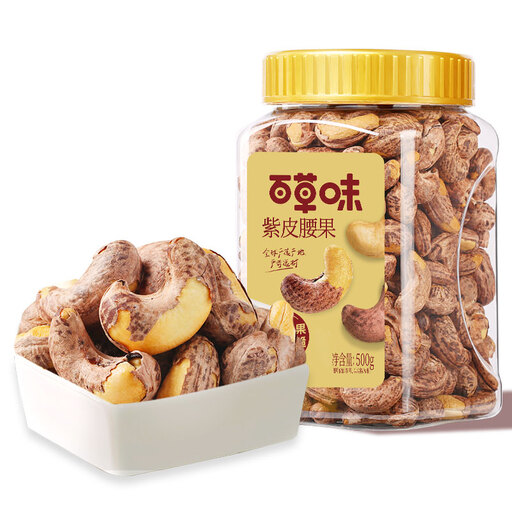 Image unavailable
The product description lists cashew kernels and salt, and says they’re suitable for sharing.
Pack size: 500 g. The product description lists 60.1 g of fat and 1.2 g of salt per 100 g.
Bear the salty flavour and cashew allergies in mind.
For solid foods, the European Commission sets a maximum of 3 g of fat per 100 g for a ‘low fat’ claim. The product labels discussed here list higher values; choosing a smaller portion of regular cashews is different from choosing a product with a lower fat content per 100 g.
No. A smaller portion doesn’t change the composition per 100 g, but you do eat a smaller amount. The Netherlands Nutrition Centre uses 25 g of unsalted cashews as an example portion; it gives this as an average of 154 kcal and 12.2 g of fat.
Follow the advice for the variety you have. Duyvis recommends storing its product in a cool, dry place and keeping an opened bag in a light- and airtight container; AH recommends storing its product in a cool, dark, dry place and closing the pack securely.
Keep the packaging so you can show the ingredients and allergen information. The products we reviewed contain cashew nuts and may carry additional allergen warnings; product information also warns that young children can choke on nuts.
The NVWA warning of 20 May 2026 concerned Trader Joe’s unsalted cashews, 170 g, barcode 2003020120930 and best-before date 23-09-2026, due to possible metal fragments. If you still have that exact batch, do not eat it; the warning does not automatically apply to other packs or batches.