
Less fat in the same quantity
You want to know how much fat cashews contain per 100 g and are looking for a substantiated claim, not just a description of how they’re prepared, such as ‘oven-roasted’.


If you want less fat in the same quantity, compare the nutrition information per 100 g and check what a reduced-fat claim is based on; ‘unsalted’ and ‘no added oil’ don’t tell you that on their own. For solid foods, the European Commission defines ‘low fat’ as no more than 3 g of fat per 100 g; according to the Netherlands Nutrition Centre, a fat-related ‘light’ or ‘reduced’ claim means at least 30% less fat than in a regular comparable product. The product information on Joybuy lists between 42,9 and 47,7 g of fat per 100 g for the five variants shown, so none meets the ‘low fat’ threshold. A smaller portion changes how much you eat, not the fat content per 100 g.
You want to know how much fat cashews contain per 100 g and are looking for a substantiated claim, not just a description of how they’re prepared, such as ‘oven-roasted’.
You want to have a manageable portion with your coffee. The weight of your portion and the nutritional values for the amount you choose are therefore relevant.
You’re buying for everyone to share and want to be able to check the ingredients and allergens. Sealing the tin and managing stock also matter when you store the nuts in one.
Start by comparing the fat content per 100 g and checking the exact claim. For solid foods, the European Commission defines ‘low fat’ as no more than 3 g of fat per 100 g; the Netherlands Nutrition Centre explains that a fat-related ‘light’ or ‘reduced’ claim means at least 30% less fat than in a regular comparable product.
| What to consider | What to look for | Who is this important to? |
|---|---|---|
| Fat content and claims | Compare fat per 100 g and check the claim and the comparable product it’s based on. | If my main reason for choosing is less fat, I want a fair comparison based on the same quantity. Around 31% of consumers prioritise a demonstrable reduction in fat. |
| Amount per snack break | Choose a portion weight and calculate the nutritional values using the table for the variant you’ve chosen. | If I want to decide for myself how much to have with my coffee, measuring out a portion makes the amount clear. Around 25% of consumers give portion control top priority. |
| Allergens when sharing | Check the ingredients and warnings about possible cross-contamination separately, and keep the original label. | If the tin is for colleagues, I want to keep allergen information to hand when the packaging is no longer beside the contents. Around 19% of consumers prioritise allergen management when sharing food. |
| Freshness and storage | Follow the storage instructions for the exact variant and look out for signs of spoilage. | If the tin is often left open, I want to be able to seal and replenish the stock according to how quickly it’s used. Around 13% of consumers make freshness during storage their top priority. |
| Pack size | Match the net weight to expected use so the amount you buy suits the team. | If I’m buying for a small team, I want to choose an amount that reflects how quickly we get through the stock. Around 12% of consumers prioritise pack size and ease of shopping. |
A description of how a product is prepared doesn’t tell you whether its total fat content meets the ‘low fat’ threshold.
Check the nutrition information per 100 g and assess any reduced-fat claim separately from the preparation method.
Cashews are a tree nut allergen. Ingredients and warnings about other allergens are no longer visible if the packaging is put out of sight.
Keep the original packaging or the full label, and make sure different snacks are easy to tell apart.
A product’s values for a smaller serving don’t change its fat content per 100 g and make it harder to compare products with different serving sizes.
Compare products per 100 g first, then measure out the amount you want.
General storage guidance doesn’t take into account how often a shared tin is opened or how the stock is stored at the office.
Follow the instructions on the packaging, seal the stock properly and look out for signs of spoilage.
If you open more stock than you can use, its quality may deteriorate and some may go to waste.
Duyvis describes Cashews Original as oven-roasted with no added oil. This may matter if the preparation method influences your choice.
AH Cashewnoten ongezouten 170 g is a specific unsalted option to consider for the office snack tin.
Jumbo Cashewnoten Ongezouten 200 g is worth considering if the pack size suits your needs.
Lidl also includes Way To Go cashews in its Alesto range and describes them as fairtrade.
ALDI Netherlands lists TRADER JOE'S Cashewnoten geroosterd en ongezouten 250 g.
PLUS Cashewnoten ongezouten ongebrand 200 g is a good fit if you prefer unroasted cashews.
These Joybuy products are standard cashew options for anyone considering ingredients, preparation method or portion size; the listed fat values don’t meet the ‘low fat’ threshold. The specifications below are based on the product information on Joybuy.
 No image available
The product description lists 100% cashew kernels; the pack contains 160 g.
Fat: 47,7 g per 100 g. Once opened, store in a sealed container in a cool, dry place.
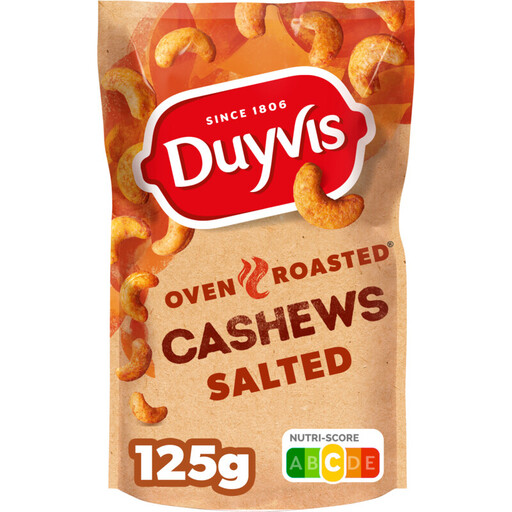 No image available
The product description says the cashews are oven-roasted with no added oil; this variant contains 125 g.
Fat: 43 g per 100 g. Store the opened contents in a light-proof, airtight container.
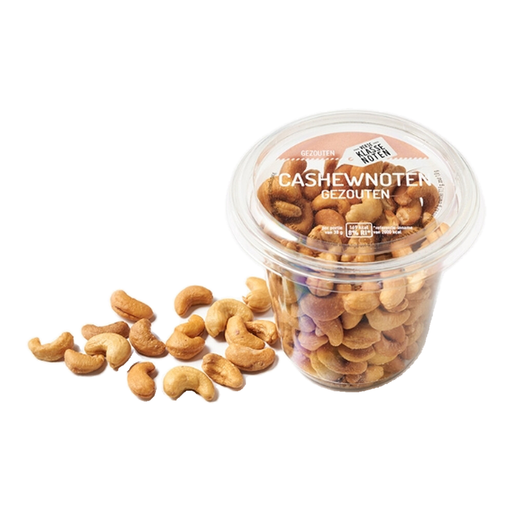 No image available
The product description lists cashews and salt, and mentions them as a snack for the office.
Fat: 42,9 g per 100 g. Salt: 0,9 g per 100 g. The description recommends eating the nuts as soon as possible after opening.
 No image available
The ingredients list includes cashews; the product name says they’re roasted and unsalted.
Fat: 46,67 g per 100 g. Salt: 0,067 g per 100 g. Store in a cool, dry place and seal the pack properly after opening.
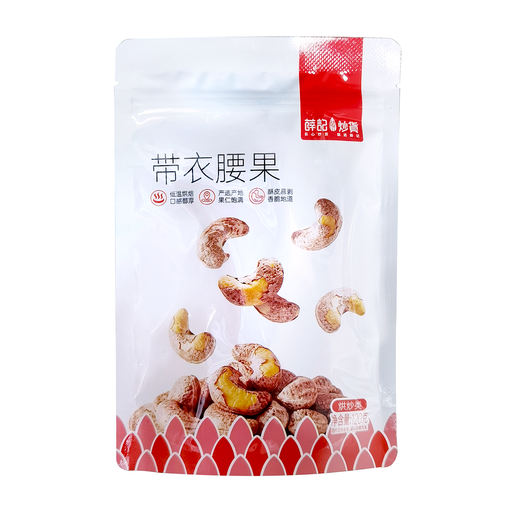 No image available
The product description lists cashews and salt, and mentions them as a snack for the office.
Fat: 42,9 g per 100 g. Salt: 0,9 g per 100 g. The description recommends eating the nuts as soon as possible after opening.
No. For solid foods, the European Commission defines ‘low fat’ as no more than 3 g of fat per 100 g. According to the Netherlands Nutrition Centre, a fat-related ‘light’ or ‘reduced’ claim means at least 30% less fat than in a regular comparable product. So check the exact claim and what it’s being compared with.
First, compare the nutritional values per 100 g. Manufacturers set their own stated portion sizes, so comparing per portion can be misleading. Then work out the nutritional values for the amount you want to have.
Follow the instructions for the exact variant. Duyvis recommends storing an opened pack in a light-proof, airtight container; the Albert Heijn and Jumbo variants reviewed advise keeping them in a cool, dry, dark place. Keep the label too, so you can check the ingredients and allergens.
The Netherlands Nutrition Centre’s general advice for unsalted cashews is to keep them in a kitchen cupboard for six months after opening, but this isn’t a guarantee for a shared tin that’s opened frequently. Follow the storage instructions on the pack and look out for rancidity, a chewy texture or mould.
Check both the ingredients and warnings about possible cross-contamination. The NVWA lists cashews as a tree nut allergen, so keep the original label with the tin and check warnings separately from ingredients that have been deliberately added.