
You genuinely want less fat
You’re looking for cashews with a lower fat content and want to distinguish a description of how they’re prepared from a substantiated nutrition claim. Check the precise claim and nutritional information on the packaging.


If you want to eat less fat with your afternoon snack, compare fat content on the same basis and consider how much you actually eat. Unsalted or made without added oil does not automatically mean reduced fat. For a regular nut snack, unsalted cashews fit the Netherlands Nutrition Centre’s guidance, while dry-roasted or oven-roasted simply describes how they are prepared. As a general, non-brand-specific reference, the Netherlands Nutrition Centre gives 12.2 g of fat and 154 kcal for 25 g of unsalted cashews.
You’re looking for cashews with a lower fat content and want to distinguish a description of how they’re prepared from a substantiated nutrition claim. Check the precise claim and nutritional information on the packaging.
You want to include regular cashews in your diet and are mainly considering whether to choose salted or unsalted nuts, as well as how much you’ll actually eat. The Netherlands Nutrition Centre provides general nutritional values per portion for unsalted cashews; these are not brand-specific.
You’re looking for a roasted option prepared without added oil, but you assess its salt and fat content separately. Duyvis describes Cashews Original as oven-roasted without added oil.
First decide whether you’re mainly looking for a demonstrably lower fat content, or whether a smaller portion, a particular salt option or a suitable pack size matters more. These are different considerations: descriptions of preparation or salt content do not, on their own, prove that a product contains less fat.
| What to consider | What should you check? | Who is this important for? |
|---|---|---|
| Claim and fat content | Check the precise nutrition claim, the fat in grams on a like-for-like basis, and the stated reference for any claimed reduction. | If you’re mainly looking for less fat in the product itself, you’ll want to assess the claim alongside the nutritional information. Around 36% of consumers prioritise a demonstrable reduction in product fat. |
| Amount per snack | Note how many grams you eat and compare the energy and fat for that amount. The Netherlands Nutrition Centre’s reference for 25 g of unsalted cashews is 154 kcal and 12.2 g of fat. | If you want to know how much energy and fat your afternoon snack contains, look at the portion you eat rather than just the packaging. Around 29% of consumers prioritise the energy content of a portion. |
| Salt and preparation | Check separately whether the option is salted or unsalted and how the nuts have been prepared. Also read the current ingredients list. | If you’re looking for a particular salt or preparation option, don’t confuse that choice with a lower fat content. Around 21% of consumers prioritise salt and preparation. |
| Packaging and storage | Check the net weight and storage instructions after opening. For the unsalted cashews examined, Albert Heijn recommends storing them in a cool, dark and dry place and closing the packaging securely. | If you eat cashews regularly, look for a pack size that suits how you use and store them. Around 14% of consumers prioritise pack size. |
A description of how a product is prepared doesn’t automatically tell you how much fat the finished product contains. Duyvis describes Cashews Original as oven-roasted without added oil; this alone is not proof of a reduced-fat claim.
Check the nutritional information and the precise claim separately from the preparation description. Only compare values on the same basis.
Unsalted describes the salt option, not the fat content. The Netherlands Nutrition Centre’s general reference for 25 g of unsalted cashews is 12.2 g of fat.
Choose unsalted if it suits your salt preferences, and assess fat and energy based on the amount you eat.
The NVWA warning issued on 20 May 2026 concerns 170 g packs of Trader Joe’s unsalted cashews with a best-before date of 23-09-2026, due to possible metal fragments. The warning does not apply to all packs or varieties.
Check whether a pack exactly matches the stated weight and best-before date. Do not eat an affected pack.
A relevant option if you’re looking for oven-roasted cashews with no added oil.
The product range described includes unsalted cashews for a regular nut snack.
The range described includes different preparation and salt options.
The options described include unsalted cashews and a Way To Go variety with Lidl’s Fairtrade positioning.
Trader Joe’s is described as offering a 250 g roasted, unsalted cashew variety.
The PLUS variety described is unroasted and unsalted.
These cashews are ready to eat as a snack and come in different preparation and salt options. Assess the nutritional information for the exact product variety; a preparation description or salt option does not, on its own, prove that a product is reduced fat.
 No image available
The product description says the nuts are ready to eat, including as a snack.
Listed fat content: 47.7 g per 100 g. The description lists cashew kernels as the only ingredient.
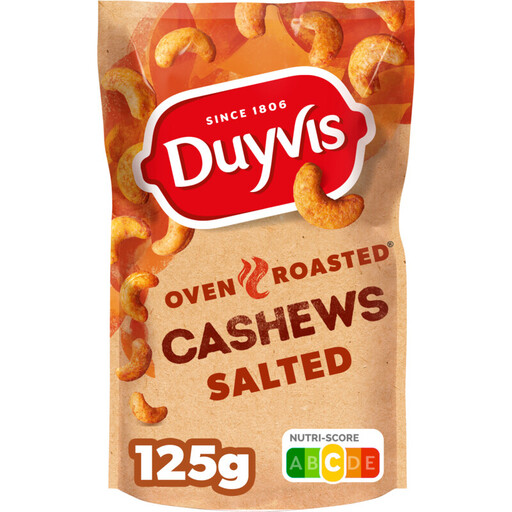 No image available
The described oven-roasting method, without added fats or oil, suits anyone specifically looking for this way of preparing cashews; it does not, by itself, prove that the product is reduced fat.
Listed fat content: 43 g per 100 g. The product description says the pack contains 4–5 portions.
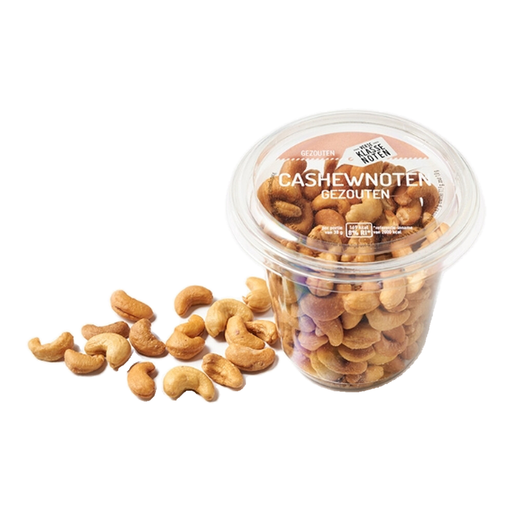 No image available
The product title describes roasted, salted cashews, making this an option for anyone looking for that salt and preparation combination.
The description lists 48 g of fat per 100 g. The ingredients list includes cashews, sunflower oil and salt.
 No image available
The product title describes a roasted, unsalted option for anyone looking for those specific features.
Listed fat content: 46.67 g per 100 g. The nutrition table lists 0.067 g of salt per 100 g.
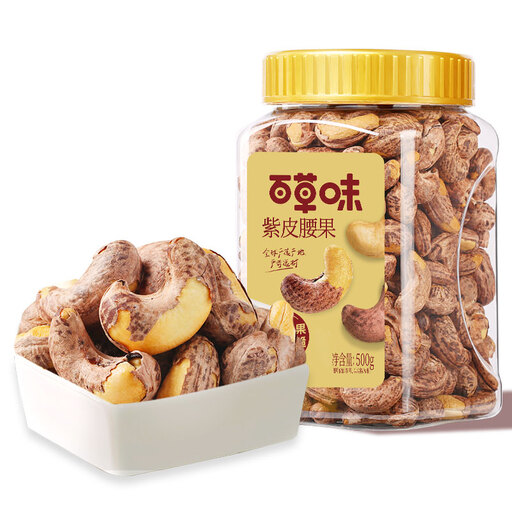 No image available
The product description suggests using these as a snack or in baking and cooking; the ingredients list includes salt.
Listed fat content: 60.1 g per 100 g. The description lists 1.2 g of salt per 100 g.
No, don’t treat the terms as interchangeable. For solid foods, the European Commission sets a maximum of 3 g of fat per 100 g for a ‘low fat’ claim. Don’t use this threshold as proof of a reduced-fat claim: check the precise claim and the basis for comparison on the packaging.
For a general 25 g portion, the Netherlands Nutrition Centre lists 12.2 g of fat, including 2.1 g of saturated fat, and 154 kcal. This is a nutritional reference for unsalted cashews, not a composition you can attribute to every brand without checking.
Follow the instructions on the packaging. For the unsalted cashews described, Albert Heijn recommends storing them in a cool, dark and dry place and closing the pack securely after use. The Netherlands Nutrition Centre lists rancidity, a chewy texture and mould as signs of loss of quality or spoilage.
According to the NVWA, allergen information must appear on the label of pre-packed foods. Check the ingredients list and any information about cross-contamination if this is relevant to you; don’t rely on the preparation method or product name alone.
The NVWA warning issued on 20 May 2026 concerns 170 g packs of Trader Joe’s unsalted cashews with a best-before date of 23-09-2026, due to possible metal fragments: do not eat these packs. The warning does not apply to other weights or varieties. If you have a pack, check both its weight and its best-before date.