What should you look for when choosing?
First compare the fat and energy per 100 g for the exact variant. Then decide whether portion size, salt or preparation method also matters for your get-together.
| What to consider |
What should you check? |
Who might prioritise this? |
| Demonstrably lower fat |
Compare the fat and energy per 100 g for the exact variant, and assess any comparative claim against the applicable conditions. |
If you’re mainly looking for less fat in the same quantity, don’t rely on the preparation method alone. Around 36% of consumers give demonstrable fat reduction top priority. |
| Portion size |
Weigh what you serve and use the nutritional values per 100 g shown on the pack in your calculations. |
If you mainly want to limit the amount in your bowl, you can weigh out a standard variant. Around 29% of consumers prioritise portion control. |
| Unsalted |
Check the product name, ingredients and salt content; salt may also come from naturally occurring sodium. |
If you’re looking for unsalted cashews, this is a separate selection criterion and doesn’t mean they contain less fat. Around 21% of consumers give an unsalted composition top priority. |
| Roasted flavour |
Check the preparation method and any added ingredients for the exact variant. |
If roasted flavour suits your get-together, you can take that preference into account and check the nutritional values separately. Around 14% of consumers choose flavour as their top priority. |
A smaller portion doesn’t lower the fat content per 100 g, but it does change how many cashews you serve. Voedingscentrum gives 12.2 g of fat in a 25 g handful of unsalted cashews as an example for the category; use the values on your own pack to make a calculation.
For solid foods, the European Commission sets a maximum of 3 g of fat per 100 g for the claim ‘low fat’. Don’t treat this as the same as ‘reduced fat’: that is a separate comparative claim with its own applicable conditions. Being unsalted or oven-roasted without added oil does not in itself prove a lower total fat content.
Cashews at Joybuy
This selection includes standard cashews that you can weigh out for your get-together, as well as roasted and unsalted options. Compare the nutritional values listed for the exact variant; none of these preparation or salt characteristics in themselves mean that the product is reduced fat.
 No image available
Jiazhouyuanye Original Flavour Large Cashew Nuts 160g
Suitable if you want standard cashews to weigh out for your get-together; the listed nutritional value gives you a basis for working out a portion.
Fat: 47.7 g per 100 g. Ingredients: cashew kernels.
View at Joybuy
 No image available
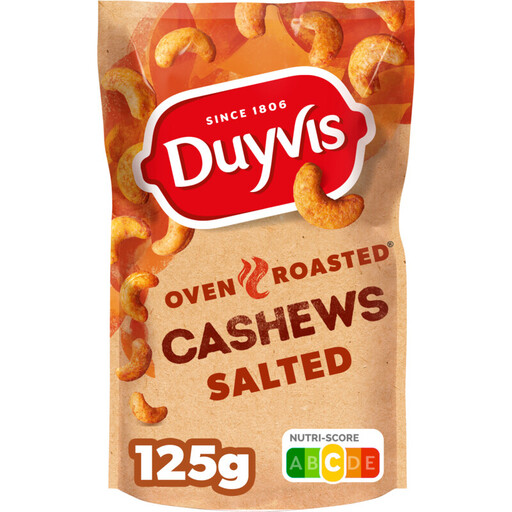
Duyvis Dry Roasted Cashews 125 g
Suitable if you’re looking for roasted cashews with no added oil; this preparation method doesn’t in itself prove a lower total fat content.
Fat: 43 g per 100 g. Salt: 0.92 g per 100 g.
View at Joybuy
 No image available
g'woon Cashew Nuts Roasted & Unsalted 200g
Suitable if you want roasted, unsalted cashews; unsalted doesn’t mean lower in fat.
Fat: 46.67 g per 100 g. Salt: 0.067 g per 100 g.
View at Joybuy
 No image available
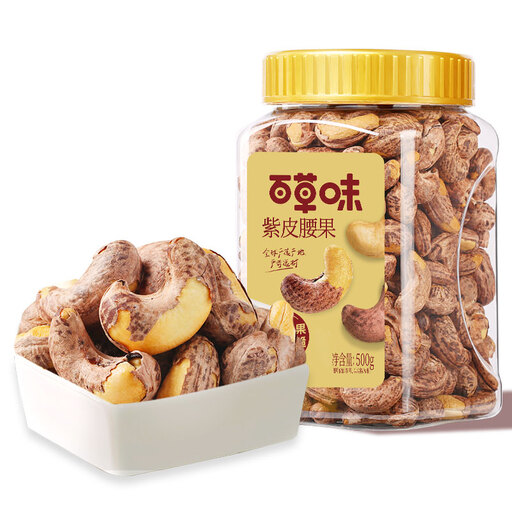
Be&Cheery Cashews with Purple Skin 180 Grade 500g
Suitable if you’re looking for cashews to snack on or share; with a larger pack, keep an eye on how much you serve.
Fat: 60.1 g per 100 g. Salt: 1.2 g per 100 g. Ingredients: cashew kernels and salt.
View at Joybuy
Frequently asked questions
Does low fat mean the same as reduced fat?
No. ‘Low fat’ and ‘reduced fat’ are different claims. For solid foods, the European Commission sets a maximum of 3 g of fat per 100 g for the claim ‘low fat’; assess a comparative claim such as ‘reduced fat’ separately against the applicable conditions.
How do I work out the fat in my portion?
Multiply the fat content per 100 g on your pack by the weight of your weighed portion, then divide by 100. Voedingscentrum gives 12.2 g of fat in 25 g of unsalted cashews as an example for the category; use the information on your own pack for your product.
What should I do with allergen information when hosting guests?
Keep the packaging so you can check the product information. The Netherlands Food and Consumer Product Safety Authority sets out a requirement for professional caterers and other providers of unpackaged food to provide allergen information; this business requirement does not automatically apply to a private get-together.
How can I avoid waste when buying a large pack?
Choose a pack size that matches what you’ll actually use, and follow the storage advice and best-before date on the exact pack. That way, you can make sure the amount you serve is suited to what you need.
Does the ALDI recall apply to all unsalted cashews?
No. The NVWA warning issued on 20 May 2026 concerns Trader Joe’s unsalted cashews, 170 g, barcode 2003020120930, with a best-before date of 23-09-2026, due to possible metal fragments. Don’t eat that specific pack if you still have it; the warning doesn’t automatically apply to all cashews from the brand.


