
Snackers with a specific dietary requirement
You’re looking for an evening snack without gluten or lactose, and you can eat cashews. Albert Heijn lists both properties for the exact 170 g variant; also check the allergen warnings.


Cashews aren’t a suitable choice if you need to avoid cashews: a gluten-free or lactose-free label doesn’t change that. If you can eat cashews, check the information for the exact product variant against the dietary requirement that matters to you, and read any warnings about possible cross-contamination. Then choose based on how they’re prepared, their salt content and the portion you’d like to have.
You’re looking for an evening snack without gluten or lactose, and you can eat cashews. Albert Heijn lists both properties for the exact 170 g variant; also check the allergen warnings.
You need to avoid cashews, peanuts or other nuts and want to know what’s listed for the exact variant. A cashew product isn’t suitable if you need to avoid cashews themselves; for other allergens, follow your dietary advice and check the product information.
You can eat cashews and are mainly looking for an unsalted option, a short ingredients list or a measured portion. The Voedingscentrum recommends storing nuts in a dry, tightly sealed container.
First check that cashews and the other allergen information are compatible with your diet. Then compare the ingredients, how they’re prepared and the portion size.
| What to consider | What should you check? | Who is this important for? |
|---|---|---|
| Allergens | Check the exact type of nut in the ingredients and read any warnings about peanuts or other nuts. If you have an allergy, follow your individual dietary advice. | If I need to avoid cashews, a cashew product isn’t an option for me. Around 33% of consumers put allergen safety first. |
| Gluten or lactose | Albert Heijn labels the 170 g variant as gluten-free and lactose-free. Check the claim on the current packaging and read the other allergen information. | If I avoid gluten or lactose but can eat cashews, I look for the relevant claim on the exact variant. Around 33% of consumers put this dietary requirement first. |
| Ingredients and preparation | PLUS lists cashews as an ingredient for its 200 g unroasted variant. Albert Heijn lists 96% cashews and Jumbo 99% cashews; both variants contain sunflower oil. | If I’m mainly looking for an unsalted snack or a short ingredients list, I compare the ingredients and preparation separately. Around 20% of consumers put this choice first. |
| Portion and storage | Albert Heijn lists a 25 g product portion for the 170 g pack. The Voedingscentrum recommends storing nuts in a dry, tightly sealed container and gives 10 to 15 °C as an example of cool storage. | If I want to measure out a portion and store the rest, I check the portion size and packaging. Around 14% of consumers put portioning and storage convenience first. |
A gluten-free or lactose-free label doesn’t mean the product is free from cashews or warnings about other nuts and peanuts.
Start with what you need to avoid. Then check the ingredients and warnings on the packaging of the exact variant.
Unsalted variants from Albert Heijn and Jumbo contain sunflower oil. Duyvis describes Original as oven-roasted without added oil, but it does contain salt and flavouring ingredients.
Check the ingredients, preparation method and nutritional information separately; one property doesn’t prove another.
The 25 g product portion listed by Albert Heijn for the 170 g pack isn’t the same as the pack’s full contents.
Measure out the amount you want into a bowl first, then seal the pack tightly.
The details below apply to the specific product variants mentioned and aren’t a general recommendation for an entire brand.
AH Unsalted Cashews 170 g is worth considering if you’re looking for specific gluten-free and lactose-free claims.
PLUS Unsalted Unroasted Cashews 200 g may suit you if you prefer unroasted cashews with a short ingredients list.
Jumbo Unsalted Cashews 200 g is an option if you’re looking for unsalted cashews and are happy with sunflower oil.
Cashews Original and Cashews Sea Salt offer different preparation styles within the category.
Lidl’s Dutch product page lists unsalted cashews.
ALDI describes Trader Joe’s 250 g cashews as roasted and unsalted.
These Joybuy products are cashews for people who can eat cashews; their ingredients and salt content vary by variant.
 No image available
A good fit if you can eat cashews and are looking for a short ingredients list.
The product description lists 100% cashew kernels as the ingredient and 0.028 g salt per 100 g.
Contains cashews; not suitable if you need to avoid them.
 No image available
A good fit if you can eat cashews and are looking for roasted, unsalted cashews.
The product description lists cashews as an ingredient and 0.067 g salt per 100 g.
Contains cashews; not suitable if you need to avoid them.
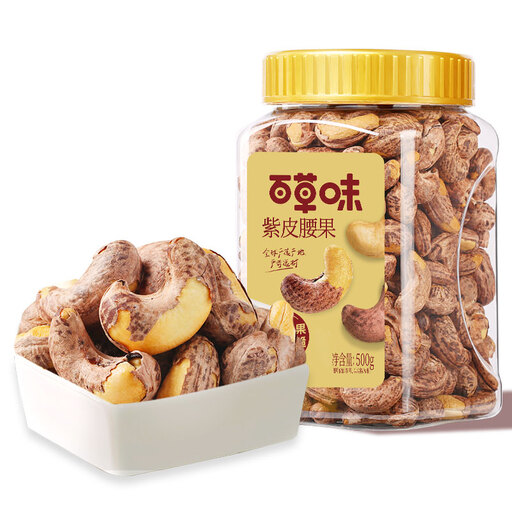 No image available
A good fit if cashews and a salted option suit your preferences.
The product information lists cashews and salt as ingredients and states 1.2 g salt per 100 g.
Contains cashews and salt; not suitable if you need to avoid cashews.
No. Cashews contain cashews, so they aren’t suitable if you need to avoid them. If you need to avoid peanuts or other nuts, follow your dietary advice and check the warnings on the exact product packaging.
Albert Heijn labels AH Unsalted Cashews 170 g as gluten-free and lactose-free. Check the current packaging and the other allergen information; this claim doesn’t make the product suitable for everyone with an allergy.
No, that claim alone doesn’t confirm it. The Voedingscentrum distinguishes between lactose intolerance and an allergy to milk proteins; if you have a cow’s milk allergy, check the full ingredients and allergen information.
The NVWA describes warnings about possible cross-contamination, including ‘May contain X’ and ‘Not suitable for people with an X allergy’. According to the NVWA, such a warning falls under the PAL policy, which has been monitored since 1 January 2026 and is based on a risk assessment. Check the wording on the exact packaging.
Albert Heijn lists 25 g as the product portion for the 170 g pack; this isn’t a universal standard for an evening snack. The Voedingscentrum recommends storing nuts in a dry, tightly sealed container and gives 10 to 15 °C as an example of cool storage. Follow the storage instructions on your pack too.