
Label readers with a specific dietary requirement
You might be looking for an explicit gluten-free or lactose-free claim, while checking allergen warnings separately. Such a claim does not mean cashews are suitable if you have a cashew allergy.


Start by identifying the substance you need to avoid. If you have a cashew allergy, cashews are not suitable for you, while an explicit gluten-free or lactose-free claim only answers that specific dietary question. For a lunchtime snack, you can compare unsalted options, but always check the ingredients, allergen warnings and packaging of the exact product you’re buying.
You might be looking for an explicit gluten-free or lactose-free claim, while checking allergen warnings separately. Such a claim does not mean cashews are suitable if you have a cashew allergy.
You’re after a simple plant-based snack and want to distinguish between a vegan label and allergen information. A short ingredients list doesn’t automatically guarantee there’s no risk of cross-contamination.
You want an unsalted option for when you’re working from home, and you’re also considering pack size and storage advice for repeated use.
Start with the substance you want to avoid. A claim about one ingredient or dietary feature doesn’t automatically tell you anything about other allergens.
Choose this option if: you specifically need that dietary claim, and cashews and the other warnings are not a reason for you to avoid the product.
Consider: the AH option reviewed contains sunflower oil; these claims don’t remove allergen warnings.
Choose this option if: you’re looking for a simple ingredient list. PLUS lists only cashews as an ingredient and labels this option vegan.
Consider: the packaging states that the product may contain peanuts; having one ingredient doesn’t amount to gluten-free certification.
Choose this option if: going unsalted is important to you and the ingredients and warnings are suitable for your diet.
Consider: the Jumbo option reviewed contains sunflower oil and carries warnings about other nuts and peanuts.
Choose this option if: you’re after a savoury snack and its ingredients and warnings are compatible with your diet.
Consider: Duyvis says Cashews Original is made without added oil; this option contains salt and may contain wheat, peanuts and other nuts.
Choose this option if: you have a cashew allergy; cashews themselves are still a tree nut allergen.
Consider: if you choose a different snack category, you’ll need to check its ingredients and allergen information separately.
| What to consider | What should you check? | Who is this important for? |
|---|---|---|
| Cashews and other allergens | Check the ‘contains’ and ‘may contain’ statements on the packaging for allergens that are relevant to you. | If I have a cashew allergy, I can’t choose this snack; I also check warnings about peanuts or other nuts separately. Around 31% of consumers prioritise checking for cashews and possible cross-contamination. |
| Gluten-free | Look for an explicit gluten-free claim, and check the ingredients and warnings as well. | If I need to avoid gluten, I look for a clear gluten-free claim rather than relying on a short ingredients list alone. Around 25% of consumers make gluten-free suitability their top purchasing priority. |
| Milk, lactose or plant-based | Identify the substance you want to avoid and check the relevant claim and allergen information. | If I want to avoid milk, I need to know whether I’m concerned about lactose, milk proteins or a plant-based composition; these are different questions. Around 19% of consumers prioritise this dietary requirement. |
| Unsalted and storage | Check whether the option is unsalted and follow the storage instructions on the packaging. | For a regular lunchtime snack, I want an unsalted option and to know how to store an opened bag. Around 13% of consumers prioritise unsalted snacks for everyday use. |
| Pack size | Compare the net weight with how much you’ll use, and check whether you’ll need to portion it out or reseal the pack. | If I choose a bag for repeated use, I consider the amount and how to store it after opening. Around 12% of consumers prefer packaging that suits their own usage. |
A gluten-free or lactose-free claim doesn’t mean that cashews or other allergens are absent. Cashews are an allergen in their own right.
First, identify which substance you need to avoid and assess it separately. If you have a cashew allergy, don’t choose cashews.
‘No added oil’ doesn’t automatically mean unsalted or gluten-free. Duyvis lists salt and possible traces of wheat in Cashews Original.
Read the preparation method, ingredients and allergen information as separate parts of the label.
PLUS lists cashews as an ingredient, but also warns that the product may contain peanuts.
As well as checking the ingredients list, read the warnings on the packaging of the product you’re actually buying.
The net weight tells you nothing about the presence of allergens. A pack size that doesn’t suit your diet or how you use the product may go uneaten.
Check the ingredients and warnings first, then choose an amount that suits how often you eat cashews.
For its 170 g pack of AH Unsalted Cashews, Albert Heijn’s product page lists claims including gluten-free, lactose-free and vegan.
PLUS describes a 200 g bag of unroasted, unsalted cashews, with cashews as the only ingredient.
The Jumbo option reviewed is unsalted and, according to the product information, contains 99% cashews and sunflower oil.
Duyvis describes Cashews Original as savoury seasoned, oven-roasted cashews.
Lidl Netherlands describes a 500 g pack of unsalted cashews.
ALDI Netherlands describes a 250 g pack of roasted, unsalted cashews sold under the Trader Joe’s product brand.
These options include roasted cashews, both unsalted and salted, as well as a seasoned variety. They aren’t alternatives for anyone with a cashew allergy; check the ingredients and allergen information for each product.
 Image unavailable
A good fit for a lunch when you’re looking for unsalted cashews.
The product description lists cashews as the only ingredient and identifies cashews and tree nuts as allergens. Seal the pack tightly after opening and store in a cool, dry place.
 Image unavailable
A good fit for a snack when you’re looking for cashews with a simple ingredient list.
The product description lists cashew kernels as the only ingredient and cashews as an allergen. Keep the pack sealed after opening and store in a cool, dry place.
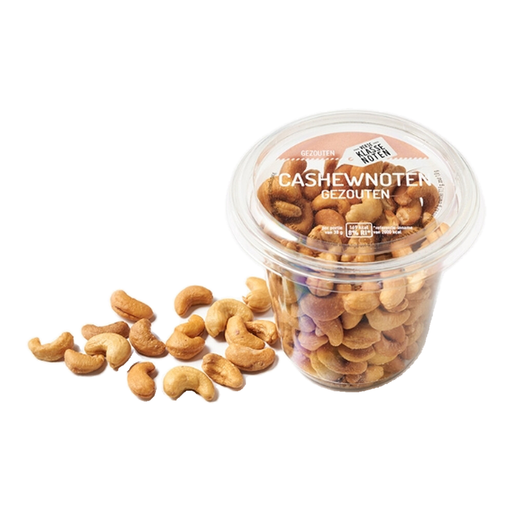 Image unavailable
A good fit if you’d prefer a salted cashew snack rather than an unsalted option.
The product description lists 98% cashews, sunflower oil and salt. Store the pack in a cool, dry place and reseal it after opening.
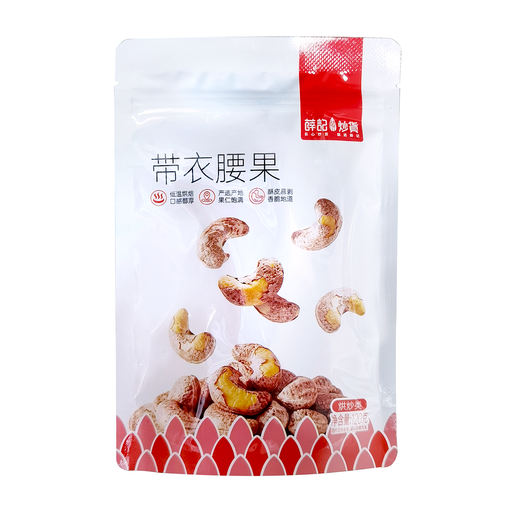 Image unavailable
A good fit for a lunch break when individually wrapped portions are handy.
The product description lists cashews and salt. The product comes in individually wrapped portions; store in a cool, dry place.
 Image unavailable
A good fit if you’re after a savoury, roasted cashew snack; this option isn’t unsalted.
The product description lists salt, flavourings and a stabiliser. The allergen information lists gluten, wheat and peanuts; check the exact product variety and the information on the packaging.
No. Such a claim relates to a specific dietary requirement and doesn’t mean cashews or other allergens are absent. Cashews are an allergen in their own right and aren’t suitable if you have a cashew allergy.
Regulation (EU) No 828/2014 sets a limit of no more than 20 mg of gluten per kg of food as sold for a ‘gluten-free’ claim. The NVWA refers to this regulation, and EUR-Lex lists it as being in force. This limit relates to gluten, not to all food allergens.
No. According to the Voedingscentrum, lactose intolerance relates to milk sugar, while cow’s milk allergy relates to milk proteins. So don’t rely on a lactose-free claim alone as proof that a product is suitable for someone with a milk allergy.
Yes. According to the NVWA Q&A on allergen policy, the production date is the deciding factor. Stock packaged before 1 January 2026 may be sold after that date if the food is not unsafe, so check the information on the packaging itself.
Don’t eat the batch with barcode 2003020120930 and best-before date 23-09-2026. On 20 May 2026, the NVWA warned that this specific batch may contain metal fragments. The warning applies to that batch and not automatically to all ALDI cashews.