
Organisers of light snack breaks
You want to make an informed choice between product composition and portion size, without assuming that unsalted or made without added oil means reduced fat.


If you want less fat per 100 g, choose a product only if the claim is substantiated for the exact variant and the relevant comparison. Unsalted, unroasted or made without added oil does not automatically mean reduced fat. If your main aim is to control how much each guest gets, decide on a suitable portion and choose packaging that fits your serving schedule. For catering, make sure the allergen information for the variant you buy is available.
You want to make an informed choice between product composition and portion size, without assuming that unsalted or made without added oil means reduced fat.
You buy snacks for a group and need to make the allergen information on the packaging available at the point of serving.
You match packaging to attendance, serving times and storage, while keeping an eye on leftovers and the amount actually being offered.
First decide whether product composition, allergen information or the amount served at each break matters most to you. Each calls for different checks.
| What to consider | What should you check? | Who is this important to? |
|---|---|---|
| Fat content and portion size | Check the exact claim, the nutritional values per 100 g and the reference product for any comparative claim. Then compare the values for the same planned portion. | If I want to assess the fat content of the product itself, I first look at the values per 100 g and work out separately how much to offer each guest. Around 42% of consumers put product composition and portion size first. |
| Allergen information | Use the information on the exact packaging and make sure guests can access it when serving unpackaged food. The Netherlands Food and Consumer Product Safety Authority (NVWA) and the Commodities Act Regulation on Allergen Information for Non-prepacked Foods set out the information requirements and the permitted ways of providing it. | If I serve nuts in bowls, I want guests to be able to check the allergen information and staff to know where to find it. Around 33% of consumers put organising allergen information first. |
| Quantity and storage | Match the net weight and planned portion to the expected number of attendees, and follow the storage instructions on the exact packaging. The Netherlands Nutrition Centre advises storing nuts in a tightly sealed container in a dry place. | If I’m planning several breaks, I want to match packaging and stock to the expected amount being served and store any unused nuts properly. Around 25% of consumers prioritise quantity, serving and storage. |
The European Commission distinguishes between claims such as ‘low fat’ and comparative claims about a reduced content. So check the exact claim and nutrition information for the variant you choose. A portion may contain less fat overall without changing the product’s composition per 100 g.
A product may suit your preferences for salt or preparation without substantiating a claim about its total fat content.
Compare the fat and energy values per 100 g, and assess the claim for the exact variant separately.
A smaller portion may show a lower total amount of nutrients, even when the values per 100 g are different.
Compare the values per 100 g first, then calculate them using the same planned catering portion.
If the quantity does not match the number of attendees and the other snacks on offer, you may be left with unused stock. Portioning also takes preparation.
Match the quantity you need to expected attendance, other snacks and the storage instructions on the packaging.
For unpackaged catering, information about any allergens present must remain available.
Keep the product information and agree where guests and staff can check the allergen information.
Duyvis describes Cashews Original as oven-roasted and made without added oil.
Albert Heijn lists AH Cashew Nuts Unsalted as a standard unsalted variant.
Jumbo lists unsalted cashews in packs including 200 g and 130 g sizes.
PLUS lists a 200 g bag of unsalted, unroasted cashews.
Lidl describes cashews in its Alesto range, including Way To Go cashews.
ALDI lists Trader Joe’s roasted and salted cashews in a 250 g pack.
This selection includes cashews for portion planning, including roasted cashews made without added oil and unsalted variants. These preparation and salt characteristics do not prove reduced fat.
 No image available
A good fit for catering when you want to plan a 160 g pack containing cashew kernels only.
Ingredients: 100% cashew kernels. Ready to eat; reseal after opening. Keep the allergen information for the exact packaging available.
 No image available
A good choice if you’re looking for oven-roasted cashews made without added fat or oil; that preparation method alone does not prove a lower total fat content.
The product description lists 43 g of fat and 0.92 g of salt per 100 g, a 125 g pack and 4–5 portions. The allergens listed are cashew, nuts, gluten, wheat and peanuts; check the packaging for catering information.
 No image available
A good choice if you’re looking for a 200 g pack of roasted, unsalted cashews.
The product description lists 46.67 g of fat and 0.067 g of salt per 100 g. Reseal tightly after opening and store in a cool, dry place; keep the allergen information for the exact packaging available.
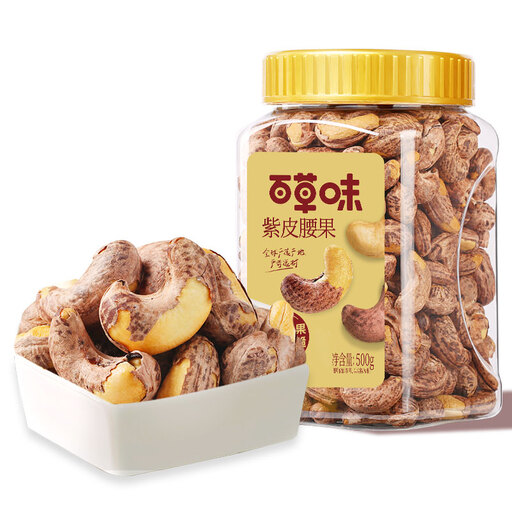 No image available
A good choice if you want to plan several portions of salted cashews from a 500 g pack.
The product description lists 60.1 g of fat and 1.2 g of salt per 100 g. This variant contains salt; keep the allergen information for the exact packaging available.
No, don’t treat the claims as interchangeable. For solid foods, the European Commission sets a maximum of 3 g of fat per 100 g for a ‘low fat’ claim. A comparative claim about a reduced content must separately meet the relevant requirements.
For unpackaged catering, information about any allergens present must be available. The Netherlands Food and Consumer Product Safety Authority (NVWA) sets out the information requirements; the Commodities Act Regulation on Allergen Information for Non-prepacked Foods allows the information to be provided in writing or electronically at the point of sale. Additional conditions apply to giving information verbally, so make sure staff can access the correct details straight away.
Multiply the portion size you’ve chosen for your catering plan by the expected number of attendees, then divide the result by the net weight of the exact pack. Round the number of packs needed up; this is a planning calculation, not a recommended daily intake.
Follow the instructions on the packaging for the variant you’ve bought. The Netherlands Nutrition Centre advises storing nuts in a tightly sealed container in a dry place. For the 130 g unsalted Jumbo variant, the instructions are to store in a cool, dry and dark place.