
Buyers catering for larger groups
You want to plan the quantity you need in advance and compare pack sizes, without treating different preparation methods as though they were the same product.


Choose a large bag if you can plan the quantity you need for your conference; smaller packs give you more flexibility to open stock in stages. Compare products with the flavour and preparation method you want, work out how much you need in advance, and check the ingredients, allergen information and any certifications for your chosen product.
You want to plan the quantity you need in advance and compare pack sizes, without treating different preparation methods as though they were the same product.
You want to consider both large and smaller packs, so you can work out how much stock to open at each serving time.
You pay attention to the ingredients, the preparation method you want and specific information about origin. A description such as ‘unsalted’ or a certification does not replace checking the allergen information.
Product information from Dutch retailers Albert Heijn, Jumbo and ALDI lists 500 g options; the Duyvis and PLUS products mentioned are 125 g and 170 g respectively. The right pack depends on the quantity you plan to serve, how often you’ll be serving and the product information you need.
| What to consider | What should you check? | Who is this important for? |
|---|---|---|
| Quantity for the group | Net weight per pack and the number of packs needed for the planned serving. | If you want to plan enough stock for a larger group, check the total quantity and the weight per bag. Around 29% of consumers prioritise the quantity needed for the group. |
| Unopened leftover stock | Expected consumption at each break, how many packs you’ll need to open and the storage advice on the pack. | If attendance varies, it can be helpful to open stock in smaller amounts. Around 22% of consumers say stock management is their main consideration. |
| Flavour and preparation | Preparation description, added salt, oil or fat, and any flavourings. | If you want to serve an unsalted or savoury seasoned option, compare the preparation method and ingredients. Around 21% of consumers prioritise flavour and preparation. |
| Allergen information | The current label, the specific type of nut and any warnings about other allergens. | When serving guests, you’ll want to be clear about which nut is being offered and what information is given on the label. Around 21% of consumers make allergen communication their top priority, although this information matters to other buyers too. |
| Information about origin | The exact product range and whether a certification applies to the pack you’ve chosen. | If specific information about origin is important, check the claim on the exact product rather than assuming it applies based on the retailer’s name. Around 7% of consumers prioritise certified origin. |
Unsalted cashews still contain cashews, and the label may also list other potential allergens.
Check the information on the pack you’ve chosen and make it clear which type of nut you’re serving. The Netherlands Food and Consumer Product Safety Authority (NVWA) says you must name the specific type of nut.
The packs described range from 125 g to 500 g. The right number depends on the quantity you plan to serve and the pack you choose.
Work out how much you need and round the number of packs up. Take into account how much stock you want to open at each serving time.
The unsalted options checked from Albert Heijn and Jumbo contain sunflower oil. Duyvis’s claim about roasting without added oil relates to a savoury seasoned option that contains salt and other flavourings.
Compare the preparation description and ingredients separately, then choose the option that best suits your menu.
Lidl’s Fairtrade statement relates to Way To Go cashews; Albert Heijn lists a specific feature for one particular product. This information does not automatically apply to every product from the same retailer or range.
Check the certification and product name on the pack you’re actually buying.
The AH option described is a 500 g bag of unsalted cashews. The product information lists sunflower oil.
The unsalted multipack described contains 500 g and lists 99% cashews and sunflower oil.
ALDI offers TRADER JOE'S cashews in a 500 g pack, with roasted salted and unsalted options listed.
Lidl describes its Way To Go cashews as Fairtrade. A separate Alesto product listing is for 500 g of roasted unsalted cashews.
The retail product described is Duyvis Oven Roasted Gezouten Cashews, in a 125 g pack. Duyvis describes the preparation as oven-roasted without added oil.
The PLUS option described is a 170 g tub of salted cashews, containing 96% cashews, sunflower oil and salt.
This selection includes cashews in packs ranging from 125 to 500 g. Check the ingredients and usage instructions for each option before planning how much to serve.
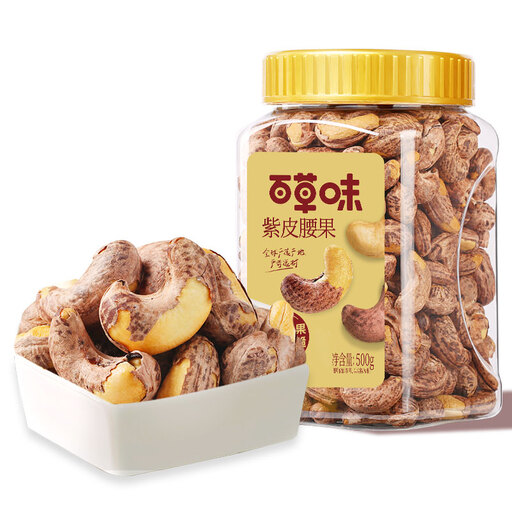 No image available
The product description says these cashews are salted and ready to eat; the pack contains 500 g.
Check the allergen information on the pack before serving them to guests.
 No image available
At 500 g, this option is suited to a larger quantity; the product description says the contents should be consumed immediately after opening.
The ingredients list states 99% cashews and salt. Check the rest of the label before serving.
 No image available
The 160 g pack may suit you if you want to plan a smaller quantity for each serving.
The product description lists 100% cashew kernels and provides usage and storage advice for after opening.
 No image available
The 125 g pack is a smaller option if you plan to serve the cashews in stages.
The product description says they are dry-roasted without added fat or oil, and contain salt and flavourings. The ingredients information lists cashews, gluten, wheat and peanuts.
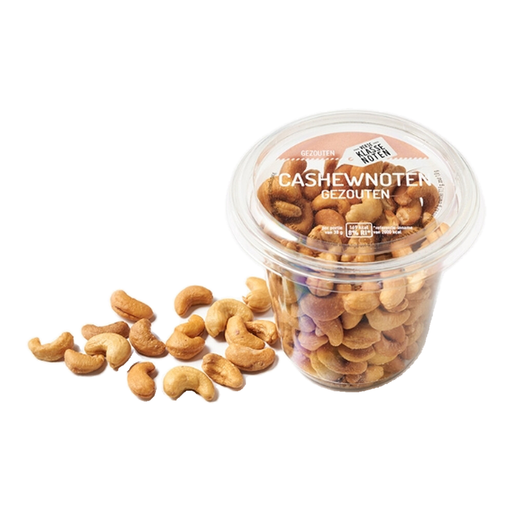 No image available
The 150 g pack may suit a smaller serving; seal it carefully after opening, as advised in the product description.
The ingredients list states 98% cashews, sunflower oil and salt. Check the allergen information on the pack too.
Multiply the number of guests by the planned amount per guest, then divide the result by the weight per bag. Round the number of bags up. For the option described, Albert Heijn lists a 25 g serving size, which gives twenty servings from 500 g. This is an example calculation, not a required catering portion or a guarantee of how much will be consumed.
No. The NVWA says you must specify exactly which type of nut is present as an allergen. So label them as cashews, and include any other relevant allergens listed on the chosen pack or in the recipe.
That is possible, subject to certain conditions. The information must be available before purchase without delay, available in writing or electronically to staff and inspectors, and accompanied by a visible notice telling guests they can ask for it. According to the NVWA, providing written information directly alongside the food is also an accepted approach.
Follow the instructions on the pack you’ve chosen. The Netherlands Nutrition Centre recommends storing nuts in a cool, dark and dry place, preferably in a well-sealed container. This general advice is not a specific guarantee of how long nuts will keep after they have been left out on a buffet.
Yes. The NVWA specifically includes catering businesses among those that must follow a food safety plan or hygiene code based on HACCP. This is a business requirement, not a certification that every bag of cashews must carry individually.