
Gluten-free and looking for a lighter snack
You have coeliac disease and want to check first whether the cashews fit into your gluten-free diet. A claim about fat content or how the product is made does not replace this check.


If you have coeliac disease, first check whether the specific cashew product is suitable for your gluten-free diet. Then compare the fat content per 100 g. Unsalted or made without added oil does not automatically mean low in fat. If you want less fat and energy per snack, you can weigh out a suitable portion of a standard variety. This does not change its nutritional values per 100 g.
You have coeliac disease and want to check first whether the cashews fit into your gluten-free diet. A claim about fat content or how the product is made does not replace this check.
You’re looking for a different product composition, not just less salt or a smaller portion. Compare the total fat per 100 g and, if the product claims to have a reduced fat content, check what it is being compared with.
You want to keep eating regular cashews but have a smaller amount as a snack. Weigh your portion and use the nutritional information on the exact product’s packaging.
First check whether the specific product is suitable for a gluten-free diet. Then compare the fat per 100 g and, if you mainly want to eat less at each snack, the values for your weighed portion.
| What to consider | What should you check? | Who is this important for? |
|---|---|---|
| Suitability for a gluten-free diet | Check the exact product, ingredients, gluten-free labelling and any warnings about cross-contamination. | If I have coeliac disease, I want to know first whether this specific pack fits into my gluten-free diet; around 34% of consumers put suitability first. |
| Total fat per 100 g | Compare total fat on the same basis and, if there is a reduced-fat claim, check the comparable reference product. | If I’m looking for a different composition, I want less total fat per 100 g, not just less salt or no added oil; around 33% of consumers make this their top purchasing priority. |
| Nutritional values per portion | Weigh the amount you eat and calculate the values using the information on the packaging of the exact product. | If I mainly want to eat less at each snack, the amount I weigh out matters more than a different recipe; around 20% of consumers put portion size first. |
| Packaging and storage | Check the pack weight, resealability and storage instructions on the packaging. | For everyday use, I want a pack that I can store and portion in a way that suits my routine; around 13% of consumers name practical use as their top priority. |
Being made without oil and being suitable for a gluten-free diet are two different things. A warning about possible cross-contamination needs to be assessed separately.
Check the ingredients and gluten information for the specific product, including any warnings on the packaging.
The PLUS variety reviewed, which is made without added oil, lists 46.5 g of fat per 100 g. The unsalted AH variety lists 50 g per 100 g. Neither preparation nor salt labelling means in itself that a product is low in fat.
Check the total fat per 100 g and assess any reduced-fat claim against the comparable products named.
A smaller amount means you eat less of the product, but it does not change the fat content per 100 g.
First compare the nutritional values per 100 g, then calculate the values for the amount you actually weigh out.
Recipes, nutritional values and allergen information can vary between products. A warning or product notice may also apply to a specific pack.
Check the product name and pack weight, and, if there is a warning, the barcode and best-before date on the packaging.
The Cashews Original range is worth considering if you’re looking for cashews that Duyvis says are oven-roasted without added oil.
AH Cashewnoten ongezouten 170 g is a specific standard variety whose product page states that it is gluten-free.
The 200 g and 130 g packs of unsalted cashews are examples of products with different recipes and nutritional values.
Alesto is a range to include in your comparison; Lidl describes its Way To Go cashews as Fairtrade.
ALDI lists Trader Joe's roasted, unsalted cashews in a 250 g pack.
PLUS Cashewnoten ongezouten ongebrand 200 g is worth considering if you want to compare a simple ingredients list.
These Joybuy products are standard cashews to consider as snack portions. For each specific product, check the ingredients and allergen information against your gluten-free diet; unsalted or roasted does not automatically mean lower in fat.
 Image unavailable
An option to consider as a weighed snack portion; check the specific packaging to see whether it is suitable for a gluten-free diet.
Ingredient: 100% cashew kernels. Fat: 47.7 g per 100 g.
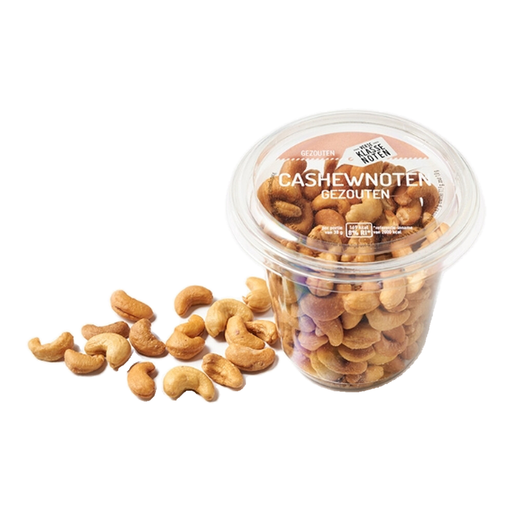 Image unavailable
Worth considering if you want to weigh out a salted cashew variety; check the specific packaging for gluten-free suitability.
Ingredients: cashew nuts, sunflower oil and salt. Fat: 48 g per 100 g.
 Image unavailable
A roasted, unsalted variety to consider as a portion; check the packaging separately for information relevant to coeliac disease.
Fat: 46.67 g per 100 g.
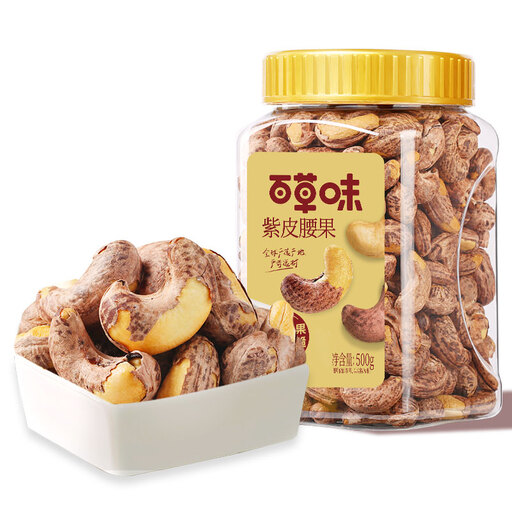 Image unavailable
Worth considering if you’re looking for cashews with their skins on; check the ingredients and allergen information on the specific pack.
Ingredients: cashew kernels and salt. Fat: 60.1 g per 100 g.
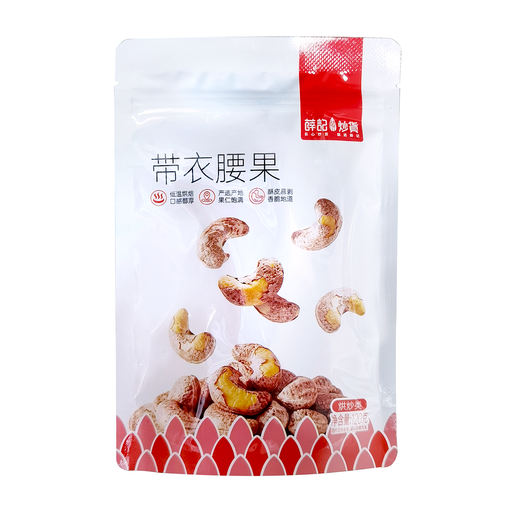 Image unavailable
A salted variety to consider as a snack portion; check the specific labelling against your gluten-free diet.
Ingredients: cashews and salt. Fat: 42.9 g per 100 g.
No. AH Cashewnoten ongezouten 170 g lists sunflower oil and 50 g of fat per 100 g. According to the European Commission, solid foods can contain no more than 3 g of fat per 100 g to qualify for a ‘low fat’ claim.
No. That description of how it is made says nothing on its own about whether the product is suitable for a gluten-free diet or has a low total fat content. Check the ingredients, allergen information and specific packaging separately.
The Dutch Coeliac Society explains that warnings such as ‘may contain cereals containing gluten’ and ‘not suitable for people with coeliac disease’ indicate a possible risk of cross-contamination. Such a warning does not prove that every pack contains gluten, but a claim about fat or oven-roasting is no reason to ignore it.
Since 1 January 2026, the new Dutch rules for precautionary allergen labelling have applied. The policy links such a warning to a risk assessment and reference values, and includes a separate exemption for artisan food products. The NVWA has monitored compliance with labelling rules since 2026.
No. The NVWA warning dated 20 May 2026 relates specifically to Trader Joe's unsalted cashews in a 170 g pack with barcode 2003020120930 and best-before date 23-09-2026, due to possible metal fragments. Don’t eat the affected pack if you still have it. The warning does not automatically apply to other packs or to the entire brand.