
People who need to avoid cashews
If you need to avoid cashews because of an allergy, choose a different snack: a different preparation or salted variety doesn’t change the ingredient. The Netherlands Nutrition Centre lists cashews as an allergen.


If you have a cashew allergy, no cashew variety is a suitable substitute: choose a different snack. If you can eat cashews but need to avoid another ingredient, check the ingredients and allergen warnings on the exact packaging. If they’re sold loose, ask for allergen information before buying.
If you need to avoid cashews because of an allergy, choose a different snack: a different preparation or salted variety doesn’t change the ingredient. The Netherlands Nutrition Centre lists cashews as an allergen.
If you can eat cashews but want to avoid, for example, gluten, peanuts or milk, check the ingredients and warnings for the specific variety. Unsalted, unroasted or made without added oil are not free-from claims.
When serving snacks, it’s important to provide allergen information before purchase. The Netherlands Food and Consumer Product Safety Authority (NVWA) distinguishes between information on prepacked products and information for products sold loose.
First decide which ingredient you want to avoid. Then compare the preparation, packaging and how you plan to serve the snack at the Christmas market.
| What to consider | What should you look for? | Who is this important for? |
|---|---|---|
| Cashews themselves | Establish whether cashews are the ingredient you need to avoid; choosing a different cashew variety doesn’t change that. | If I need to avoid cashews, every cashew variety is out; around 36% of consumers prioritise avoiding cashews. |
| Gluten | Read the information for the exact variety, including any gluten-free claim and warnings about cereals containing gluten or wheat. | If you want to eat cashews but avoid gluten, you’ll need to check the information on the specific packaging. Around 29% of consumers prioritise avoiding gluten. |
| Peanuts, milk or lactose | Check the specific ingredient and the accompanying allergen information. A lactose-free claim alone doesn’t prove that a product is suitable for someone with a milk allergy. | If you can eat cashews but need to avoid peanuts or milk, check for that specific ingredient and its accompanying warning; around 21% of consumers prioritise a different specific allergen requirement. |
| Serving and storage | Decide whether you’ll serve the product packaged or loose, how information will be available before purchase and which storage instructions apply to the packaging you choose. | If you’re serving snacks from a stall, you’ll want to provide allergen information before sale and follow the storage instructions. Around 14% of consumers prioritise practical serving and storage considerations. |
This guide can help consumers considering cashews as a Christmas market snack, including when checks show that a different snack is needed. The percentages show the relative importance of different purchasing priorities; they are not measured market shares.
Unsalted, unroasted or made without added oil doesn’t mean that cashews or other allergens are absent. A claim about how a product is prepared doesn’t, on its own, tell you whether it’s suitable for a particular dietary requirement.
Decide which ingredient you need to avoid and read the information for the exact variety.
Duyvis lists cashews, peanuts and almonds as ingredients in Cashews, Peanuts & Almonds Original. So don’t assess a mix as though it contains only cashews.
Check the full ingredients list and allergen information on the packaging.
For unpackaged products, allergen information must be available in another way before purchase. The NVWA says this can be provided in writing. You can also give the information verbally, as long as it’s clearly stated that customers can ask for it.
Plan in advance how visitors can view or request the information.
For a stallholder, this means taking extra time to make allergen information available and keep it up to date.
The NVWA warning dated 20 May 2026 concerns TRADER JOE’S Cashewnoten ongezouten 170 gram, with EAN 2003020120930 and best-before date 23-09-2026. The warning refers to possible metal fragments and applies to that specific packaging.
Do not eat a pack with this EAN and best-before date; the fact that the date has passed doesn’t cancel the warning.
Duyvis offers both cashew products and mixed nuts.
Albert Heijn offers products including AH Cashewnoten ongezouten.
Jumbo lists several pack sizes of unsalted cashews.
Lidl sells cashews under the Alesto brand and also lists Way To Go cashews.
ALDI lists TRADER JOE’S roasted, unsalted cashews in a 250 g pack.
PLUS offers Cashewnoten ongezouten ongebrand in a 200 g bag.
These Joybuy products are cashew options for people who can eat cashews and want to check the ingredients or preparation of a specific variety. They are not general free-from recommendations; check the product information on the exact packaging before buying.
 No image available
An option to look at if you can eat cashews and want to check the ingredients.
The product information lists 100% cashew kernels and a pack size of 160 g. Store in a cool, dry place and reseal the pack after opening.
Contains cashews and isn’t suitable if you need to avoid them.
 No image available
This roasted variety is worth considering if you can eat cashews and want to check the ingredients and warnings.
The product information lists a 125 g pack and oven-roasting without added fats or oil. Gluten, wheat and peanuts are listed as allergens; store in a cool, dry place.
Contains cashews and isn’t suitable if you need to avoid them. The listed information about gluten, wheat and peanuts doesn’t make this a suitable choice if you need to avoid those ingredients.
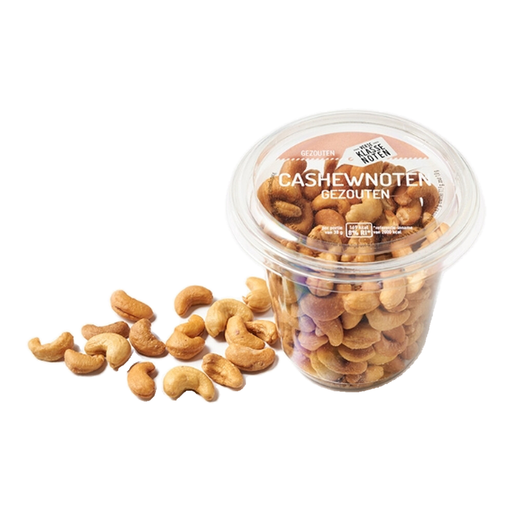 No image available
Consider this option if you can eat cashews and are looking for a salted variety.
The product information lists 98% cashews, sunflower oil and salt; the nuts are described as freshly roasted. The pack contains 150 g. Store in a cool, dry place and reseal the pack after opening.
Contains cashews and isn’t suitable if you need to avoid them.
 No image available
An option to compare if you can eat cashews and are looking for an unsalted product.
The product name describes roasted, unsalted cashews; the product information lists a pack size of 200 g. Store in a cool, dry place away from direct sunlight, and reseal the pack after opening.
Contains cashews and isn’t suitable if you need to avoid them.
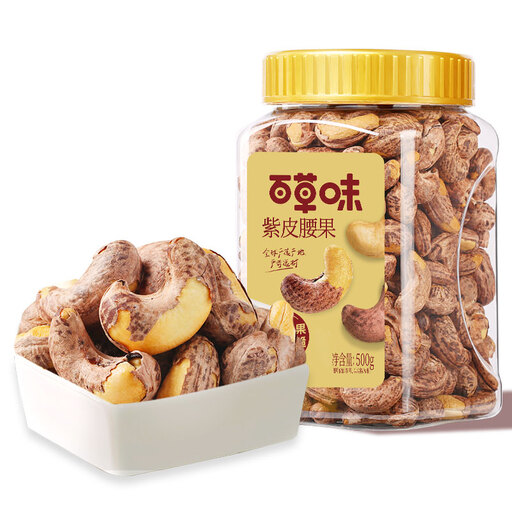 No image available
Check the product information for this variety if you can eat cashews and want to check the ingredients.
The product name lists grade 180 and 500 g. The ingredients information lists cashew kernels and salt. Store in a cool, dry place and reseal the pack after opening.
Contains cashews and isn’t suitable if you need to avoid them.
No. Cashews are a tree nut allergen; unsalted describes only a product characteristic. If you need to avoid cashews, choose a different snack.
No. The European Commission sets separate conditions for using the gluten-free claim; it says nothing about the absence of cashews. Cashews contain cashews as an ingredient.
Yes, allergen information must be available before purchase. The NVWA says it can be provided in writing. You can also give the information verbally, as long as it’s clearly stated that customers can ask for it.
Follow the instructions on the packaging for the variety you choose. For Jumbo Ongezouten Cashewnoten 130 g, Jumbo advises storing the product in a cool, dry and dark place; other varieties may have different storage instructions.
Do not eat TRADER JOE’S Cashewnoten ongezouten 170 gram with EAN 2003020120930 and best-before date 23-09-2026. On 20 May 2026, the NVWA reported possible metal fragments; the warning concerns that specific packaging.