What should you look for when buying?
First check whether cashew is allowed and what texture is suitable for the child’s age. Then compare the nutritional values for the amount you’ll use, and check that the pack size works for the childcare setting’s usage and storage arrangements.
The European Commission sets a maximum of 40 kcal per 100 g for solid foods to carry the ‘low energy’ claim. This is a threshold for that nutrition claim, not a dietary target for a child.
| What to consider |
What to look for |
Who is this important for? |
| Texture and age |
Don’t choose whole nuts for children under 4; check the texture of the spread. |
When I’m putting together lunch for a toddler, I don’t want to offer whole nuts because of the choking risk. Around 33% of consumers rank an age-appropriate texture as their top purchasing priority. |
| Energy per amount |
Compare values per 100 g and work them out for the amount actually used; a smaller portion doesn’t make the product low in energy. |
When I want to estimate the energy in a spread, I consider the amount in the whole lunch, not just what’s on the pack. Around 27% of consumers prioritise energy per amount used. |
| Allergens and childcare policy |
Check the individual allergy plan, the childcare setting’s arrangements, and both ‘contains’ and ‘may contain’ statements on the label. |
When I’m arranging food for childcare, I want to know whether cashew and any potential cross-contact allergens are allowed. Around 27% of consumers put allergens and setting-specific arrangements first. |
| Preparation and storage |
Choose a pack size that suits usage and follow the storage instructions for that exact variant. |
When I’m organising lunch for several children, the pack needs to suit the storage available and the planned usage. Around 13% of consumers start by considering practical preparation and storage. |
Cashews at Joybuy
These Joybuy products are whole cashews. They may be suitable for further preparation or for adults, but not as a whole-nut snack for children under 4.
 No image available
Jiazhouyuanye Original Flavour Large Cashew Nuts 160g
The stated energy per 100 g can help you calculate how much is included in the lunch; these are whole nuts, not suitable as a whole-nut snack for children under 4.
Ingredients: 100% cashew kernels.
Energy: 604 kcal per 100 g.
View at Joybuy
 No image available
g’woon Cashew Nuts Roasted & Unsalted 200g
You can use the nutritional information to calculate the energy in a measured amount; these whole nuts aren’t suitable as a snack for children under 4.
Product variant: roasted and unsalted.
Energy: 596 kcal per 100 g.
View at Joybuy
 No image available
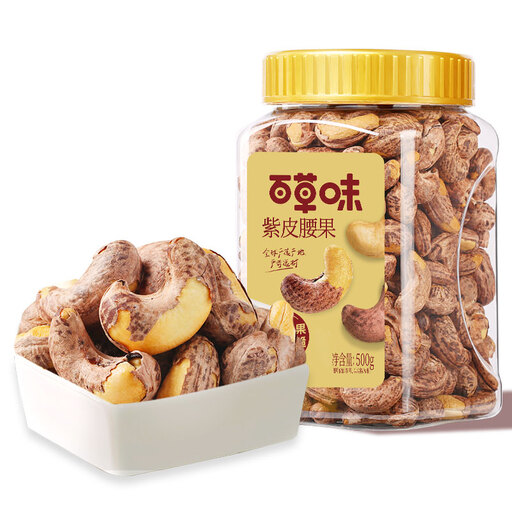
Be&Cheery cashews with purple skin 180 grade 500g
The nutritional information can help you calculate the energy per amount used; don’t give these whole nuts as a snack to children under 4.
Ingredients: cashew kernels and salt.
Energy: 679 kcal per 100 g.
Salt: 1,2 g per 100 g.
View at Joybuy
Frequently asked questions
Can using less cashew spread reduce the energy in the sandwich filling?
Yes. A smaller amount of the same product provides less energy when calculated. AH Terra’s label gives a serving size of 15 g; at 612 kcal per 100 g, that works out at 91,8 kcal. This isn’t a recommended portion for a toddler, and it doesn’t make the product low in calories. Energy needs vary from child to child and change with age.
Does every cashew spread need to be refrigerated?
No, follow the instructions on the pack for the exact variant. AH Terra 100% cashew spread says to refrigerate after purchase at a maximum of 7°C; Jumbo’s 100% Cashew Spread says to store in a cool, dry place.
What allergen information should I check?
Check all the information on the label, as well as the arrangements for the child and the childcare setting. The NVWA says allergen information for prepacked products is provided on the label; the availability of this information doesn’t mean the product is suitable for someone with a cashew allergy.
What does a childcare setting need to do to handle food safely?
RIVM/KIDDI advises following the Hygiene Code for Small Institutions or another approved hygiene code that covers the work being carried out. Everyone involved in food processes must follow that code. This is hygiene guidance, not a product-specific safety approval.
Which cashews did the ALDI warning apply to?
The NVWA warning dated 20 May 2026 applied to Trader Joe’s Unsalted Cashew Nuts, 170 g, barcode 2003020120930, with a best-before date of 23-09-2026, because of possible metal fragments. Don’t eat that specific pack. The warning doesn’t apply to other packs or batches.


